
Warsaw Grand Theatre - Polish National Opera (Teatr Wielki) tickets 31 December 2026 - New years eve gala | GoComGo.com

New years eve gala

Warsaw Grand Theatre - Polish National Opera (Teatr Wielki), Moniuszko Auditorium, Warsaw, Poland
All photos (1)
Select date and time
8 PM

E-tickets: Print at home or at the box office of the event if so specified. You will find more information in your booking confirmation email.

You can only select the category, and not the exact seats.
If you order 2 or 3 tickets: your seats will be next to each other.
If you order 4 or more tickets: your seats will be next to each other, or, if this is not possible, we will provide a combination of groups of seats (at least in pairs, for example 2+2 or 2+3).

Important Info
Type: Classical Concert
City: Warsaw, Poland
Starts at: 20:00

E-tickets: Print at home or at the box office of the event if so specified. You will find more information in your booking confirmation email.

You can only select the category, and not the exact seats.
If you order 2 or 3 tickets: your seats will be next to each other.
If you order 4 or more tickets: your seats will be next to each other, or, if this is not possible, we will provide a combination of groups of seats (at least in pairs, for example 2+2 or 2+3).

Cast
Performers
Conductor: Yoel Gamzou
Soprano: Sophie Bevan
Baritone: Tomasz Kumiega
Programme
Overview

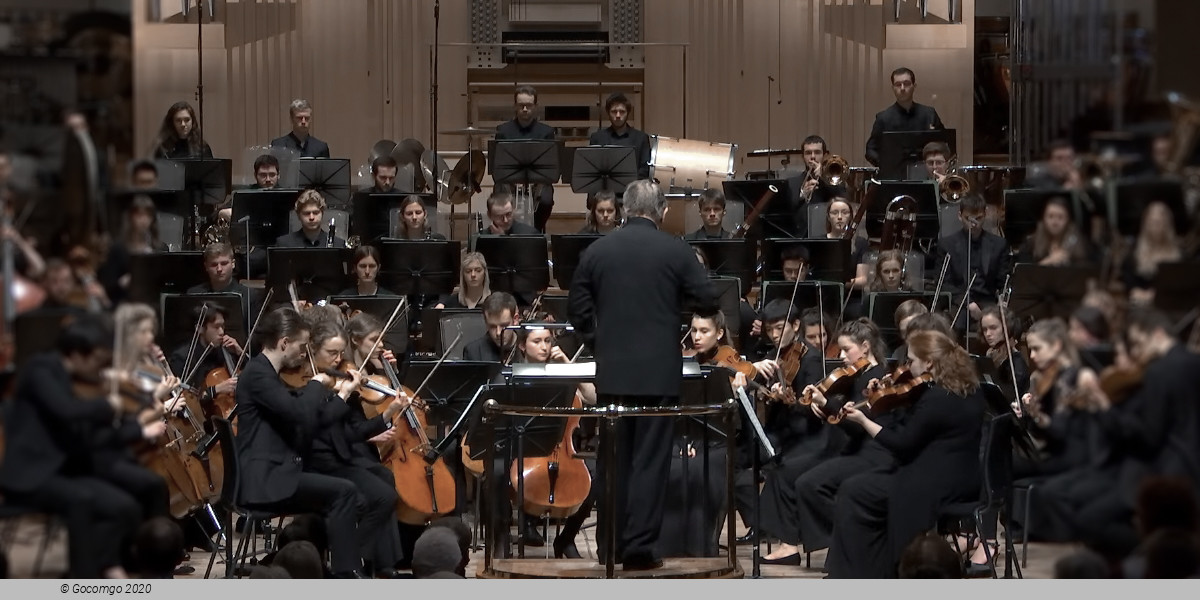
The end and beginning of the year have a special energy in music. It's a time of rituals, intense emotions, and programs created on a grand scale. Vienna's New Year's Eve concerts at the Musikverein attract audiences with tradition – listeners know when to clap their hands to the rhythm of Johann Strauss's (the father's) Radetzky March  and when to be carried away by the undulating melody  of Johann Strauss's (the son's) " An der schönen blauen Donau ." London's Last Night of the Proms  surprises with a riot of repertoire, including the ever-resonant " Land of Hope and Glory"  by Edward Elgar. Season finales, in turn, can be a showcase for the strength of the entire ensemble – a moment when institutions reach for particularly impressive and engaging repertoire.
What would it be like to combine the energies of these three musical traditions in a single evening? Yoel Gamzou and his invited guests will attempt to answer this question. In the spirit of the BBC Proms, the program will be dominated by masterpieces by English composers: Benjamin Britten's The Young Person's Guide to the Orchestra,  Op. 34, and Les Illuminations,  Op. 18 , Edward Elgar's Pomp and Circumstance , William Walton's Crown Imperial , and even Queen  's Bohemian Rhapsody .  
The grand finale of the season will be livened up by Edvard Grieg's Piano Concerto in A minor,  Op. 16, performed by Benjamin Grosvenor – a frequent guest at the BBC Proms and winner of the 2020 "Diapason d'Or de l'année" award for his recording of Fryderyk Chopin's piano concertos. A local touch, reflecting the uniquely "urban" character of Viennese New Year's Eve concerts, will be brought to the forefront by Grażyna Bacewicz's Overture for Orchestra  .
The conductor will also be accompanied on stage by two singers. Soprano Sophie Bevan is familiar with the atmosphere of London's Royal Albert Hall, having performed at the first evening concert of the BBC Proms in 2024. This time, she will sing on New Year's Eve in Warsaw, accompanied by baritone Tomasz Kumięga, well-known to audiences at the Teatr Wielki – Polish National Opera .
It promises to be an evening full of brilliance, energy, hope and glory – or rather, two evenings, as the program will also return during the New Year's concert.

Venue Info

Warsaw Grand Theatre - Polish National Opera (Teatr Wielki) - Warsaw
Location   plac Teatralny 1

The Grand Theatre in Warsaw is a theatre and opera complex situated on the historic Theatre Square in central Warsaw. The Warsaw Grand Theatre is home to the Polish National Ballet and is one of the largest theatrical venues in the world.

The Theatre was built on Theatre Square between 1825 and 1833, replacing the former building of Marywil, from Polish classicist designs by the Italian architect Antonio Corazzi of Livorno, to provide a new performance venue for existing opera, ballet and drama companies active in Warsaw. The building was remodeled several times and, in the period of Poland's political eclipse from 1795 to 1918, it performed an important cultural and political role in producing many works by Polish composers and choreographers.

It was in the new theatre that Stanisław Moniuszko's two best-known operas received their premieres: the complete version of Halka (1858), and The Haunted Manor (1865). After Frédéric Chopin, Moniuszko was the greatest figure in 19th-century Polish music, for in addition to producing his own works, he was director of the Warsaw Opera from 1858 until his death in 1872.

While director of the Grand Theatre, Moniuszko composed The Countess, Verbum Nobile, The Haunted Manor and Paria, and many songs that make up 12 Polish Songbooks.

Also, under Moniuszko's direction, the wooden Summer Theatre was built close by in the Saxon Garden. Summer performances were given annually, from the repertories of the Grand and Variety (Rozmaitości) theatres. Józef Szczublewski writes that during this time, even though the country had been partitioned out of political existence by its neighbors, the theatre flourished: "the ballet roused the admiration of foreign visitors; there was no equal troupe of comedians to be found between Warsaw and Paris, and Modrzejewska was an inspiration to drama."

The theatre presented operas by Władysław Żeleński, Ignacy Jan Paderewski, Karol Szymanowski and other Polish composers, as well as ballet productions designed by such choreographers as Roman Turczynowicz, Piotr Zajlich and Feliks Parnell. At the same time, the repertoire included major world opera and ballet classics, performed by the most prominent Polish and foreign singers and dancers. It was also here that the Italian choreographer Virgilius Calori produced Pan Twardowski (1874), which (in the musical arrangement first of Adolf Sonnenfeld and then of Ludomir Różycki) has for years been part of the ballet company's repertoire.

During the 1939 battle of Warsaw, the Grand Theatre was bombed and almost completely destroyed, with only the classical façade surviving. During the Warsaw Uprising of 1944 the Germans shot civilians in the burnt-out ruins. The plaque to the right of the main entrance commemorates the suffering and heroism of the victims of fascism.

Important Info
Type: Classical Concert
City: Warsaw, Poland
Starts at: 20:00
Top of page