
Warsaw Grand Theatre - Polish National Opera (Teatr Wielki) tickets 22 December 2026 - Premiere Coppélia | GoComGo.com

Premiere
Coppélia

Warsaw Grand Theatre - Polish National Opera (Teatr Wielki), Moniuszko Auditorium, Warsaw, Poland
All photos (7)
Select date and time
12 PM 7 PM
From
US$ 88

E-tickets: Print at home or at the box office of the event if so specified. You will find more information in your booking confirmation email.

You can only select the category, and not the exact seats.
If you order 2 or 3 tickets: your seats will be next to each other.
If you order 4 or more tickets: your seats will be next to each other, or, if this is not possible, we will provide a combination of groups of seats (at least in pairs, for example 2+2 or 2+3).

Important Info
Type: Ballet
City: Warsaw, Poland
Starts at: 12:00
Acts: 3

E-tickets: Print at home or at the box office of the event if so specified. You will find more information in your booking confirmation email.

You can only select the category, and not the exact seats.
If you order 2 or 3 tickets: your seats will be next to each other.
If you order 4 or more tickets: your seats will be next to each other, or, if this is not possible, we will provide a combination of groups of seats (at least in pairs, for example 2+2 or 2+3).

Cast
Performers
Ballet company: Polish National Ballet
Creators
Composer: Léo Delibes
Librettist: Arthur Saint-Léon
Librettist: Charles-Louis-Étienne Nuitter
Author: Ernst Theodor Amadeus Hoffmann
Choreography: Manuel Legris
Overview

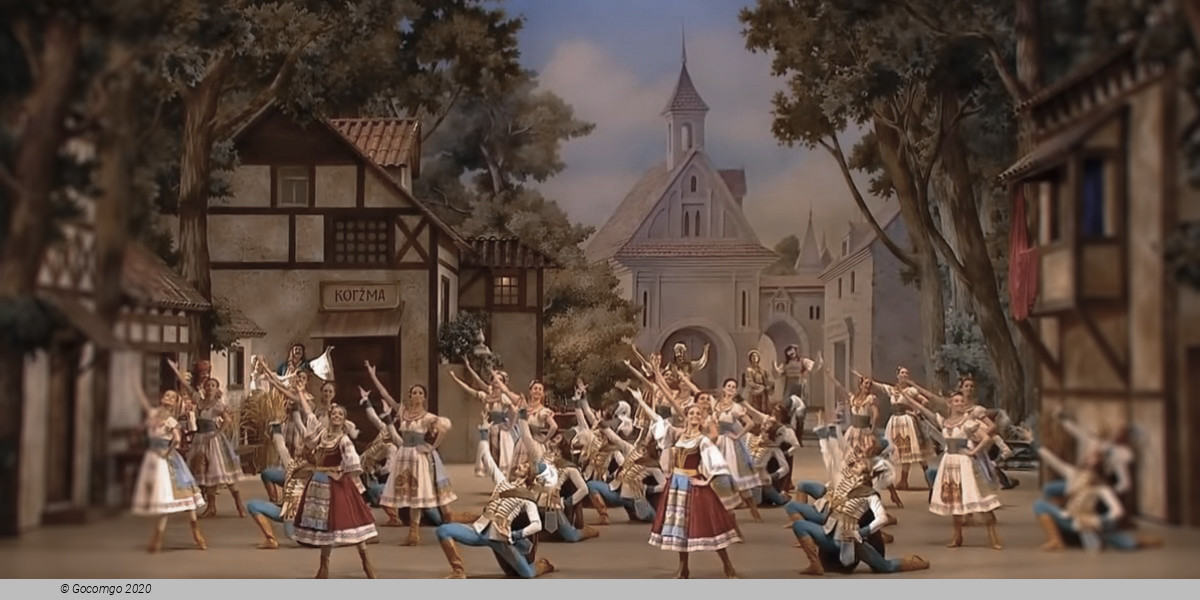
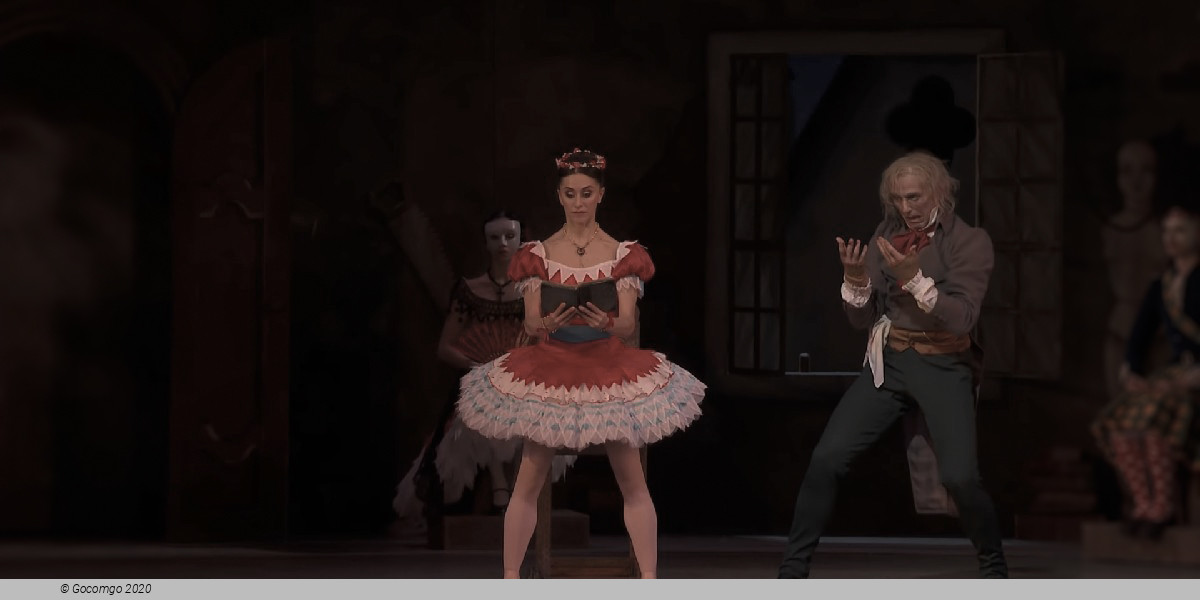
The story is simple and full of charm. A young woman named Swanhilda notices her fiancé, Franz, hanging around under Doctor Coppélius’s windows, trying to woo the inventor’s supposed daughter. In a fit of jealousy, Swanhilda discovers that Coppélia is just a mechanical doll and decides to mock the inventor and teach her sweetheart a lesson. Associated with the Paris Opera, the creators of Coppélia employed this comedic intrigue to develop what turned out to be one of the most popular ballets of the 19th century. The events unfold in a Polish town in Austrian-occupied Galicia, which is reflected in the score, with a beautiful Delibes mazurka and other familiar musical motifs. Coppélia was staged multiple times, with some versions being performed on our stage. Most recently, the ballet was presented in Warsaw 50 years ago in a version by Russia’s Asaf Messerer. This production is choreographed by Manuel Legris, the former principal dancer of the Paris Opera Ballet, who went on to lead the Vienna State Ballet and La Scala Theatre Ballet. Warsaw audiences undoubtedly remember him from his staging of Le Corsaire. Now, Legris is developing his take on Coppélia especially for the Teatr Wielki. It promises to be a treat for lovers of classical ballet and our new family performance. 

History
Premiere of this production: 25 May 1870, Théâtre Impérial l Opéra, Paris

Coppélia is a comic ballet originally choreographed by Arthur Saint-Léon to the music of Léo Delibes, with libretto by Charles-Louis-Étienne Nuitter. Nuitter's libretto and mise-en-scène was based upon two stories by E. T. A. Hoffmann: Der Sandmann (The Sandman) and Die Puppe (The Doll).

Synopsis

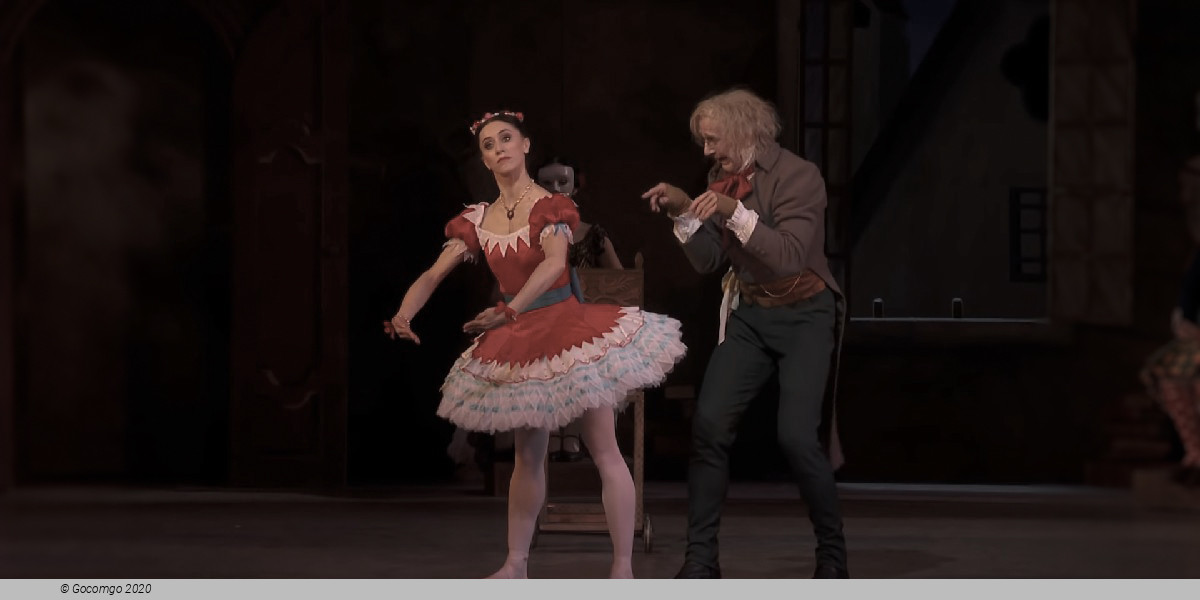
Dr. Coppélius is a doctor who has made a life-size dancing doll. It is so lifelike that Franz, a village youth, becomes infatuated with it and sets aside his heart's true desire, Swanhilda. She shows him his folly by dressing as the doll, pretending to make it come to life and ultimately saving him from an untimely end at the hands of the inventor.

Act I
The story begins during a town festival to celebrate the arrival of a new bell. The town crier announces that, when it arrives, anyone who becomes married will be awarded a special gift of money. Swanilda and Franz plan to marry during the festival. However, Swanilda becomes unhappy with Franz because he seems to be paying more attention to a girl named Coppélia, who sits motionless on the balcony of a nearby house. The house belongs to a mysterious and faintly diabolical inventor, Doctor Coppélius. Although Coppélia spends all of her time sitting motionless and reading, Franz is mesmerized by her beauty and is determined to attract her attention. Still upset with Franz, Swanilda shakes an ear of wheat to her head: if it rattles, then she will know that Franz loves her. Upon doing this, however, she hears nothing. When she shakes it by Franz's head, he also hears nothing; but then he tells her that it rattles. However, she does not believe him and runs away heartbroken.

Later on, Dr. Coppelius leaves his house and is heckled by a group of boys. After shooing them away, he continues on without realizing that he has dropped his keys in the melée. Swanilda finds the keys, which gives her the idea of learning more about Coppélia. She and her friends decide to enter Dr. Coppelius' house. Meanwhile, Franz develops his own plan to meet Coppélia, climbing a ladder to her balcony.

Act II
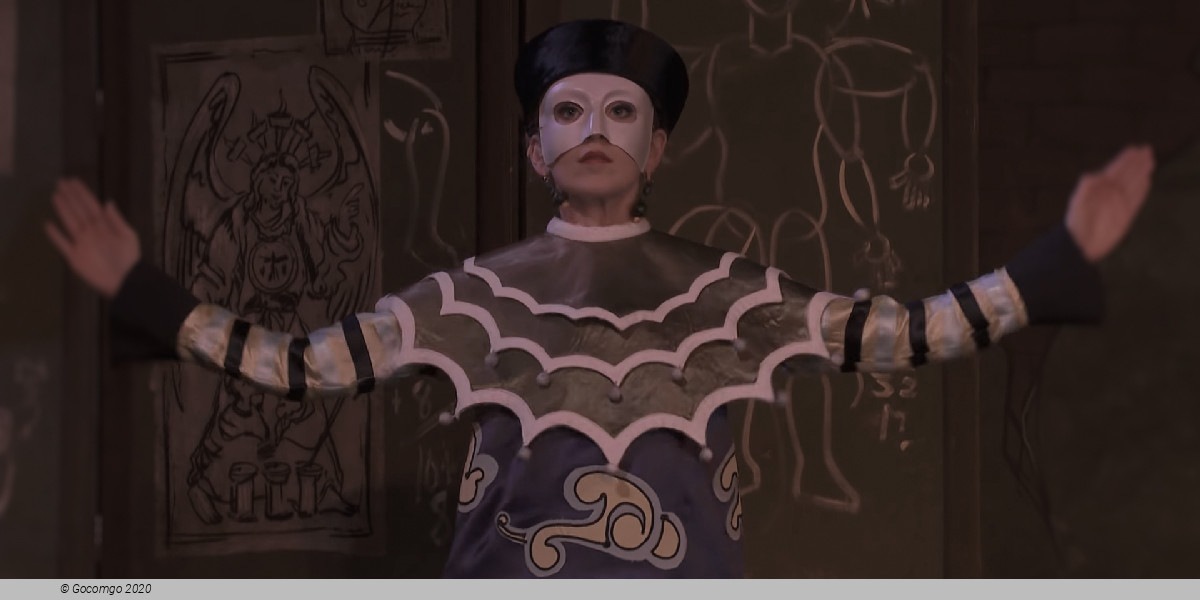
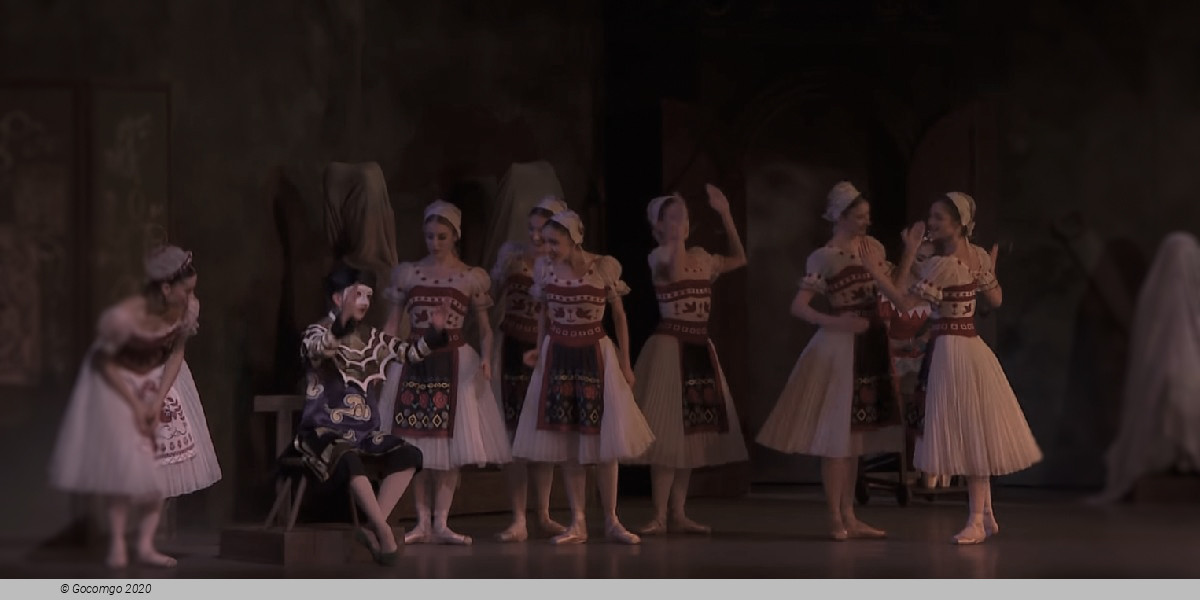
Swanilda and her friends find themselves in a large room filled with people. However, the occupants aren't moving. The girls discover that, rather than people, these are life-size mechanical dolls. They quickly wind them up and watch them move. Swanilda also finds Coppélia behind a curtain and discovers that she, too, is a doll.

Dr. Coppelius returns home to find the girls. He becomes angry with them, not only for trespassing but for also disturbing his workroom. He kicks them out and begins cleaning up the mess. However, upon noticing Franz at the window, Coppélius invites him in. The inventor wants to bring Coppélia to life but, to do that, he needs a human sacrifice. With a magic spell, he will take Franz's spirit and transfer it to Coppélia. After Dr. Coppelius proffers him some wine laced with sleeping powder, Franz begins to fall asleep. The inventor then readies his magic spell.

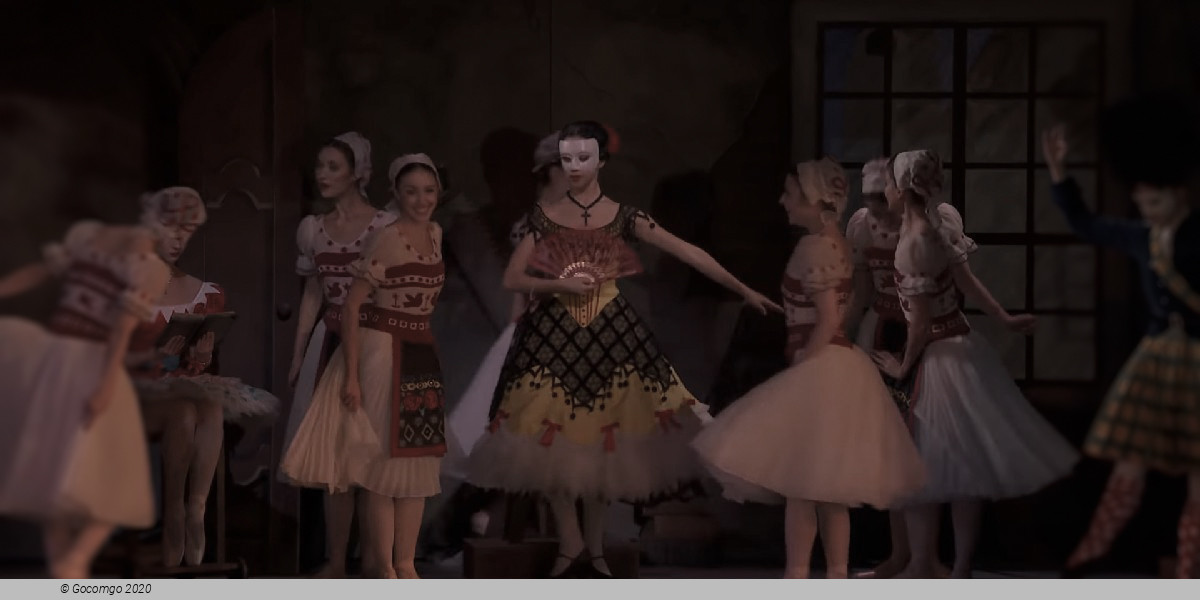
However, Dr. Coppelius did not expel all the girls: Swanilda is still there, hidden behind a curtain. She dresses up in Coppélia's clothes and pretends that the doll has come to life. She wakes Franz and then winds up all the mechanical dolls to aid their escape. Dr. Coppelius becomes confused and then saddened when he finds a lifeless Coppélia behind the curtain.

(Note: In some Russian versions of the ballet, after getting caught, Swanhilda confesses to Dr. Coppelius about what she and her friends did and her situation with Franz. Coppelius decides to forgive Swanhilda and teach her how to act like a doll coming to life to fool Franz, thus ending Act 2 on a happier note.)

Act III
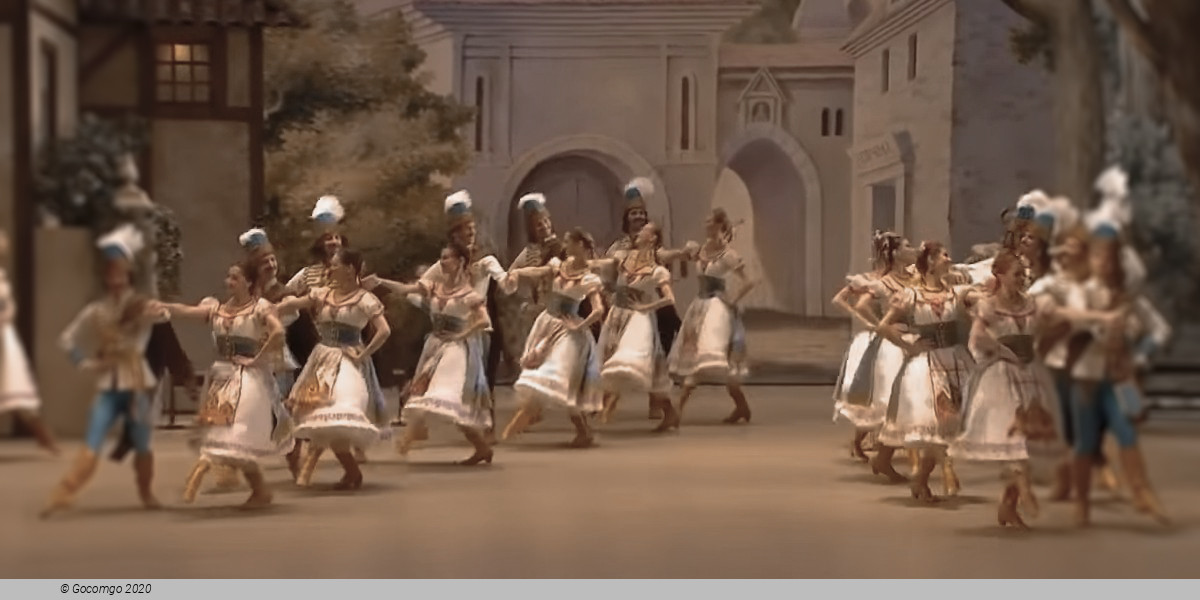
Swanilda and Franz are about to make their wedding vows when the angry Dr. Coppelius appears, claiming damages. Dismayed at having caused such an upset, Swanilda offers Dr. Coppelius her dowry in return for his forgiveness. However, Franz tells Swanilda to keep her dowry and offers to pay Dr. Coppelius instead. At that point, the mayor intervenes and gives Dr. Coppelius a bag of money, which placates him. Swanilda and Franz are married and the entire town celebrates by dancing.

Venue Info

Warsaw Grand Theatre - Polish National Opera (Teatr Wielki) - Warsaw
Location   plac Teatralny 1

The Grand Theatre in Warsaw is a theatre and opera complex situated on the historic Theatre Square in central Warsaw. The Warsaw Grand Theatre is home to the Polish National Ballet and is one of the largest theatrical venues in the world.

The Theatre was built on Theatre Square between 1825 and 1833, replacing the former building of Marywil, from Polish classicist designs by the Italian architect Antonio Corazzi of Livorno, to provide a new performance venue for existing opera, ballet and drama companies active in Warsaw. The building was remodeled several times and, in the period of Poland's political eclipse from 1795 to 1918, it performed an important cultural and political role in producing many works by Polish composers and choreographers.

It was in the new theatre that Stanisław Moniuszko's two best-known operas received their premieres: the complete version of Halka (1858), and The Haunted Manor (1865). After Frédéric Chopin, Moniuszko was the greatest figure in 19th-century Polish music, for in addition to producing his own works, he was director of the Warsaw Opera from 1858 until his death in 1872.

While director of the Grand Theatre, Moniuszko composed The Countess, Verbum Nobile, The Haunted Manor and Paria, and many songs that make up 12 Polish Songbooks.

Also, under Moniuszko's direction, the wooden Summer Theatre was built close by in the Saxon Garden. Summer performances were given annually, from the repertories of the Grand and Variety (Rozmaitości) theatres. Józef Szczublewski writes that during this time, even though the country had been partitioned out of political existence by its neighbors, the theatre flourished: "the ballet roused the admiration of foreign visitors; there was no equal troupe of comedians to be found between Warsaw and Paris, and Modrzejewska was an inspiration to drama."

The theatre presented operas by Władysław Żeleński, Ignacy Jan Paderewski, Karol Szymanowski and other Polish composers, as well as ballet productions designed by such choreographers as Roman Turczynowicz, Piotr Zajlich and Feliks Parnell. At the same time, the repertoire included major world opera and ballet classics, performed by the most prominent Polish and foreign singers and dancers. It was also here that the Italian choreographer Virgilius Calori produced Pan Twardowski (1874), which (in the musical arrangement first of Adolf Sonnenfeld and then of Ludomir Różycki) has for years been part of the ballet company's repertoire.

During the 1939 battle of Warsaw, the Grand Theatre was bombed and almost completely destroyed, with only the classical façade surviving. During the Warsaw Uprising of 1944 the Germans shot civilians in the burnt-out ruins. The plaque to the right of the main entrance commemorates the suffering and heroism of the victims of fascism.

Important Info
Type: Ballet
City: Warsaw, Poland
Starts at: 12:00
Acts: 3
Top of page