




Warsaw Grand Theatre - Polish National Opera (Teatr Wielki) tickets 16 October 2026 - Premiere Mothers of Kherson | GoComGo.com

Premiere
Mothers of Kherson

Warsaw Grand Theatre - Polish National Opera (Teatr Wielki), Moniuszko Auditorium, Warsaw, Poland
All photos (1)
Select date and time
7 PM
From
US$ 103

E-tickets: Print at home or at the box office of the event if so specified. You will find more information in your booking confirmation email.

You can only select the category, and not the exact seats.
If you order 2 or 3 tickets: your seats will be next to each other.
If you order 4 or more tickets: your seats will be next to each other, or, if this is not possible, we will provide a combination of groups of seats (at least in pairs, for example 2+2 or 2+3).

Important Info
Type: Opera
City: Warsaw, Poland
Starts at: 19:00
Acts: 2
Sung in: English
Titles in: English,Polish

E-tickets: Print at home or at the box office of the event if so specified. You will find more information in your booking confirmation email.

You can only select the category, and not the exact seats.
If you order 2 or 3 tickets: your seats will be next to each other.
If you order 4 or more tickets: your seats will be next to each other, or, if this is not possible, we will provide a combination of groups of seats (at least in pairs, for example 2+2 or 2+3).

Cast
Performers
Conductor: Keri-Lynn Wilson
Tenor: Adrian Domarecki (Kostya)
Soprano: Hanna Sosnowska-Bill Hanna Sosnowska-Bill (Lilia)
Soprano: Izabela Matuła (Kateryna)
Soprano: Kamila Dutkowska (Dasha)
Mezzo-Soprano: Małgorzata Walewska (Olha)
Creators
Composer: Maxim Kolomiiets
Director: Barbara Wysocka
Librettist: George Brant
Opera Company: Polish National Opera
Overview

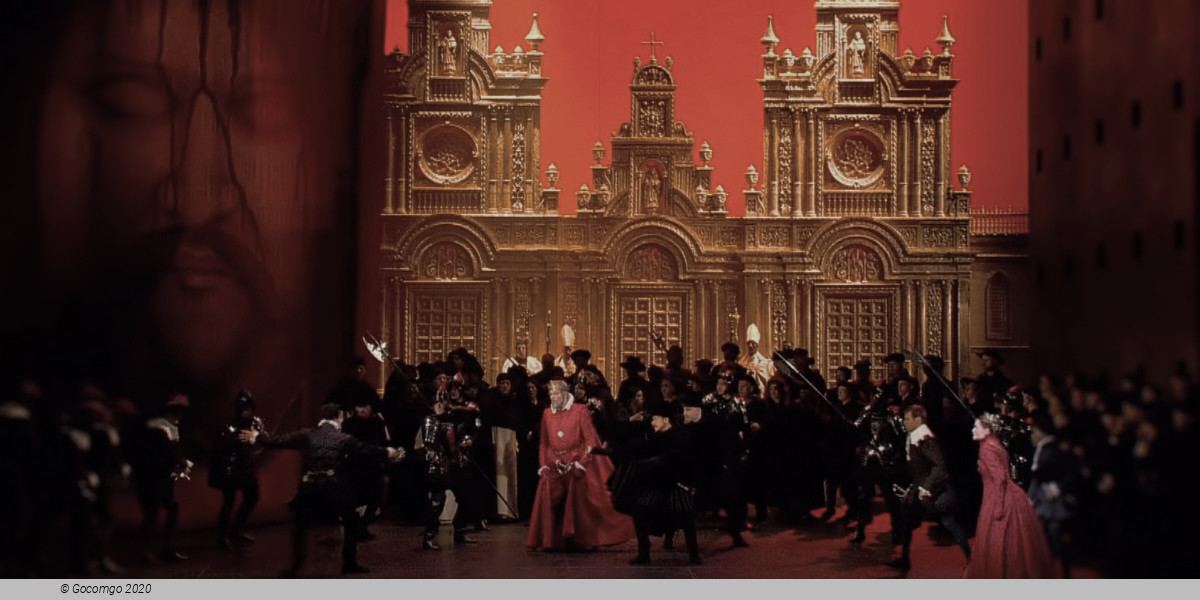
Don't get used to our suffering' implored Olena Zelenska in 2024, reminding the world about the ongoing war in Ukraine. The Mothers of Kherson is a response to the appeal. It was co-produced by the Teatr Wielki – Polish National Opera and the Metropolitan Opera in New York, two institutions that have been actively supporting the embattled nation since the beginning of Russia's full-scale invasion in 2022. One of their joint projects is the Ukrainian Freedom Orchestra led by conductor Keri-Lynn Wilson, who has also been involved in the process of developing the new opera.

The creators, American playwright George Brant and Ukrainian composer Maxim Kolomiiets, both with extensive opera experience under their belt, sought a story that would convey the magnitude of Ukrainian suffering and resonate with the audience on a universal level. The opera focuses on a practice of employment since the beginning of the Russian invasion: mass abductions and deportations of Ukrainian children. The libretto, however, is only loosely inspired by facts. It follows different women fighting to recover their abducted children, highlighting their common characteristics. They all lost their daughters after the children were taken to Crimea by deceit. Although the distance between Kherson and the peninsula is not far, due to the raging war, their mothers must travel thousands of kilometers, taking a roundabout way to the camp where the children are held. Will they be able to retrieve their missing children? 

The production is directed by Barbara Wysocka, who made her opera debut at the Teatr Wielki and now pursues a successful European career. She interprets The Mothers of Kherson as a politically engaged documentary opera that explores fundamental themes, including suffering, loyalty, parental love, and the power of community. 

This is an opera responding to the challenges of our times. It explores an acutely painful topic, giving voice to tormented women and highlighting the suffering of children. emphasis Whileing the tragic impact of grand history on individuals, the piece also speaks to human determination and the ability to sacrifice in the name of higher values.

History
Premiere of this production: 16 October 2026, Moniuszko Auditorium, Teatr Wielki – Polish National Opera (Warsaw)

Matki Chersonia (The Mothers of Kherson) is a new opera by Maxim Kolomiiets based on the true stories of Ukrainian mothers who risk everything to rescue their children from occupied territory. Combining an emotionally powerful score with a deeply human story, this world-premiere production explores courage, love, sacrifice, and hope amid the devastation of war.

Synopsis

When several children are forcibly taken from the Kherson region during the war, their mothers refuse to accept the loss. Determined to bring them home, they undertake a dangerous journey across checkpoints and occupied territories, confronting fear, uncertainty, and impossible choices.

As their paths intertwine, each woman discovers extraordinary strength in the face of overwhelming adversity. Their search becomes more than a rescue mission—it is a testament to the enduring power of maternal love, solidarity, and the determination to protect future generations, even at the greatest personal cost.

Venue Info

Warsaw Grand Theatre - Polish National Opera (Teatr Wielki) - Warsaw
Location   plac Teatralny 1

The Grand Theatre in Warsaw is a theatre and opera complex situated on the historic Theatre Square in central Warsaw. The Warsaw Grand Theatre is home to the Polish National Ballet and is one of the largest theatrical venues in the world.

The Theatre was built on Theatre Square between 1825 and 1833, replacing the former building of Marywil, from Polish classicist designs by the Italian architect Antonio Corazzi of Livorno, to provide a new performance venue for existing opera, ballet and drama companies active in Warsaw. The building was remodeled several times and, in the period of Poland's political eclipse from 1795 to 1918, it performed an important cultural and political role in producing many works by Polish composers and choreographers.

It was in the new theatre that Stanisław Moniuszko's two best-known operas received their premieres: the complete version of Halka (1858), and The Haunted Manor (1865). After Frédéric Chopin, Moniuszko was the greatest figure in 19th-century Polish music, for in addition to producing his own works, he was director of the Warsaw Opera from 1858 until his death in 1872.

While director of the Grand Theatre, Moniuszko composed The Countess, Verbum Nobile, The Haunted Manor and Paria, and many songs that make up 12 Polish Songbooks.

Also, under Moniuszko's direction, the wooden Summer Theatre was built close by in the Saxon Garden. Summer performances were given annually, from the repertories of the Grand and Variety (Rozmaitości) theatres. Józef Szczublewski writes that during this time, even though the country had been partitioned out of political existence by its neighbors, the theatre flourished: "the ballet roused the admiration of foreign visitors; there was no equal troupe of comedians to be found between Warsaw and Paris, and Modrzejewska was an inspiration to drama."

The theatre presented operas by Władysław Żeleński, Ignacy Jan Paderewski, Karol Szymanowski and other Polish composers, as well as ballet productions designed by such choreographers as Roman Turczynowicz, Piotr Zajlich and Feliks Parnell. At the same time, the repertoire included major world opera and ballet classics, performed by the most prominent Polish and foreign singers and dancers. It was also here that the Italian choreographer Virgilius Calori produced Pan Twardowski (1874), which (in the musical arrangement first of Adolf Sonnenfeld and then of Ludomir Różycki) has for years been part of the ballet company's repertoire.

During the 1939 battle of Warsaw, the Grand Theatre was bombed and almost completely destroyed, with only the classical façade surviving. During the Warsaw Uprising of 1944 the Germans shot civilians in the burnt-out ruins. The plaque to the right of the main entrance commemorates the suffering and heroism of the victims of fascism.

Important Info
Type: Opera
City: Warsaw, Poland
Starts at: 19:00
Acts: 2
Sung in: English
Titles in: English,Polish
Top of page