Vienna State Opera tickets 22 November 2026 - Premiere Ariadne auf Naxos | GoComGo.com

Premiere
Ariadne auf Naxos

Vienna State Opera, Main Stage, Vienna, Austria
All photos (5)
Select date and time
7 PM
From
US$ 132

E-tickets: Print at home or at the box office of the event if so specified. You will find more information in your booking confirmation email.

You can only select the category, and not the exact seats.
If you order 2 or 3 tickets: your seats will be next to each other.
If you order 4 or more tickets: your seats will be next to each other, or, if this is not possible, we will provide a combination of groups of seats (at least in pairs, for example 2+2 or 2+3).

Important Info
Type: Opera
City: Vienna, Austria
Starts at: 19:00
Acts: 1
Sung in: German

E-tickets: Print at home or at the box office of the event if so specified. You will find more information in your booking confirmation email.

You can only select the category, and not the exact seats.
If you order 2 or 3 tickets: your seats will be next to each other.
If you order 4 or more tickets: your seats will be next to each other, or, if this is not possible, we will provide a combination of groups of seats (at least in pairs, for example 2+2 or 2+3).

Overview

When the planned performance of his opera seria Ariadne auf Naxos in the palace of a Viennese nouveau riche is combined with the dance masquerade of an Italian comedy troupe, the young composer is initially in despair.

It is mainly thanks to the dancer Zerbinetta that he agrees. In the opera itself, we meet Ariadne, abandoned and desperate. Only the god Bacchus succeeds in bringing her back to life. In the mystical union of the two, there is still room for Zerbinetta's mockery: "Come the new god gone, devoted we are mute!"

About the direction

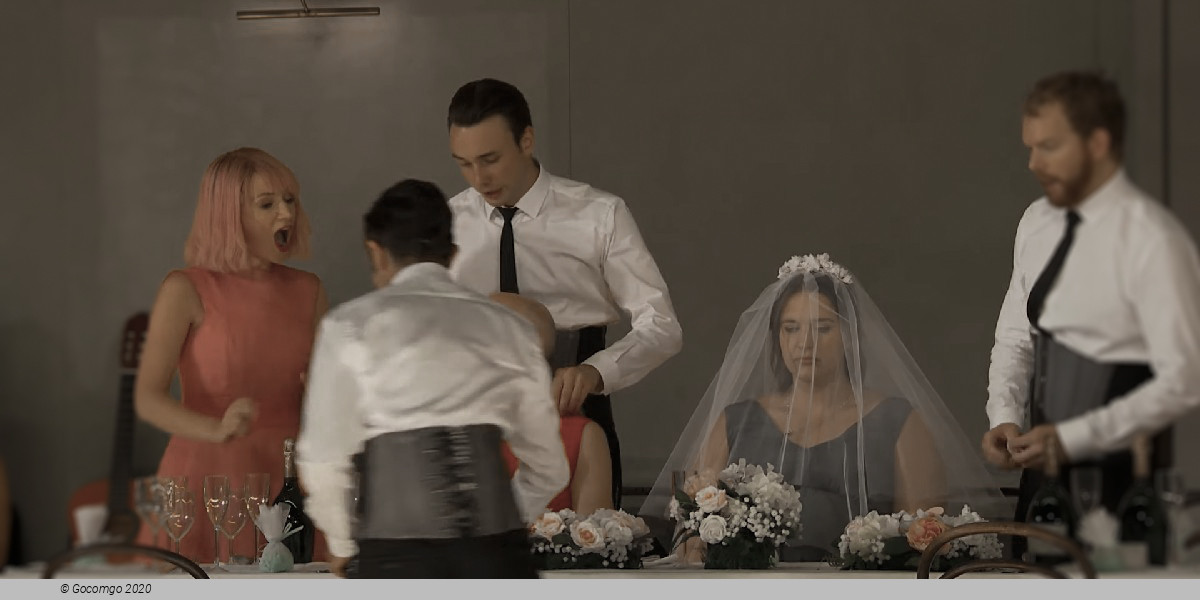
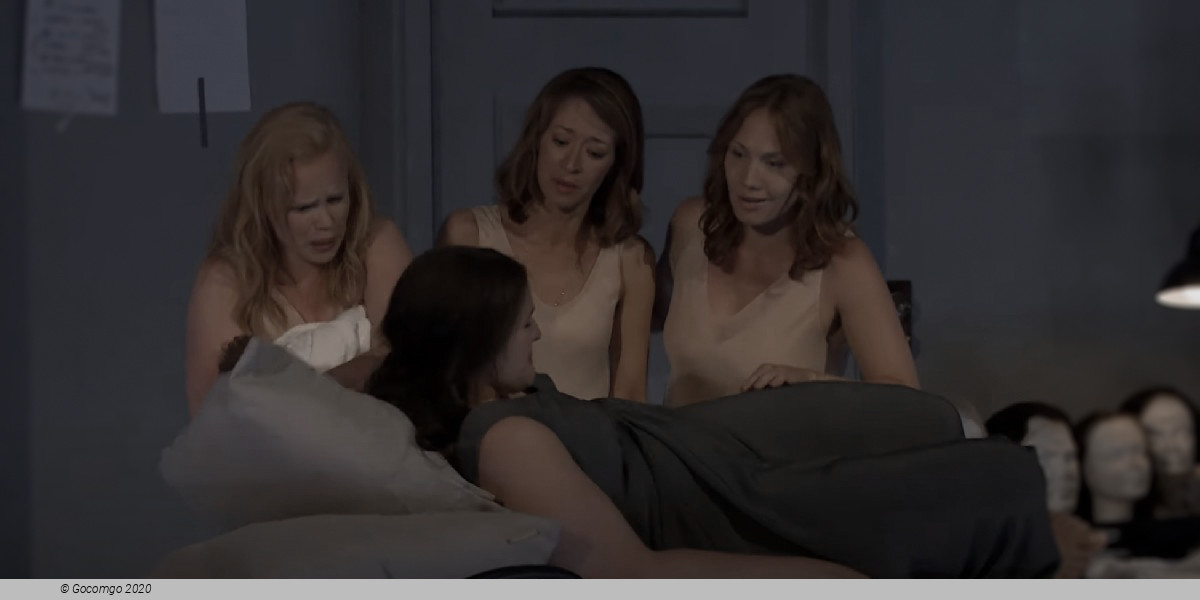
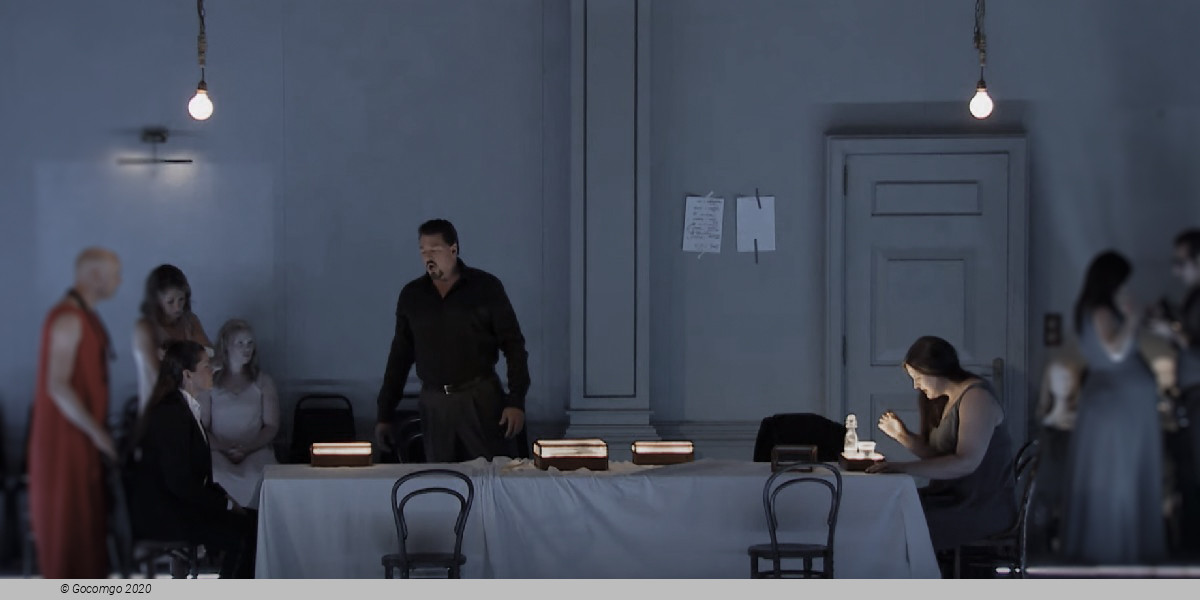
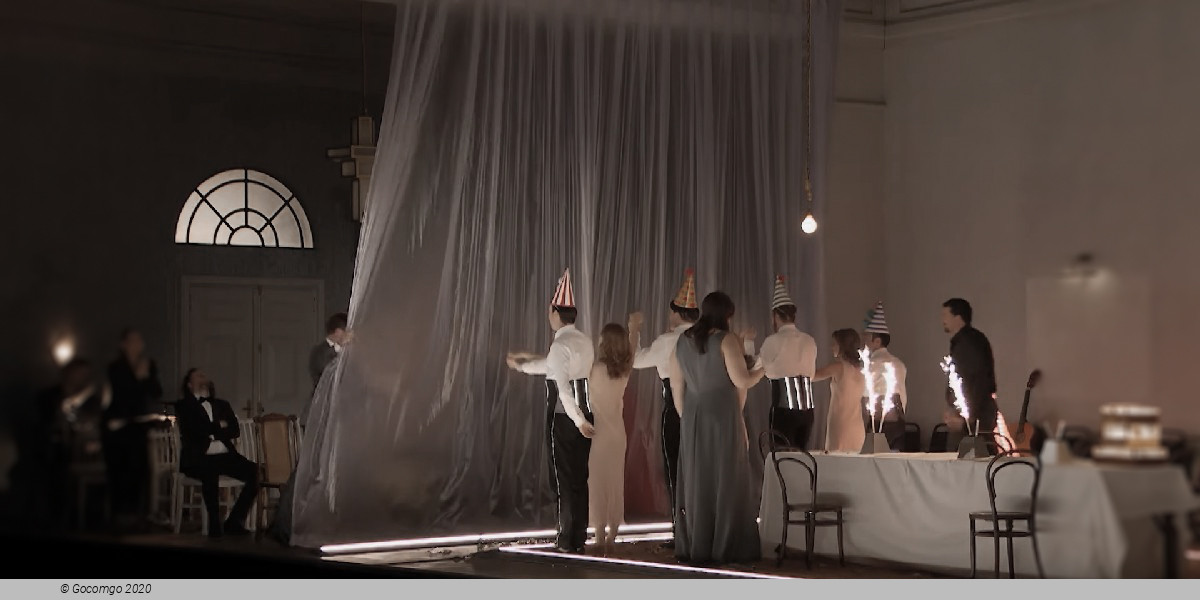
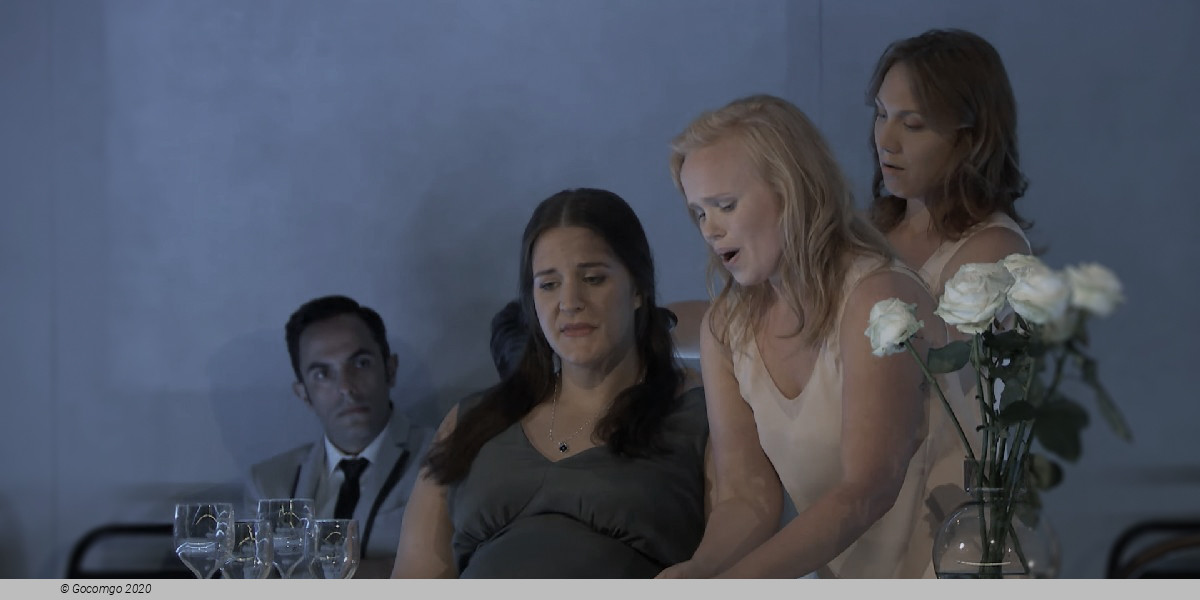
Barrie Kosky relocates the beginning of Ariadne auf Naxos to the Villa Beer - an upper-class Viennese house from around 1900. This is where society meets, where the wealthy bourgeoisie surround themselves with opera and operetta artists - a place where seriousness and entertainment, grand opera and light muse naturally intertwine.

For Kosky, the challenge of the piece lies in the constant shift between pathos and lightness. These opposites drive each other on and constantly threaten to lose their balance. If one becomes too heavy, the other tips over. It is precisely this momentum that creates the tension that carries the evening.
On the surface, Zerbinetta and her troupe belong to the commedia dell'arte. However, Kosky reveals what lies behind this cipher: the cosmos of operetta with a new generation of emancipated women. Zerbinetta stands for movement, change and the freedom to make new commitments. The idea of remaining faithful to a single man is alien to her. Ariadne, on the other hand, holds on to precisely this idea - and with her to a seriousness that does not relativize pain and loss. There is no simple opposition between the two, but rather a tension between two attitudes towards life and the world.

At the end is Bacchus: Dionysus, the god of the theater. For Kosky, he is a figure who does not resolve these opposites, but transforms them. The theater begins where the tragic and the comic drive each other on, sparks fly - and something new emerges.

About the music

Ariadne auf Naxos is one of Richard Strauss' most subtle scores. It is characterized by the flowing alternation between contrasting musical levels: In the prelude, an agile, recitative-like style predominates, while the opera is more strongly characterized by large, wide-ranging arches - both forms of expression, however, permeate the entire work.
The music requires a special balance. Comedic lightness and heroic tone must intertwine seamlessly without covering each other up. It is precisely this combination that makes the score so appealing: Strauss works with subtle transitions rather than sharp breaks.
Despite the comparatively small orchestral forces, an astonishing variety of colors and forms of expression is created. The music repeatedly opens up to great emphasis, for example in the final minutes of the opera, which seem like the climax of a continuous musical wave movement.
At the same time, the music remains closely tied to the language and the scene. The specific tone of the libretto - characterized by the Viennese linguistic style of the time - is taken up and continued musically.

Ariadne auf Naxos has an unusual genesis. In the first version from 1912, the opera was part of a theater evening based on Molière's The Citizen as Nobleman. Initially, a play with its own plot was performed, at the end of which the opera followed as a festive interlude - Zerbinetta and her troupe also appear here as part of this stage program.
It was not until the revision of 1916 that it took on the form we know today. The play was deleted and replaced by a newly composed prelude, which takes place immediately before the opera begins. For the first time, the genesis of the performance itself becomes the subject - and the opera becomes a play about the theater.
At the center is a theme that Hofmannsthal described as a "simple and immense problem of life": fidelity. While Zerbinetta takes the constant change of love for granted, Ariadne clings to the idea of a single, absolute bond.
It is precisely this combination of theatrical reflection and existential questioning that makes Ariadne auf Naxos so special to this day.

History
Premiere of this production: Staatsoper Stuttgart

Ariadne auf Naxos (Ariadne on Naxos) is an opera by Richard Strauss with a German libretto by Hugo von Hofmannsthal. Combining slapstick comedy and consummately beautiful music, the opera's theme is the competition between high and low art for the public's attention.

Venue Info

Vienna State Opera - Vienna
Location   Opernring 2

The Vienna State Opera is one of the leading opera houses in the world. Its past is steeped in tradition. Its present is alive with richly varied performances and events. Each season, the schedule features 350 performances of more than 60 different operas and ballets. The members of the Vienna Philharmonic are recruited from the Vienna State Opera's orchestra. The building is also the home of the Vienna State Ballet, and it hosts the annual Vienna Opera Ball during the carnival season.

The 1,709-seat Renaissance Revival venue was the first major building on the Vienna Ring Road. It was built from 1861 to 1869 following plans by August Sicard von Sicardsburg and Eduard van der Nüll, and designs by Josef Hlávka. The opera house was inaugurated as the "Vienna Court Opera" (Wiener Hofoper) in the presence of Emperor Franz Joseph I and Empress Elisabeth of Austria. It became known by its current name after the establishment of the First Austrian Republic in 1921. The Vienna State Opera is the successor of the Vienna Court Opera, the original construction site chosen and paid for by Emperor Franz Joseph in 1861.

The opera house was the first major building on the Vienna Ringstrasse commissioned by the Viennese "city expansion fund". Work commenced on the house in 1861 and was completed in 1869, following plans drawn up by architects August Sicard von Sicardsburg and Eduard van der Nüll. It was built in the Neo-Renaissance style by the renowned Czech architect and contractor Josef Hlávka.

Gustav Mahler was one of the many conductors who have worked in Vienna. During his tenure (1897–1907), Mahler cultivated a new generation of singers, such as Anna Bahr-Mildenburg and Selma Kurz, and recruited a stage designer who replaced the lavish historical stage decors with sparse stage scenery corresponding to modernistic, Jugendstil tastes. Mahler also introduced the practice of dimming the lighting in the theatre during performances, which was initially not appreciated by the audience. However, Mahler's reforms were maintained by his successors.

Herbert von Karajan introduced the practice of performing operas exclusively in their original language instead of being translated into German. He also strengthened the ensemble and regular principal singers and introduced the policy of predominantly engaging guest singers. He began a collaboration with La Scala in Milan, in which both productions and orchestrations were shared. This created an opening for the prominent members of the Viennese ensemble to appear in Milan, especially to perform works by Wolfgang Amadeus Mozart and Richard Strauss.

Ballet companies merge

At the beginning of the 2005–2006 season, the ballet companies of the Staatsoper and the Vienna Volksoper were merged under the direction of Gyula Harangozó.

From the 2010–2011 season a new company was formed called Wiener Staatsballet, Vienna State Ballet, under the direction of former Paris Opera Ballet principal dancer Manuel Legris. Legris eliminated Harangozós's policy of presenting nothing but traditional narrative ballets with guest artists in the leading roles, concentrated on establishing a strong in-house ensemble and restored evenings of mixed bill programs, featuring works of George Balanchine, Jerome Robbins, Jiří Kylián, William Forsythe, and many contemporary choreographers, as well as a reduced schedule of the classic ballets.

Opera ball

For many decades, the opera house has been the venue of the Vienna Opera Ball. It is an internationally renowned event, which takes place annually on the last Thursday in Fasching. Those in attendance often include visitors from around the world, especially prominent names in business and politics. The opera ball receives media coverage from a range of outlets.

Important Info
Type: Opera
City: Vienna, Austria
Starts at: 19:00
Acts: 1
Sung in: German
Top of page