
Teatro Alla Scala: Anna Bolena Tickets | Event Dates & Schedule | GoComGo.com

Anna Bolena Tickets

Teatro Alla Scala, Milan, Italy
All photos (6)
1 / 6
Available Dates: 30 Mar - 16 Apr, 2027 (7 events)
Important Info
Type: Opera
City: Milan, Italy

E-tickets: Print at home or at the box office of the event if so specified. You will find more information in your booking confirmation email.

You can only select the category, and not the exact seats.
If you order 2 or 3 tickets: your seats will be next to each other.
If you order 4 or more tickets: your seats will be next to each other, or, if this is not possible, we will provide a combination of groups of seats (at least in pairs, for example 2+2 or 2+3).

Cast
Performers
Choose the date to see the peformers
History
Premiere of this production: 26 December 1830, Teatro Carcano, Milan

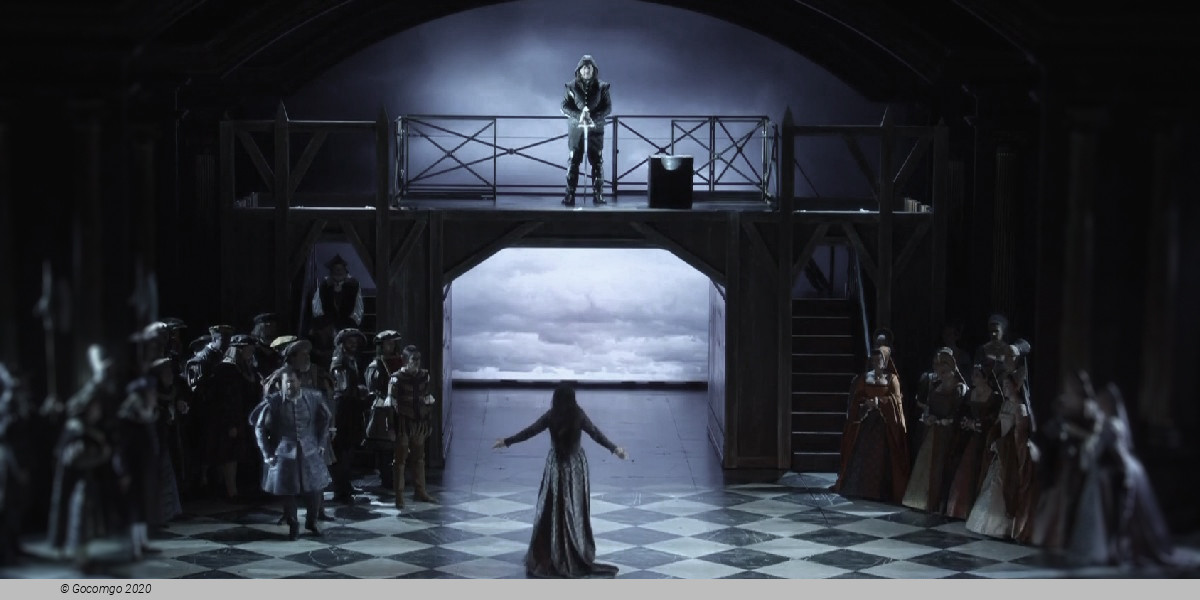
Anna Bolena is a tragic opera (tragedia lirica) in two acts composed by Gaetano Donizetti. Felice Romani wrote the Italian libretto after Ippolito Pindemonte's Enrico VIII ossia Anna Bolena and Alessandro Pepoli's Anna Bolena, both recounting the life of Anne Boleyn, the second wife of England's King Henry VIII.

Synopsis

Time: 1536
Place: Windsor and London

Act 1
Scene One: Night. Windsor Castle, Queen's apartments

Courtiers comment that the queen’s star is setting, because the king’s fickle heart burns with another love.

Jane Seymour enters to attend a call by the Queen; Anna enters and notes that people seem sad. The queen admits to Jane that she is troubled. At the queen’s request, her page Smeaton plays the harp and sings in an attempt to cheer the people present. The queen asks him to stop. Unheard by any one else, she says to herself that the ashes of her first love are still burning, and that she is now unhappy in her vain splendor. All leave, except Jane.

Henry VIII enters and tells Jane that soon she will have no rival, that the altar has been prepared for her, and that she will have husband, sceptre, and throne. Each leaves by a different door.

Scene Two: Day. Around Windsor Castle

Lord Rochefort, Anna’s brother, is surprised to meet Lord Richard Percy, who has been called back to England from exile by Henry VIII. Percy asks if it is true that the Queen is unhappy and that the King has changed. Rochefort answers that love is never content.

Hunters enter. Percy is agitated at the prospect of possibly seeing Anna, who was his first love. Henry and Anna enter and express surprise at seeing Percy. Henry does not allow Percy to kiss his hand, but says that Anna has given him assurances of Percy’s innocence but she still has feelings for Percy. Henry VIII tells Hervey, an officer of the king, to spy on every step and every word of Anna and Percy.

Scene Three: Windsor Castle, close to the Queen's apartments

Smeaton takes a locket from his breast containing Anna’s portrait. He has stolen it and has come to return it. He hears a sound and hides behind a screen. Anna and Rochefort enter. Rochefort asks Anna to hear Percy. Then he leaves. Smeaton peeps out from behind the screen, but cannot escape. Percy enters. Percy says that he sees that Anna is unhappy. She tells him that the king now loathes her. Percy says that he still loves her. Anna tells him not to speak to her of love. Before leaving, Percy asks whether he can see Anna again. She says no. He draws his sword to stab himself, and Anna screams. In the mistaken belief that Percy is attacking Anna, Smeaton rushes out from behind the screen. Smeaton and Percy are about to fight. Anna faints, and Rochefort rushes in. Just then, Henry VIII enters and sees the unsheathed swords. Summoning attendants, he says that these persons have betrayed their king. Smeaton says that it is not true, and tears open his tunic to offer his breast to the king for slaying if he is lying. The locket with Anna’s portrait falls at the king’s feet. The king snatches it up. He orders that the offenders be dragged to dungeons. Anna says to herself that her fate is sealed.

Act 2

Scene One: London. Antechamber of the Queen's apartments

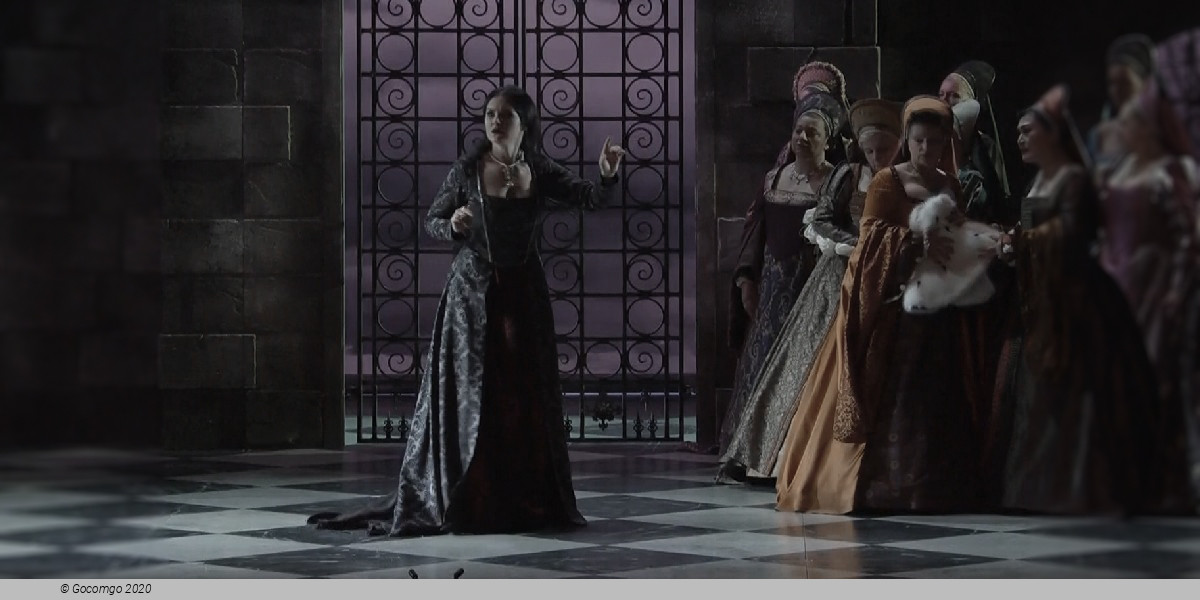
The guards note that even Jane Seymour has stayed away from Anna. Anna enters with a retinue of ladies, who tell her to place her trust in heaven. Hervey enters and says that the Council of Peers has summoned the ladies into its presence. The ladies leave with Hervey. Jane enters and says that Anna can avoid being put to death by admitting guilt. Anna says that she will not buy her life with infamy. She expresses the hope that her successor will wear a crown of thorns. Jane admits that she is to be the successor. Anna tells her to leave, but says that Henry VIII alone is the guilty one. Jane leaves, deeply upset.

Scene Two: Antechamber leading into the hall where the Council of Peers is meeting

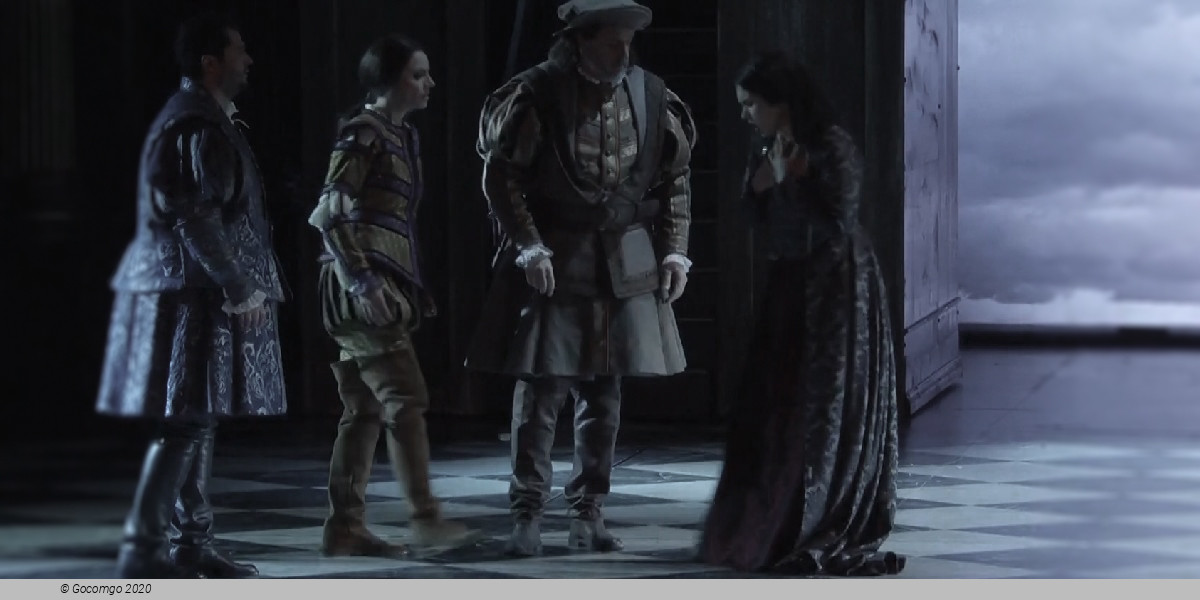
Hervey tells courtiers that Anna is lost, because Smeaton has talked and has revealed a crime. Henry VIII enters. Hervey says that Smeaton has fallen into the trap. Henry VIII tells Hervey to continue to let Smeaton believe that he has saved Anna's life. Anna and Percy are brought in, separately. Henry VIII says that Anna has made love to the page Smeaton, and that there are witnesses. He says that both Anna and Percy will die. Percy says that it is written in heaven that he and Anna are married. They are led away by guards.

Jane enters. She says that she does not want to be the cause of Anna's death. Henry VIII says that she will not save Anna by leaving. Hervey enters and says that the Council has dissolved the royal marriage and has condemned Anna and her accomplices to death. Courtiers and Jane ask the king to be merciful. He tells them to leave.

Scene Three: Tower of London

Percy and Rochefort are together in their cell. Hervey enters and says that the king has pardoned them. They ask about Anna. Hearing that she is to be executed, they choose to be executed also. They leave, surrounded by guards.

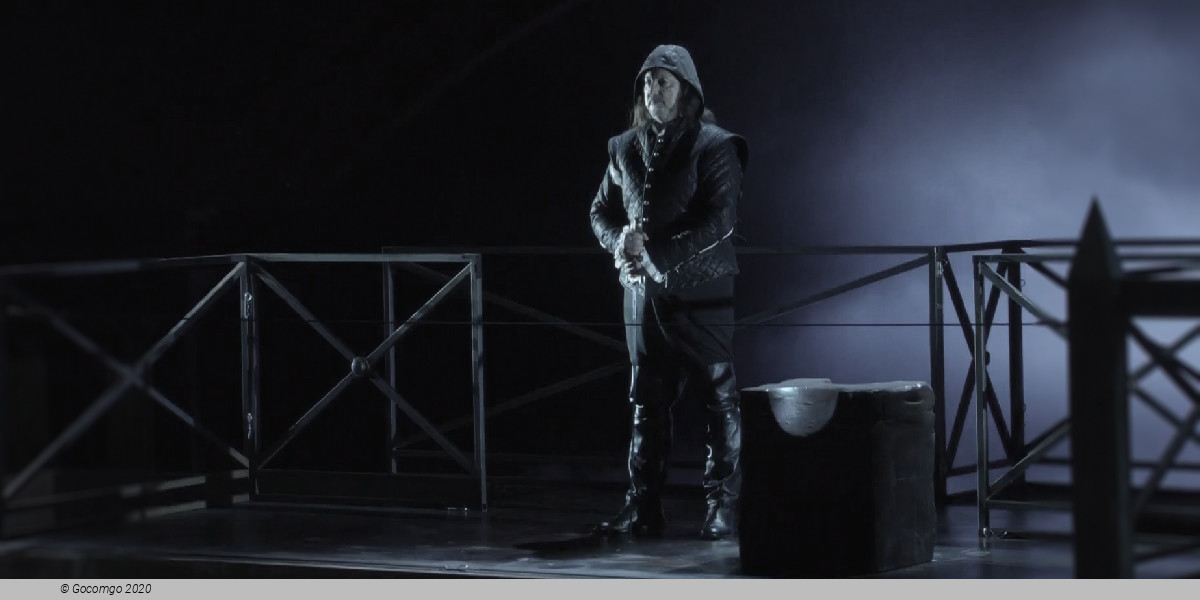
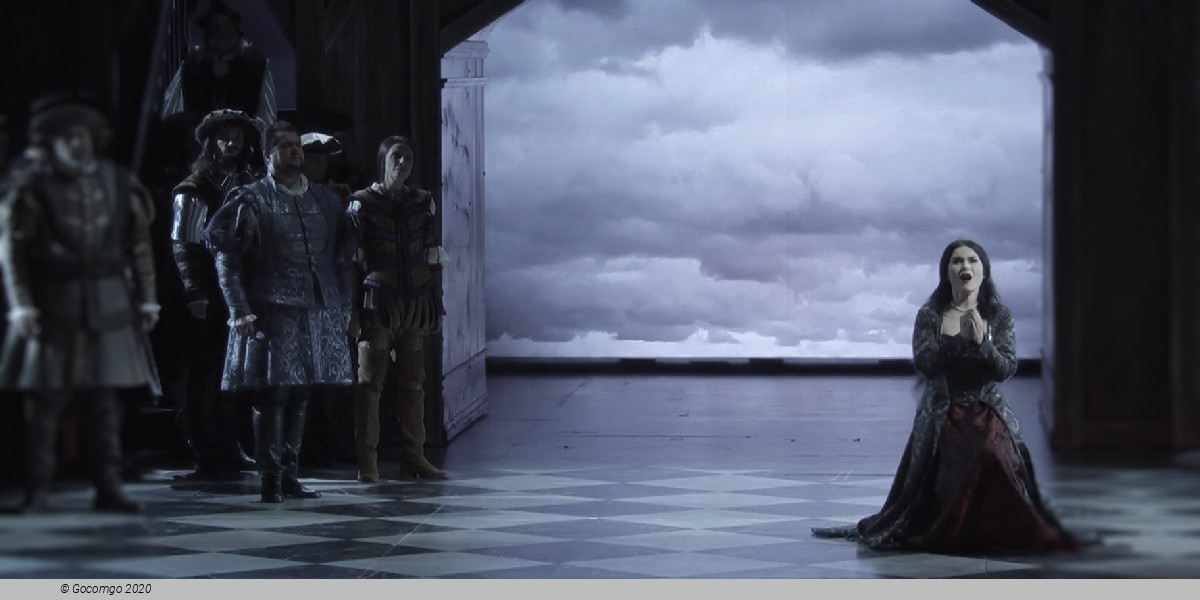
In Anna's cell, a chorus of ladies comment on her madness and grief. Anna enters, she imagines that it is her wedding day to the king. Then she imagines that she sees Percy, and she asks him to take her back to her childhood home (Donizetti used the theme from the English/American song Home Sweet Home as part of Anna’s Mad Scene to underscore her longing). Percy, Rochefort and Smeaton are brought in. Smeaton throws himself at Anna's feet and says that he accused her in the belief that he was saving her life. In her delirium, Anna asks him why he is not playing his lute. The sound of cannon is heard. Anna comes to her senses. She is told that Jane and Henry VIII are being acclaimed by the populace on their wedding day. Anna says that she does not invoke vengeance on the wicked couple. She faints. Guards enter to lead the prisoners to the block. Smeaton, Percy and Rochefort say that one victim has already been sacrificed.

Venue Info

Teatro Alla Scala - Milan
Location   Via Filodrammatici, 2

Teatro Alla Scala is an opera house in Milan. Most of Italy's greatest operatic artists, and many of the finest singers from around the world, have appeared at La Scala. The theatre is regarded as one of the leading opera and ballet theatres globally. It is home to the La Scala Theatre Chorus, La Scala Theatre Ballet, La Scala Theatre Orchestra, and the Filarmonica della Scala orchestra.

The Teatro alla Scala was founded, under the auspices of the Empress Maria Theresa of Austria, to replace the Royal Ducal Theatre, which was destroyed by fire on 26 February 1776 and had until then been the home of opera in Milan. The cost of building the new theatre was borne by the owners of the boxes at the Ducal, in exchange for possession of the land on which stood the church of Santa Maria alla Scala (hence the name) and for renewed ownership of their boxes. Designed by the great neoclassical architect Giuseppe Piermarini, La Scala opened on 3 August 1778 with Antonio Salieri's opera L'Europa riconosciuta, to a libretto by Mattia Verazi.

With the advent of Rossini in 1812 (La pietra del paragone), the Teatro alla Scala was to become the appointed place of Italian opera seria: of its history dating back more than a century and of its subsequent tradition up till the present. The catalogue of Rossini's works performed until 1825 included: Il turco in Italia, La Cenerentola, Il barbiere di Siviglia, La donna del lago, Otello, Tancredi, Semiramide and Mosé. During that period the choreographies of Salvatore Viganò (1769-181) and of Carlo Blasis (1795-1878) also widened the theatre's artistic supremacy to include ballet.

An exceptional new season of serious opera opened between 1822 and 1825, with Chiara e Serafina by Gaetano Donizetti (1797-1848) and Il pirata by Vincenzo Bellini (1801-1835). The later operas of Donizetti performed at La Scala were (until 1850) Anna Bolena, Lucrezia Borgia, Torquato Tasso, La fille du régiment, La favorita, Linda di Chamonix, Don Pasquale, and Poliuto. These were followed (until 1836) by Bellini's I Capuleti e i Montecchi, Norma, La sonnambula, Beatrice di Tenda and I puritani.

In 1839 Oberto Conte di San Bonifacio inaugurated the cycle of operas by Giuseppe Verdi (1813-1901), the composer whose name is linked more than any other to the history of La Scala. After the dismal failure of Un giorno di regno, Nabucco was performed in 1842. It was the first, decisive triumph of Verdi's career. At the same time, the strong patriotic feelings stirred by Nabucco founded the "popularity" of opera seria and identified its image with the Scala.

Arturo Toscanini (1867-1957) became the artistic director and introduced radical reform into the theatre, both in its organisational aspects and in its relations with the public. Toscanini, one of the greatest conductors of all time, took up Verdi's musical inheritance and launched a tradition of interpretation that continued uninterruptedly and was renewed during the twentieth century. It was he who reappraised and regularly performed at the Scala the works of Richard Wagner (hitherto only belatedly and inadequately recognised). He also firmly extended the Scala's orchestral repertoire to include symphonic music.

In 1948 maestro Guido Cantelli (1920-1956) made his debut and established himself as one of the leading postwar conductors. Numerous opera performances productions (the Wagnerian cycle conducted in 1950 by Wilhelm Furtwängler, the Verdi repertoire by Victor De Sabata, etc), concerts (Herbert von Karajan, Dimitri Mitropoulos, Bruno Walter, etc), singers (Maria Callas, Renata Tebaldi, Giuseppe Di Stefano, Mario Del Monaco, etc), ballet performances (Margot Fonteyn, Serge Lifar, Maya Plissetskaya, Rudolf Nureyev), and productions (Luchino Visconti, Giorgio Strehler) belong not only to the history of the Scala, but to that of the history of musical theatre since the war.

In 1965 Claudio Abbado made his début at the Scala and in 1972 was named conductor of the Scala Orchestra. Until 1986 he directed among other works Il barbiere di Siviglia, Cenerentola, L'Italiana in Algeri by Rossini, Simon Boccanegra, Macbeth and Don Carlo by Verdi, the recent Al gran sole carico d'amore by Luigi Nono, and Pelléas et Mélisande by Claude Debussy. He also conducted numerous concerts. The chorus-master was Romano Gandolfi. In 1975 the ballet dancer Oriella Dorella debuted at La Scala. Among other contemporary composers, up till 1986 the Theatre continued to give works by Luciano Berio (La vera storia), Franco Donatoni (Atem) and Karlheinz Stockhausen (Samstag aus Licht).

In 1981 Riccardo Muti debuted at the Scala as an opera conductor (Mozart, Le nozze di Figaro). Giulio Bertola was appointed to direct the Chorus. In 1982 the Orchestra Filarmonica della Scala was established. In 1985 Alessandra Ferri made her debut at the Scala. In 1986 Riccardo Muti was appointed musical director. From 1989 to 1998 he reintroduced the best-loved works (Rigoletto, La traviata, Macbeth, La forza del destino) and numerous other titles by Verdi including Falstaff and Don Carlo.

In 1991 Roberto Gabbiani took over the directorship of the chorus. In 1997 La Scala was converted into a Foundation under private ownership, thus opening a decisive phase of modernisation.

On 7 December 2001 a new production of Otello, conducted by Muti, concluded the Verdi Year and, for the time being, performances at Piermarini’s original building in Piazza Scala. Major restoration and modernisation works of the Theatre began in January 2002.

The 2005-2006 Season, dedicated to the 250th anniversary of Mozart’s birth, was inaugurated by Idomeneo conducted by Daniel Harding. The 2006/07 season saw the return on 7 December of an opera by Verdi, Aida, conducted by Riccardo Chailly, and the launch of the Celebrations for the 50th Anniversary of Arturo Toscanini’s Death. On 7 December 2007 the 2007/08 season opened with Tristan und Isolde conducted by Daniel Barenboim. The opera marked the beginning of a closer collaboration between the Teatro alla Scala and the Israeli-Argentinian Maestro.

Important Info
Type: Opera
City: Milan, Italy

E-tickets: Print at home or at the box office of the event if so specified. You will find more information in your booking confirmation email.

You can only select the category, and not the exact seats.
If you order 2 or 3 tickets: your seats will be next to each other.
If you order 4 or more tickets: your seats will be next to each other, or, if this is not possible, we will provide a combination of groups of seats (at least in pairs, for example 2+2 or 2+3).

From
$ 315
Top of page