
Teatro La Fenice tickets 2 October 2027 - Norma | GoComGo.com

Norma

Teatro La Fenice, La Fenice Opera House, Venice, Italy
All photos (5)
Select date and time
3:30 PM
From
US$ 157

E-tickets: Print at home or at the box office of the event if so specified. You will find more information in your booking confirmation email.

You can only select the category, and not the exact seats.
If you order 2 or 3 tickets: your seats will be next to each other.
If you order 4 or more tickets: your seats will be next to each other, or, if this is not possible, we will provide a combination of groups of seats (at least in pairs, for example 2+2 or 2+3).

Important Info
Type: Opera
City: Venice, Italy
Starts at: 15:30

E-tickets: Print at home or at the box office of the event if so specified. You will find more information in your booking confirmation email.

You can only select the category, and not the exact seats.
If you order 2 or 3 tickets: your seats will be next to each other.
If you order 4 or more tickets: your seats will be next to each other, or, if this is not possible, we will provide a combination of groups of seats (at least in pairs, for example 2+2 or 2+3).

Cast
Performers
Orchestra: La Fenice Orchestra
Conductor: Ramón Tebar
Mezzo-Soprano: Carlotta Vichi (Clotilde)
Bass: George Andguladze (Oroveso)
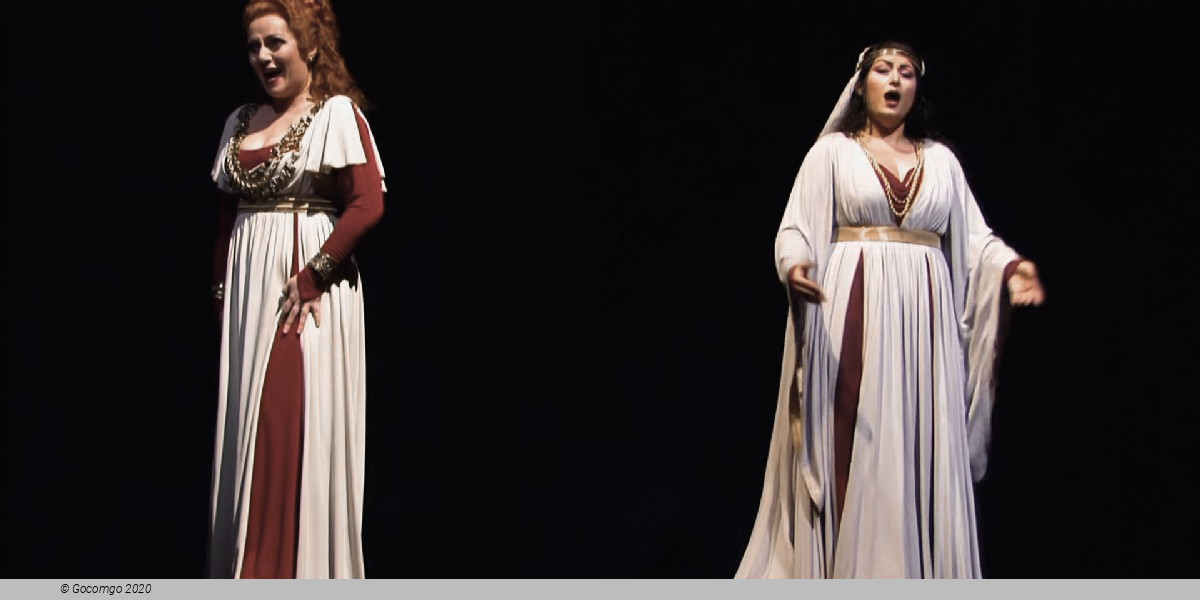
Soprano: Hasmik Torosyan (Adalgisa)
Soprano: Marigona Qerkezi (Norma)
Tenor: Martin Muehle (Pollione)
Tenor: Paolo Antognetti (Flavio)
Creators
Composer: Vincenzo Bellini
Librettist: Felice Romani
Director: Maria Todaro
Overview

Few operas combine lyrical beauty and dramatic intensity as powerfully as Vincenzo Bellini’s Norma. This La Fenice new production brings one of the defining masterpieces of the bel canto repertoire to the stage, revealing the extraordinary emotional range of Bellini’s music through a story of love, betrayal, duty, and sacrifice.

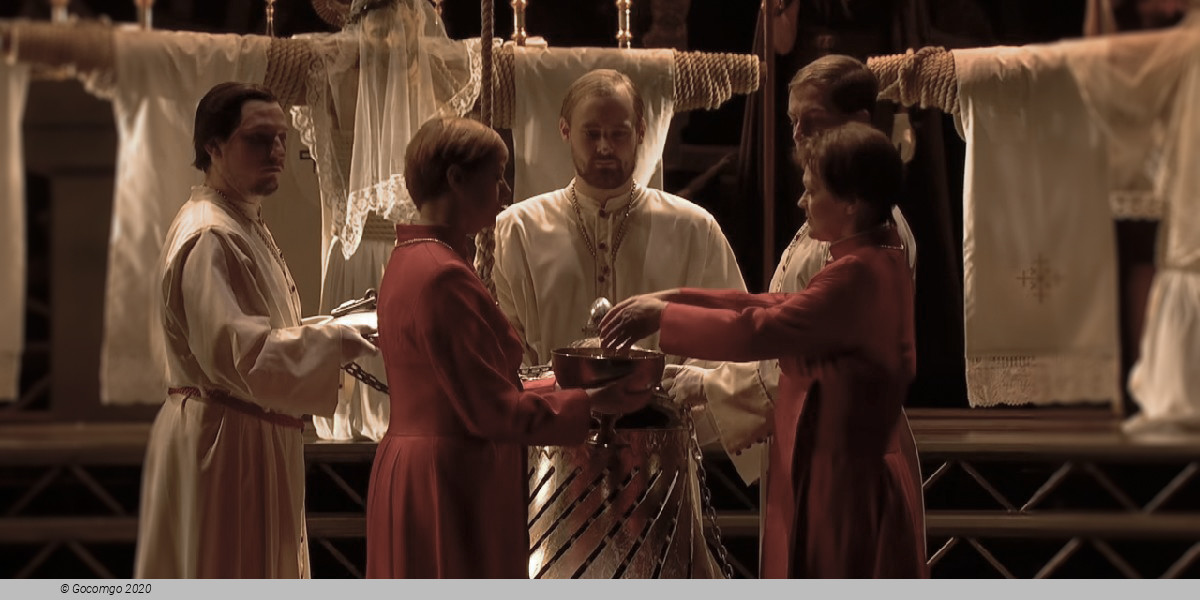
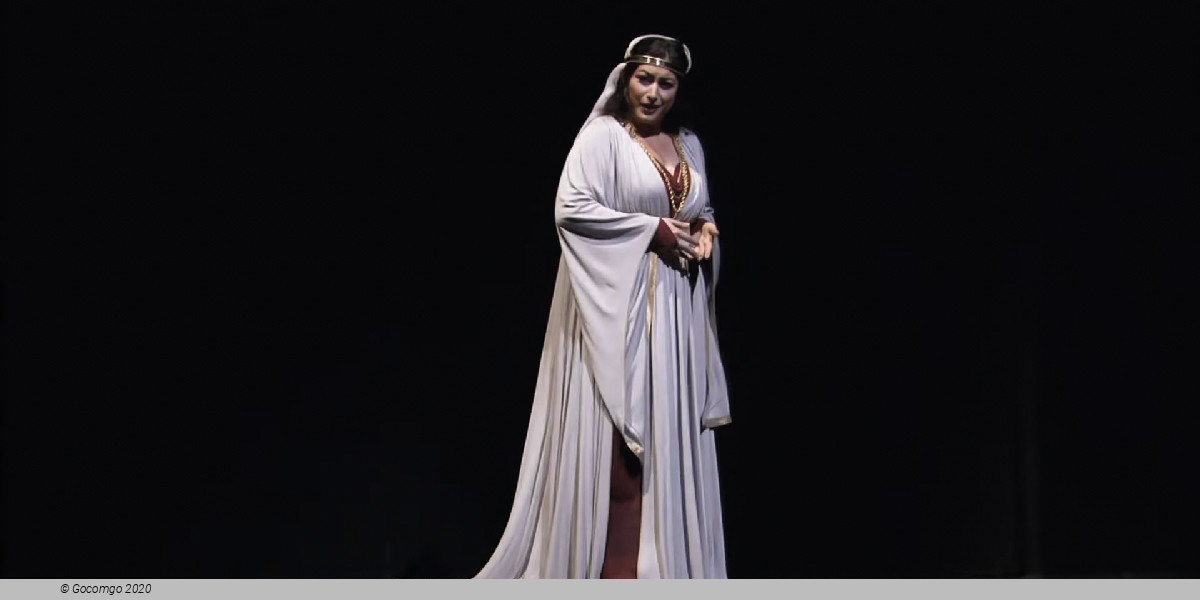
Set in ancient Gaul under Roman occupation, the opera centres on Norma, a revered Druid priestess who secretly loves the Roman proconsul Pollione. Their relationship has already produced two children, but Pollione has fallen in love with another young priestess, Adalgisa. When Norma discovers his betrayal, her personal suffering becomes inseparable from her responsibilities to her people and her sacred vows. As private passions collide with political and religious conflict, the drama moves towards a powerful and deeply moving resolution.

Bellini’s score is celebrated for its long, flowing melodies and extraordinary vocal demands. The famous aria “Casta diva” stands at the heart of the work, but its musical richness extends far beyond this iconic moment. Intimate duets, dramatic ensembles, and richly expressive orchestral passages create a continuous emotional arc, allowing the characters’ conflicting desires to emerge with remarkable clarity.

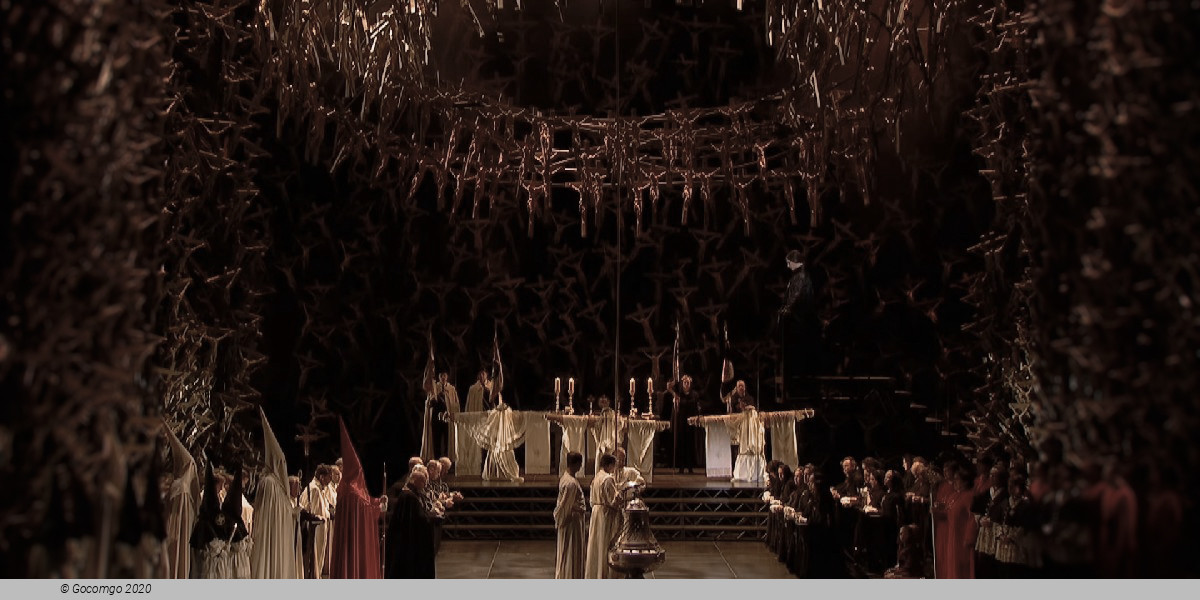
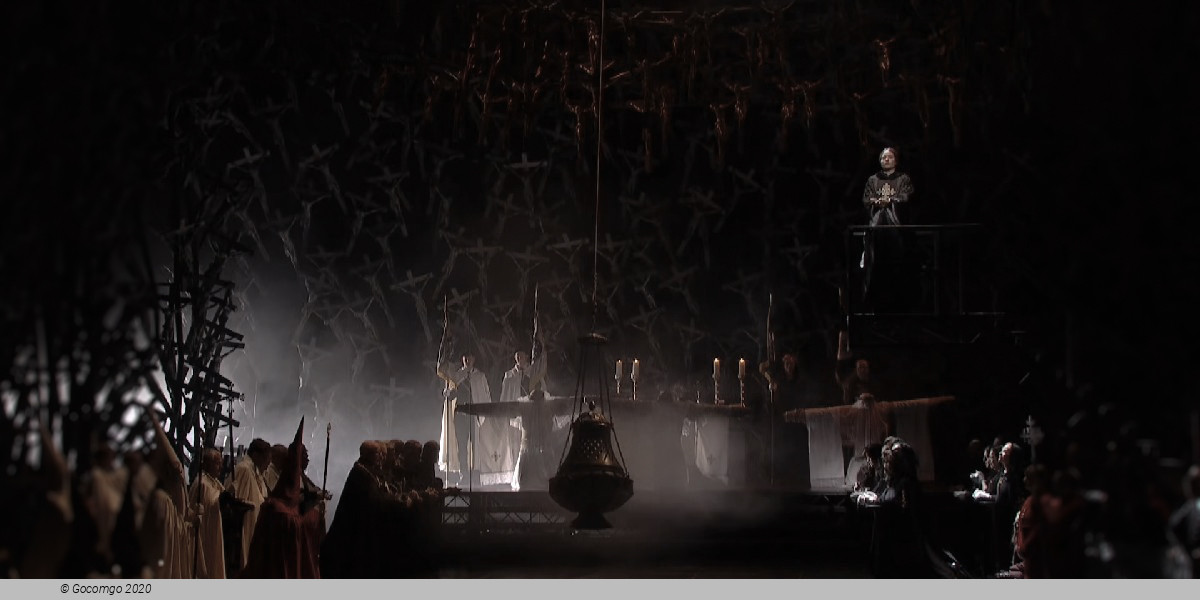
La Fenice new staging
Cooperating with Rustaveli National Theatre

History
Premiere of this production: 26 December 1831, Teatro alla Scala, Milan

Norma by Alexandre Soumet. It was first produced at La Scala in Milan on 26 December 1831. The opera is regarded as a leading example of the bel canto genre, and the soprano prayer "Casta diva" in act 1 is a famous piece.

Synopsis


Act 1
Sinfonia
Scene 1: The grove of the druids

Oroveso leads the druids in a procession in the forest to pray for victory against the invading Romans: (Oroveso and druids: "Ite sul colle, o Druidi" / "Go up on the hill, O druids"). The druids pray that Norma will come and have the courage to broker peace with the Romans: (Druids and Oroveso: "Dell'aura tua profetica" / "With thy prophetic aura, imbue her, O terrible God".) All leave to go to the temple.

Pollione and Flavio enter. Although Norma has secretly broken her vows in order to love him and has borne him two children, Pollione tells Flavio that he no longer loves her, having fallen in love with the priestess Adalgisa. But he expresses some remorse, describing his dream in which Adalgisa was beside him at the altar of Venus and a huge storm arose: (Pollione, aria: "Meco all'altar di Venere" / "With me at the altar in Rome was Adalgisa dressed in white, veiled all in white.") The storm presaged disaster for them both: "Thus does Norma punish her faithless lover," he declares. They hear the trumpets sounding to announce Norma's arrival. Flavio urges his friend to leave, but Pollione stands firm, proclaiming that he will confront them with a superior power and overthrow their altars: (Cabaletta: "Me protegge, me difende" / "I am protected and defended")

As Norma leads the druids and priestesses, the crowd proclaims: "Norma viene" / "Norma is coming" and, as Oroveso awaits her, they describe her dress and manner. All kneel as she approaches. "The time is not ripe for our revenge", she declares, stating that Rome will perish one day by being worn down. Then, with the mistletoe in hand, she approaches the altar with a plea to the moon (the "Chaste Goddess"): (cavatina: "Casta diva" / "Chaste goddess"). Continuing, she pleads that the goddess shed upon earth that peace which she has created in heaven. She calls for all to complete the rites and then clear the uninitiated from the grove. To herself, she declares that she cannot hurt Pollione, but desires that things return to where they used to be: (Cabaletta: "Ah! bello a me ritorna" / "Return to me, O beautiful one"). The assembled crowd accepts her cautious approach, and all leave the grove.

Later that night: The Temple of Irminsul in the grove

Adalgisa prays at the temple, remembering with some sorrow how she became involved with Pollione. He enters, telling her that she prays to a cruel god and is not trying to invoke the god of love. While she appears to reject him, he declares (Aria: "Va crudele" /"Go, O cruel one") but he is convinced that he cannot leave her; he is distraught, but she is equally torn, until the moment when he declares that he must return to Rome the following day. He begs Adalgisa to go with him: (Duet: Pollione, then Adalgisa, then together: "Vieni in Roma" / "Come to Rome"). She resists him, but finally appears to agree that they will leave together the following day.

Scene 2: Norma's dwelling

Alessandro Sanquirico's set design for act 1, scene 2, for the original production
Norma appears to be upset and orders her maid, Clotilde, to take the two children away from her, expressing very conflicted feelings about them. She tells Clotilde that Pollione has been recalled to Rome, but does not know if he will take her or how he feels about leaving his children. As Adalgisa approaches, the children are taken away.

Adalgisa tells Norma she has fallen in love with a Roman, whom she does not name. As she describes how she fell in love while waiting at the temple and seeing "his handsome face" appear, Norma recalls (as an aside) her own feelings for Pollione ("my passions, too, burned like this"), and more and more, their experiences of falling in love run parallel: (Norma and Adalgisa, duet: "Sola, furtiva al tempio" / "Often I would wait for him"). Adalgisa pleads for help and forgiveness, and Norma pledges that she will do that and will also free her from her vows as a priestess: (Norma: "Ah! sì, fa core, abbracciami" / "Yes, take heart, embrace me". Adalgisa: "Ripeti, o ciel, ripetimi" / "Say that again, heavens, say again")

Norma asks Adalgisa to describe the man whom she loves. Responding, she tells her that he is a Roman, and, at that moment, turns to indicate that it is Pollione who is just then entering the room. As Norma furiously turns to confront Pollione, Adalgisa is confused: Norma: "Oh! non tremare, o perfido" / "O faithless man, do not tremble".

Forcing the priestess to realise that she is the victim of a huge deception, Norma addresses Adalgisa. (Trio: each sings in succession, beginning with Norma: "Oh! di qual sei tu vittima" / "Oh, you are the victim"; then Adalgisa: "Oh! qual traspare orribile" / "What horror has been revealed"; then the two women together, followed by Pollione alone: "Norma! de' tuoi rimproveri" / "Norma, do not reproach me now", continuing with "Please give this wretched girl some respite"; after which all three repeat their words, singing at first singly, then together.)

There follow angry exchanges among the three, Norma declaring Pollione to be a traitor; he trying to persuade Adalgisa to leave with him; and she angrily telling him to go away. When he declares that it is his fate to leave Norma, she encourages the young priestess to go with him, but the latter declares that she would rather die. Norma then demands that her lover go, leaving behind his children—and his honour. (Finale: brief duet, Adalgisa and Pollione: he declares his love, and she her desire to Norma not to be the cause of grief to her. Trio: Norma continues to rage at Pollione, Adalgisa repeats her desire to make him return to Norma, and Pollione curses the day when he met Norma.) Then the sound of the druids calling Norma to the temple is heard. They report that the angry god, Irminsul, has spoken. Pollione storms out.

Act 2
Orchestral introduction
Scene 1: Norma's dwelling
Norma looks at both of her sons, who are asleep. She considers killing them. Advancing towards them with knife upraised, she hesitates. (Recitative: "Dormono entrambi ... non vedran la mano che li percuote" / "They are both asleep ... they shall not see the hand which strikes them.") But she cannot bring herself to do it: (Aria: "Teneri, teneri figli" / "My dear, dear sons") The children wake up and she calls for Clotilde, demanding that Adalgisa be brought to her.

The young priestess enters, concerned at how pale Norma looks. Norma makes her swear to do everything she asks and, upon her agreement, tells her that she is entrusting the two children to her care and states that they should be taken to the Roman camp to their father Pollione, a man whom she hopes will make a better mate for Adalgisa than he was for her. Adalgisa is aghast. Norma: "I beg you for his children's sake." (Duet, first Norma: "Deh! con te, con te li prendi" / "Please, take them with you") Adalgisa tells her that she will never leave Gaul and only agreed to the request in order to do what was good for Norma. (Duet, Adalgisa: "Vado al campo") In the duet, Adalgisa agrees to go to the Roman camp and tell Pollione of Norma's grief but her hope is to persuade him to return to Norma. She then renounces Pollione: (Duet: "Mira, o Norma" / "Look, o Norma") They sing together, each expressing her own thoughts and feelings until Norma realises that Adalgisa will give up Pollione and remain with her: (Cabaletta: Duet, Norma and Adalgisa: "Si fino all'ore estreme" / "Until the last hour")

Scene 2: The grove
The druid warriors gather and prepare themselves to attack the Romans. Oroveso enters with news from the gods: the time has not arrived to strike. Somewhat frustrated, the soldiers accept the decision.

Scene 3: The temple of Irminsul
Norma enters. (Aria: "Ei tornerà" / "He will come back") Then Clotilde arrives with news that Adalgisa has failed to persuade Pollione to return. Although Norma questions whether she should have trusted her, she then learns from her servant that Adalgisa is returning and wishes to take her vows at the altar and that the Roman has sworn to abduct her from the temple. In anger, Norma strikes a gong-like shield as a summons to war. Trumpets sound and Oroveso and the druids all rush in, demanding to know what is happening. They hear Norma's answer and the soldiers take up the refrain: "Guerra, guerra!" / "War, war!", while Norma proclaims "Blood, blood! Revenge!"

In order for Norma to complete the rites to authorise going to war, Oroveso demands to know who will be the sacrificial victim. At that moment, Clotilde rushes in to announce that a Roman has desecrated the temple, but that he has been apprehended. It is Pollione who is led in, and Norma is urged to take the sacrificial knife to stab him but, approaching him, she is unable to perform the deed. The assembled crowd demands to know why, but she dismisses them, stating that she needs to question her victim.

The crowd departs: (Duet, Norma and Pollione: "In mia man alfin tu sei" / "At last you are in my hands"). Norma demands that he forever shun Adalgisa; only then will she release him and never see him again. He refuses, and she vents her anger by telling him that she will then kill her children. "Strike me instead", he demands, "so that only I alone will die", but she quickly asserts that not only will all the Romans die, but so will Adalgisa, who has broken her vows as a priestess. This prompts him to plead for her life. (Cabaletta: Norma and Pollione: "Già mi pasco ne' tuoi sguardi" / "Already I take pleasure in the looks you give me".) When Pollione demands the knife, she calls the priests to assemble. Norma announces that it would be better to sacrifice a priestess who has broken her vows, and orders the pyre to be lit. Oroveso demands to know who is to be sacrificed while Pollione begs that she stays silent. Norma then wonders to herself if she is not in fact the guilty one, then reveals that it is she who is to be the victim: a high priestess who has broken her vows, has become involved with the enemy, and has borne his children. (Aria, Norma to Pollione: "Qual cor tradisti" / "The heart you betrayed"; Duet: Norma and Pollione; ensemble, Norma, Oroveso, Pollione, druids, priests: each expresses his/her sorrow, anger, pleas to Norma, with Oroveso learning for the first time that Norma is a mother.)

In the concerted finale, Norma pleads with Oroveso to spare her children ("Deh! non volerli vittime" / "Please don't make them victims"). As she prepares to leap into the flames, the re-enamoured Pollione joins her, declaring "your pyre is mine as well. There, a holier and everlasting love will begin".

Venue Info

Teatro La Fenice - Venice
Location   Campo San Fantin, 1965

Teatro La Fenice is an opera house in Venice. It is one of "the most famous and renowned landmarks in the history of Italian theatre", and in the history of opera as a whole. Especially in the 19th century, La Fenice became the site of many famous operatic premieres at which the works of several of the four major bel canto era composers – Rossini, Bellini, Donizetti, Verdi – were performed.

Its name reflects its role in permitting an opera company to "rise from the ashes" despite losing the use of three theatres to fire, the first in 1774 after the city's leading house was destroyed and rebuilt but not opened until 1792; the second fire came in 1836, but rebuilding was completed within a year. However, the third fire was the result of arson. It destroyed the house in 1996 leaving only the exterior walls, but it was rebuilt and re-opened in November 2004. In order to celebrate this event the tradition of the Venice New Year's Concert started.

Seven old theaters were active in Venice at the end of the eighteenth century, two for the production of plays and the others for music. The grandest of these was the Teatro San Benedetto, which stood on the site currently occupied by the Rossini cinema. Built by the Grimani family in 1755, it was subsequently assigned to the Nobile Società di Palchettisti (Noble Association of Box-holders). However, following a judicial ruling in 1787, this association was expelled and forced to give up the opera house to the noble Venier family, the owners of the land on which it was built. The association immediately proposed building a larger and more sumptuous opera house than the one it had lost, which would become the symbol of their changing fortunes and their capacity for ′rebirth′. It was therefore to be called La Fenice, like the mythical, immortal bird able to rise out of its own ashes, to symbolize the association's splendid rebirth after its misfortunes.

The piece of land between Contrada Santa Maria Zobenigo and Contrada Sant'Angelo was bought for the purpose in 1790 and the private houses on it were demolished. A competition was then announced for the design of the opera house, and the committee of experts selected the work of the architect Giannantonio Selva from the 29 plans submitted. Work began in 1791 and was completed just 18 months later, in April 1792. La Fenice immediately made its mark as one of the leading opera houses, noted in Italy and Europe both for the high artistic quality of its work and the splendour of its building. But, almost as if the name were the bearer of bad omens, on the night of 13 December 1836 the opera house was devastated by a first fire caused by a recently installed Austrian heater. The newspapers said it took three days and three nights to put out the fire and that various hotspots were still smouldering among the debris 18 days later. The flames entirely destroyed the house, and only the foyer and the Sale Apollinee were saved. The association decided to proceed with its immediate reconstruction. It appointed the architect Giambattista Meduna and his engineer brother Tommaso to carry out the work, while Tranquillo Orsi was responsible for the decorations. The work began in February 1837 and performances were temporarily staged in the Teatro Apollo (previously the San Luca, now Goldoni).

Everything was completed in record time. By the evening of 26 December of the same year, the new opera house, reborn in the new artistic style of the age, was opened to the public. The speed of the work, however, led to urgent restoration works to the framework being required as early as 1854 and, again under the direction of Giambattista Meduna, the house was redecorated in a style that remained unchanged until 1996. On 23 July 1935, the box-holder owners ceded their share in the opera house to the Comune di Venezia, so it went from private to public ownership, and in 1937-8 part of the building was subject to further major restorations and alterations by engineer Eugenio Miozzi. On the night of 29 January 1996, during a period of closure for restoration works, a second fire – as the Myth said – this time arson, completely destroyed the house and most of the Sale Apollinee. Once again La Fenice rose again, faithfully reconstructed to a plan by the architect Aldo Rossi, and was reopened on 14 December 2003.

First theatre
In 1774, the Teatro San Benedetto, which had been Venice's leading opera house for more than forty years, burned to the ground. By 1789, with interest from a number of wealthy opera lovers who wanted a spectacular new house, "a carefully defined competition" was organized to find a suitable architect. It was won by Gianantonio Selva who proposed a neoclassical style building with 170 identical boxes in tiers in a traditional horseshoe shaped auditorium, which had been the favoured style since it was introduced as early as 1642 in Venice. The house would face on one side a campo, or small plaza, and on the other a canal, with an entrance which gave direct access backstage and into the theatre.

However, the process was not without controversy especially in regard to the aesthetics of the building. Some thirty responses were received and, as Romanelli accounts, Selva's was designated as the design to be constructed, the actual award for best design went to his chief rival, Pietro Bianchi. However, Selva's design and finished opera house appears to have been of high quality and the one best suited to the limitations of the physical space it was obliged to inhabit.

Construction began in June 1790, and by May 1792 the theatre was completed. It was named "La Fenice", in reference to the company's survival, first of the fire, then of the loss of its former quarters. La Fenice was inaugurated on 16 May 1792, with an opera by Giovanni Paisiello entitled I giuochi d'Agrigento set to a libretto by Alessandro Pepoli.

But no sooner had the opera house been rebuilt than a legal dispute broke out between the company managing it and the owners, the Venier family. The issue was decided in favor of the Veniers.

At the beginning of the 19th century, La Fenice acquired a European reputation. Rossini mounted two major productions there: Tancredi in 1813 and Semiramide in 1823. Two of Bellini's operas were given their premieres there: I Capuleti e i Montecchi in March 1830 and Beatrice di Tenda in March 1833. Donizetti, fresh from his triumphs at La Scala in Milan and at the Teatro di San Carlo in Naples, returned to Venice in 1836 with his Belisario, after an absence of seventeen years.

Second theatre
In December 1836, disaster struck again when the theatre was destroyed by fire. However, it was quickly rebuilt with a design provided by the architect-engineer team of the brothers Tommaso and Giovanni Battista Meduna. The interior displays a late-Empire luxury of gilt decorations, plushy extravagance and stucco. La Fenice once again rose from its ashes to open its doors on the evening of 26 December 1837.

Giuseppe Verdi's association with La Fenice began in 1844, with the premiere performance of Ernani during the carnival season. Over the next 13 years, the premieres of Attila, Rigoletto, La traviata, and Simon Boccanegra took place there.

During the First World War, La Fenice was closed, but it reopened to become the scene of much activity, attracting many of the world's greatest singers and conductors. In 1930, the Venice Biennale initiated the First International Festival of Contemporary Music, which brought such composers as Stravinsky and Britten, and more recently Berio, Nono, and Bussotti, to write for La Fenice.

On 29 January 1996, La Fenice was completely destroyed by fire. Only its acoustics were preserved, since Lamberto Tronchin, an Italian acoustician, had measured the acoustics two months earlier.

Arson was immediately suspected. In March 2001, a court in Venice found two electricians, Enrico Carella and his cousin Massimiliano Marchetti, guilty of setting the fire. They appeared to have set the building ablaze because their company was facing heavy fines over delays in repair work in which they were engaged. Carella, the company's owner, disappeared after a final appeal was turned down. He had been sentenced to seven years in prison. Marchetti surrendered and served a six-year sentence. Ultimately, Carella was arrested in February 2007 at the Mexico-Belize border, was extradited to Italy, and was released on day parole after serving 16 months.

Present theatre
After various delays, reconstruction began in earnest in 2001. In 650 days, a team of 200 plasterers, artists, woodworkers, and other craftsmen succeeded in recreating the ambiance of the old theatre, at a cost of some €90 million. As Gillian Price notes, "This time round, thanks to an enlightened project by late Italian architect Aldo Rossi and the motto 'how it was, where it was', it has been fitted out with extra rehearsal areas and state-of-the-art stage equipment, while the seating capacity has been increased from 840 to 1000."

La Fenice was rebuilt in 19th-century style on the basis of a design by architect Aldo Rossi who, in order to obtain details of its design, used still photographs from the opening scenes of Luchino Visconti's film Senso (1954), which had been filmed in the house. La Fenice reopened on 14 December 2003 with an inaugural concert of Beethoven, Wagner, and Stravinsky. The first staged opera was a production of La traviata, in November 2004.

Critical response to the rebuilt La Fenice was mixed. The music critic of the paper Il Tempo, Enrico Cavalotti, was satisfied. He found the colors a bit bright but the sound good and compact. However, for his colleague Dino Villatico of the La Repubblica, the acoustics of the new hall lacked resonance, and the colours were painfully bright. He found it "kitsch, a fake imitation of the past". He said that "the city should have had the nerve to build a completely new theater; Venice betrayed its innovative past by ignoring it".

Important Info
Type: Opera
City: Venice, Italy
Starts at: 15:30
Top of page