
Teatro La Fenice: Hänsel und Gretel Tickets | Event Dates & Schedule | GoComGo.com

Hänsel und Gretel Tickets

Teatro La Fenice, Venice, Italy
All photos (8)
1 / 8
Available Dates: 19 - 27 Feb, 2027 (5 events)
Important Info
Type: Opera
City: Venice, Italy
Acts: 3

E-tickets: Print at home or at the box office of the event if so specified. You will find more information in your booking confirmation email.

You can only select the category, and not the exact seats.
If you order 2 or 3 tickets: your seats will be next to each other.
If you order 4 or more tickets: your seats will be next to each other, or, if this is not possible, we will provide a combination of groups of seats (at least in pairs, for example 2+2 or 2+3).

Cast
Performers
Choose the date to see the peformers
Creators
Composer: Engelbert Humperdinck
Librettist: Adelheid Wette
Author: Brothers Grimm
Director: Cecilia Ligorio
Overview

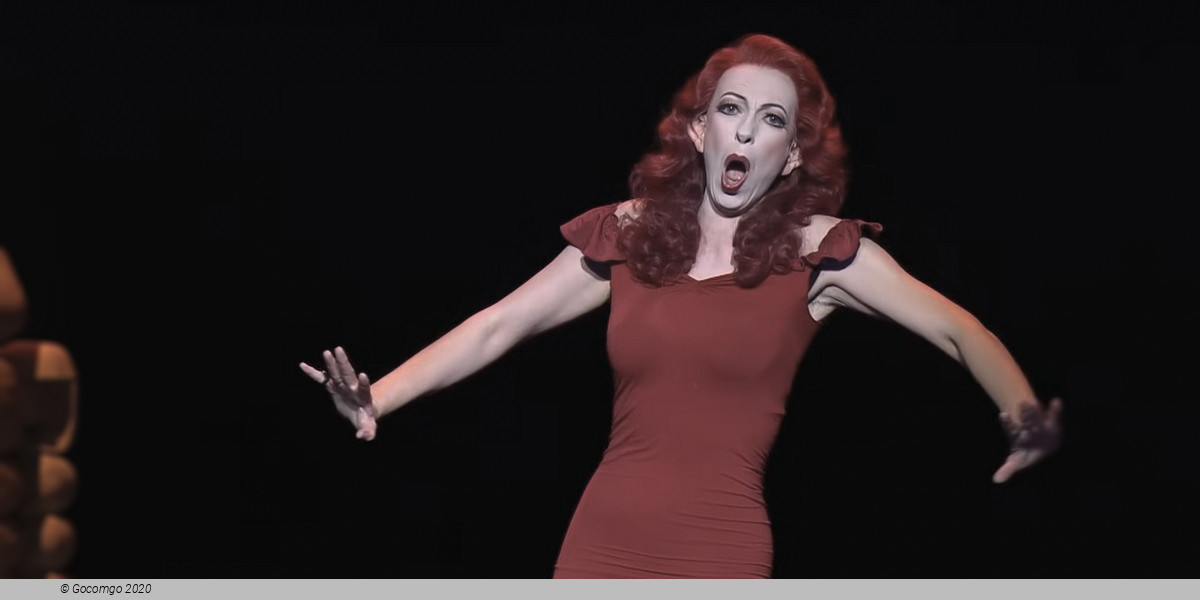
Step into a world of fairy-tale enchantment with Engelbert Humperdinck’s Hänsel und Gretel. Inspired by the beloved Brothers Grimm tale, this charming opera combines the atmosphere of a traditional fairy tale with richly lyrical music, colourful orchestration, and a story filled with adventure, danger, and imagination. It is an ideal choice for audiences discovering opera as well as for those returning to a cherished classic.

Engelbert Humperdinck was part of Wagner’s inner circle of disciples (the so-called ‘Knights of the Grail’). Devoted to the Master of Leipzig – whom he idolised, despite his teachers, who were diehard anti-Wagnerians – he did not hesitate to offer him his full collaboration during the composition of Parsifal and the preparation of the opera’s premiere in Bayreuth. Wagner’s influence is evident in Hänsel und Gretel, which is returning to Venice after more than thirty years.

Humperdinck’s score is one of the great treasures of German Romantic opera. Drawing on folk-inspired melodies and Wagnerian orchestral richness, it creates a vivid musical landscape in which the innocence of childhood is balanced by moments of suspense and mystery. The famous Evening Prayer is among the work’s most beautiful passages, while the lively dances, atmospheric orchestral scenes, and colourful ensembles bring the fairy-tale world vividly to life.

La Fenice new staging

History
Premiere of this production: 23 December 1893, Hoftheater in Weimar

Hansel and Gretel is an opera by nineteenth-century composer Engelbert Humperdinck, who described it as a Märchenoper (fairy-tale opera). The libretto was written by Humperdinck's sister, Adelheid Wette, based on the Grimm brothers' fairy tale "Hansel and Gretel". It is much admired for its folk music-inspired themes, one of the most famous being the "Abendsegen" ("Evening Benediction") from act 2.

Synopsis

Act 1

Scene 1: At home

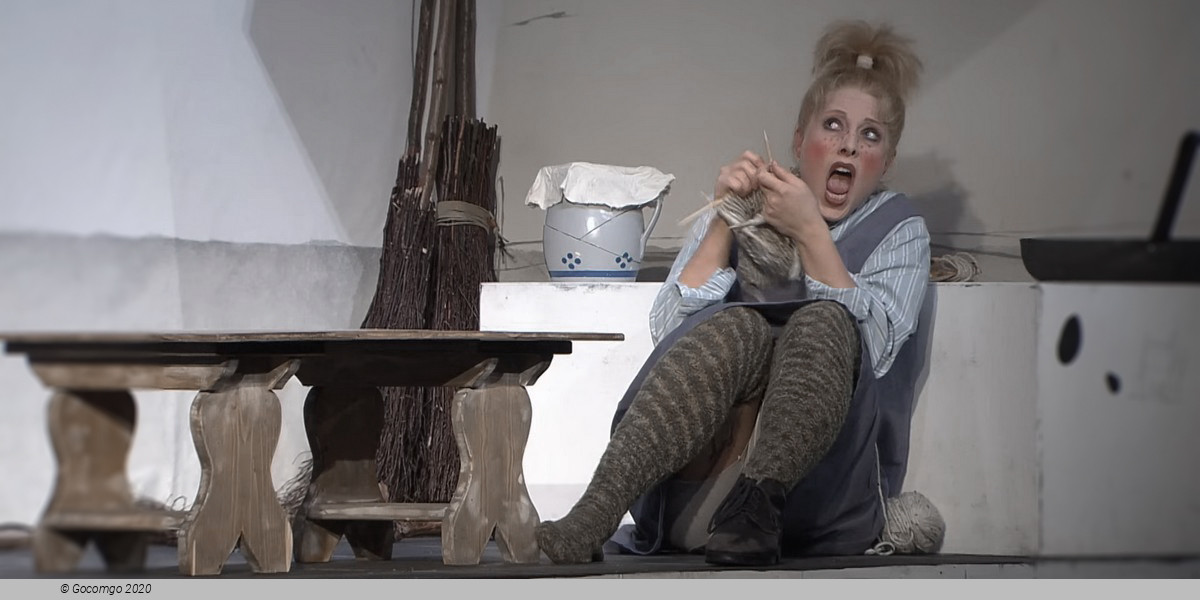
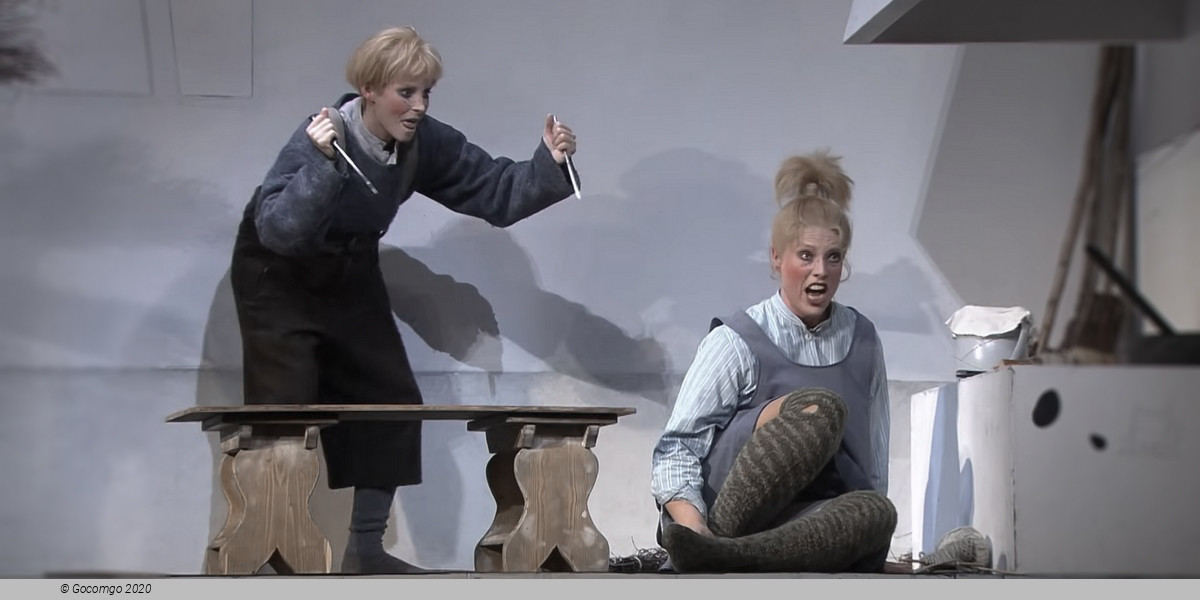
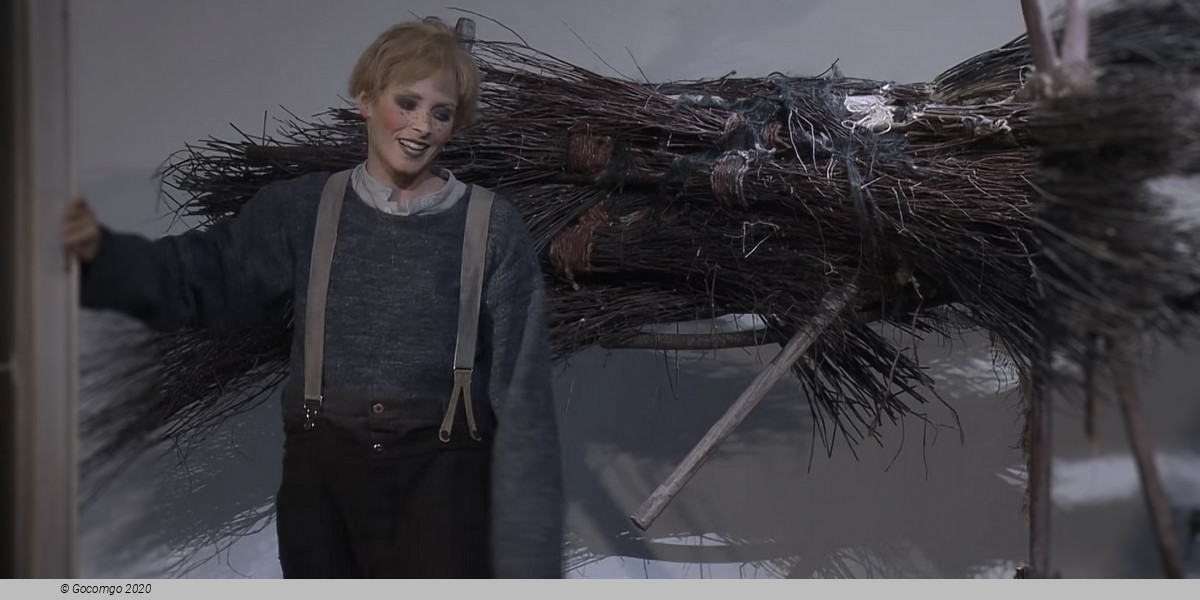
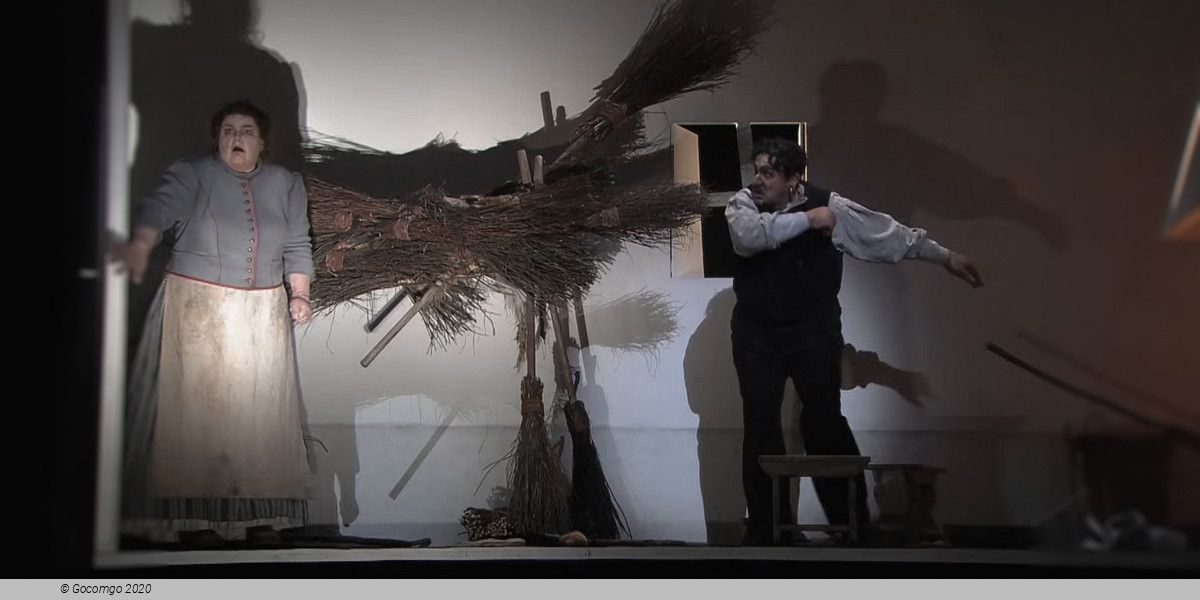
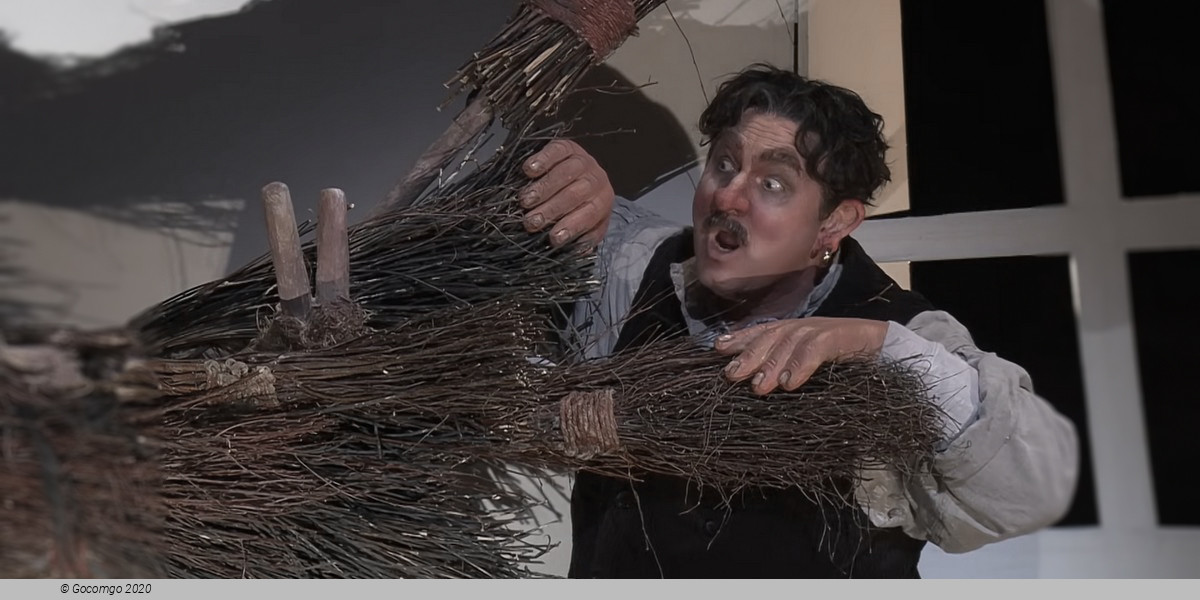
Gretel stitches a stocking, and Hansel is making a broom. Gretel sings to herself as she works. Hänsel mocks her, singing to the same tune a song about how hungry he is. He wishes for mother to come home. Gretel tells him to be quiet and reminds him of what father always says: "When the need is greatest, God the Lord puts out His hand." Hansel complains that one cannot eat words, and Gretel cheers him up by telling him a secret: A neighbor has given mother a jug of milk, and tonight she will make a rice pudding for them to eat. Hansel, excited, tastes the cream on the top of the milk. Gretel scolds him and tells him he should get back to work. Hansel says that he does not want to work, he would rather dance. Gretel agrees, and they begin to dance around.

Scene 2

Mother enters, and she is furious when she finds that Hansel and Gretel have not been working. As she threatens to beat them with a stick, she knocks over the jug of milk. Mother sends Hansel and Gretel to the haunted Ilsenstein forest to look for strawberries. Alone, she expresses her sorrow that she is unable to feed her children, and asks God for help.

Scene 3

From far off, father sings about how hungry he is. He bursts into the house, roaring drunk, and kisses mother roughly. She pushes him away and scolds him for being drunk. He surprises her by taking from his pack a feast: Bacon, butter, flour, sausages, fourteen eggs, beans, onions, and a quarter pound of coffee. He explains to her that beyond the forest, it is almost time for a festival, and everyone is cleaning in preparation. He went from house to house and sold his brooms at the highest prices. As father and mother celebrate, he suddenly stops and asks where the children are. Mother changes the subject to the broken jug, and after she finishes telling him the story, he laughs, then asks again after the children. She tells him that they are in the Ilsenstein forest. Suddenly scared, father tells her that the forest is where the evil Gingerbread Witch (literally, "Nibbling Witch") dwells. She lures children with cakes and sweets, pushes them into her oven, where they turn to gingerbread, and then eats them. Father and mother rush to the forest to search for their children.

Act 2

Here there is a prelude which begins the act, called the "Witch-ride". Sometimes, the two acts are linked to each other, and the prelude is treated as an interlude.

Scene 1: In the forest. Sunset.

Gretel weaves a crown of flowers as she sings to herself. Hansel searches for strawberries. As Gretel finishes her crown, Hansel fills his basket. Gretel tries to put the crown on Hansel, but, saying that boys do not play with things like these, he puts it on her head instead. He tells her that she looks like the Queen of the Wood, and she says that if that's so, then he should give her a bouquet, too. He offers her the strawberries. They hear a cuckoo calling, and they begin to eat the strawberries. As the basket empties, they fight for the remaining strawberries, and finally, Hansel grabs the basket and dumps the leftovers in his mouth. Gretel scolds him and tells him that mother will be upset. She tries to look for more, but it is too dark for her to see. Hansel tries to find the way back, but he cannot. As the forest darkens, Hansel and Gretel become scared, and think they see something coming closer. Hansel calls out, "Who's there?" and a chorus of echoes calls back, "He's there!" Gretel calls, "Is someone there?" and the echoes reply, "There!" Hansel tries to comfort Gretel, but as a little man walks out of the forest, she screams.

Scene 2

The Sandman, who has just walked out of the forest, tells the children that he loves them dearly, and that he has come to put them to sleep. He puts grains of sand into their eyes, and as he leaves they can barely keep their eyes open. Gretel reminds Hansel to say their evening prayer, and after they pray, they fall asleep on the forest floor.

Scene 3

Traumpantomime. Fourteen angels come out and arrange themselves around the children to protect them as they sleep. They are presented with a gift. The forest is filled with light as the curtain falls.

Act 3

Scene 1: In the forest.

The Dew Fairy comes to wake the children. She sprinkles dew on them, sings of how wonderful it is to be alive in the morning with the beauty of the forest surrounding her, and leaves as the children stir. Gretel wakes first, and wakes the sleepy Hansel. They tell each other of their mutual dream, of angels protecting them as they slept.

Scene 2

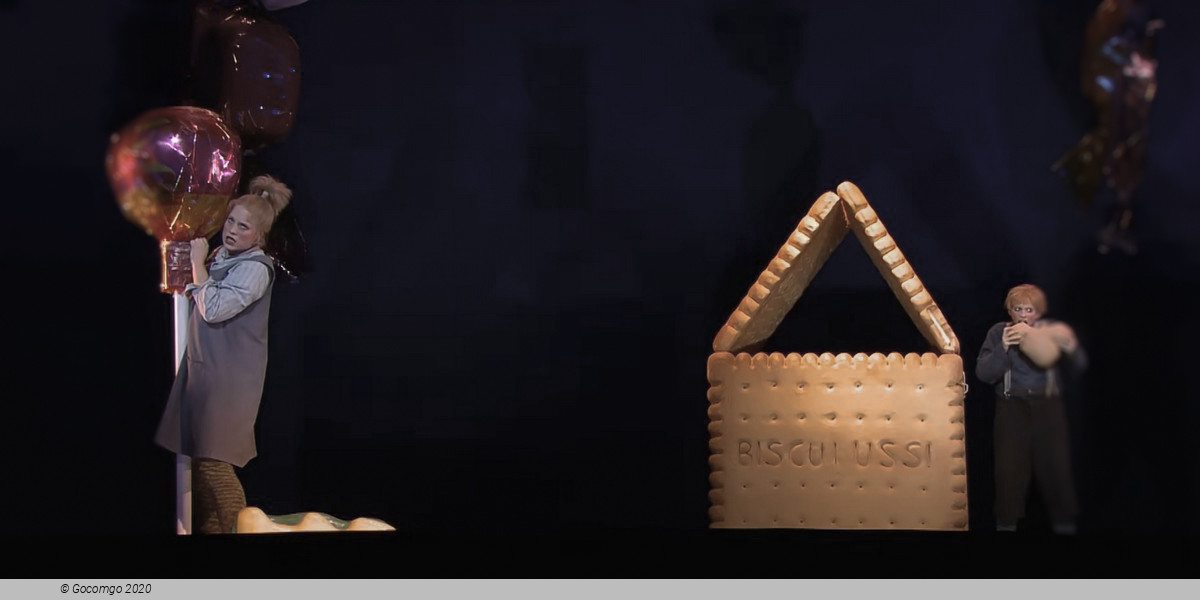
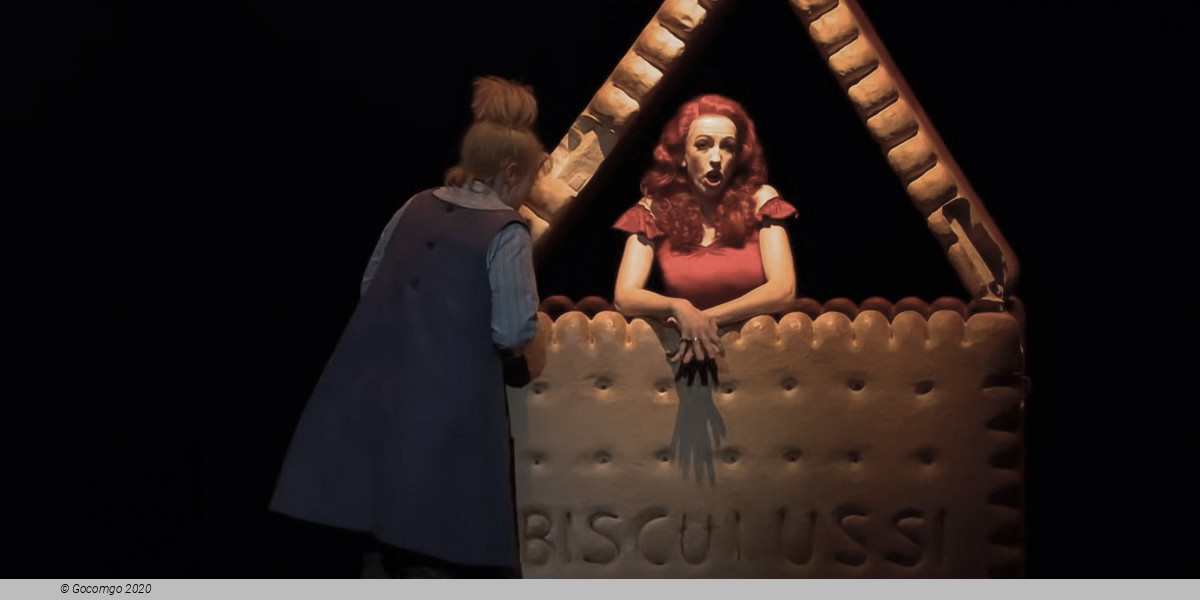
Suddenly they notice behind them a glorious gingerbread house. The roof is slated with cakes, the windows are of licorice, and the walls are decorated with cookies. On the left side is an oven, on the right side is a cage, and around it is a fence of gingerbread children. Unable to resist temptation, they take a little bit of the house and nibble on it.

Scene 3

As the children nibble, a voice calls out, "Nibbling, nibbling, little mouse! Who's nibbling on my little house?" Hansel and Gretel decide that the voice must have been the wind, and they begin to eat the house. As Hansel breaks off another piece of the house, the voice again calls out, "Nibbling, nibbling, little mouse! Who's nibbling on my little house?" Hansel and Gretel ignore the voice, and continue eating. The witch comes out of the house and catches Hansel with a rope. As Hansel tries to escape, the witch explains that she is Rosine Leckermaul (literally, "Rosina Tastymuzzle"), and that she likes nothing better than to feed children sweets. Hansel and Gretel are suspicious of the witch, so Hansel frees himself from the rope and he and Gretel begin to run away.

The witch takes out her wand and calls out, "Stop!" Hansel and Gretel are frozen to the spot where they stand. Using the wand, the witch leads Hansel to the cage. The witch leaves him stiff and slow of movement. She tells Gretel to be reasonable, and then the witch goes inside to fetch raisins and almonds with which to fatten Hansel. Hansel whispers to Gretel to pretend to obey the witch. The witch returns, and waving her wand, says, "Hocus pocus, holderbush! Loosen, rigid muscles, hush!" Using the wand, the witch forces Gretel to dance, then tells her to go into the house and set the table. Hansel pretends to be asleep, and the witch, overcome with excitement, describes how she plans to cook and eat Gretel.

The witch wakes up Hansel and has him show her his finger. He puts out a bone instead, and she feels it instead. Disappointed that he is so thin, the witch calls for Gretel to bring out raisins and almonds. As the witch tries to feed Hansel, Gretel steals the wand from the witch's pocket. Waving it towards Hansel, Gretel whispers, "Hocus pocus, holderbush! Loosen rigid muscles, hush!" As the witch turns around and wonders at the noise, Hansel discovers that he can move freely again.

The witch tells Gretel to peek inside the oven to see if the gingerbread is done. Hansel softly calls out to her to be careful. Gretel pretends that she does not know what the witch means. The witch tells her to lift herself a little bit and bend her head forward. Gretel says that she is "a goose" and doesn't understand, then asks the witch to demonstrate. The witch, frustrated, opens the oven and leans forward. Hansel springs out of the cage, and he and Gretel shove the witch into the oven. They dance. The oven begins to crackle and the flames burn fiercely, and with a loud crash it explodes.

Scene 4

Around Hansel and Gretel, the gingerbread children have turned back into humans. They are asleep and unable to move, but they sing to Hansel and Gretel, asking to be touched. Hansel is afraid, but Gretel strokes one on the cheek, and he wakes up, but is still unable to move. Hansel and Gretel touch all the children, then Hansel takes the witch's wand and, waving it, calls out the magic words, freeing the children from the spell.

Scene 5

Father is heard in the distance, calling for Hansel and Gretel. He and mother enter and embrace Hansel and Gretel. Meanwhile, the gingerbread children pull out from the ruins of the oven the witch, who has turned into gingerbread. Father gathers Hansel, Gretel and the other children around and tells them to look at this miracle. He explains that this is heaven's punishment for evil deeds and reminds them, "When the need is greatest, God the Lord puts out His hand."

Venue Info

Teatro La Fenice - Venice
Location   Campo San Fantin, 1965

Teatro La Fenice is an opera house in Venice. It is one of "the most famous and renowned landmarks in the history of Italian theatre", and in the history of opera as a whole. Especially in the 19th century, La Fenice became the site of many famous operatic premieres at which the works of several of the four major bel canto era composers – Rossini, Bellini, Donizetti, Verdi – were performed.

Its name reflects its role in permitting an opera company to "rise from the ashes" despite losing the use of three theatres to fire, the first in 1774 after the city's leading house was destroyed and rebuilt but not opened until 1792; the second fire came in 1836, but rebuilding was completed within a year. However, the third fire was the result of arson. It destroyed the house in 1996 leaving only the exterior walls, but it was rebuilt and re-opened in November 2004. In order to celebrate this event the tradition of the Venice New Year's Concert started.

Seven old theaters were active in Venice at the end of the eighteenth century, two for the production of plays and the others for music. The grandest of these was the Teatro San Benedetto, which stood on the site currently occupied by the Rossini cinema. Built by the Grimani family in 1755, it was subsequently assigned to the Nobile Società di Palchettisti (Noble Association of Box-holders). However, following a judicial ruling in 1787, this association was expelled and forced to give up the opera house to the noble Venier family, the owners of the land on which it was built. The association immediately proposed building a larger and more sumptuous opera house than the one it had lost, which would become the symbol of their changing fortunes and their capacity for ′rebirth′. It was therefore to be called La Fenice, like the mythical, immortal bird able to rise out of its own ashes, to symbolize the association's splendid rebirth after its misfortunes.

The piece of land between Contrada Santa Maria Zobenigo and Contrada Sant'Angelo was bought for the purpose in 1790 and the private houses on it were demolished. A competition was then announced for the design of the opera house, and the committee of experts selected the work of the architect Giannantonio Selva from the 29 plans submitted. Work began in 1791 and was completed just 18 months later, in April 1792. La Fenice immediately made its mark as one of the leading opera houses, noted in Italy and Europe both for the high artistic quality of its work and the splendour of its building. But, almost as if the name were the bearer of bad omens, on the night of 13 December 1836 the opera house was devastated by a first fire caused by a recently installed Austrian heater. The newspapers said it took three days and three nights to put out the fire and that various hotspots were still smouldering among the debris 18 days later. The flames entirely destroyed the house, and only the foyer and the Sale Apollinee were saved. The association decided to proceed with its immediate reconstruction. It appointed the architect Giambattista Meduna and his engineer brother Tommaso to carry out the work, while Tranquillo Orsi was responsible for the decorations. The work began in February 1837 and performances were temporarily staged in the Teatro Apollo (previously the San Luca, now Goldoni).

Everything was completed in record time. By the evening of 26 December of the same year, the new opera house, reborn in the new artistic style of the age, was opened to the public. The speed of the work, however, led to urgent restoration works to the framework being required as early as 1854 and, again under the direction of Giambattista Meduna, the house was redecorated in a style that remained unchanged until 1996. On 23 July 1935, the box-holder owners ceded their share in the opera house to the Comune di Venezia, so it went from private to public ownership, and in 1937-8 part of the building was subject to further major restorations and alterations by engineer Eugenio Miozzi. On the night of 29 January 1996, during a period of closure for restoration works, a second fire – as the Myth said – this time arson, completely destroyed the house and most of the Sale Apollinee. Once again La Fenice rose again, faithfully reconstructed to a plan by the architect Aldo Rossi, and was reopened on 14 December 2003.

First theatre
In 1774, the Teatro San Benedetto, which had been Venice's leading opera house for more than forty years, burned to the ground. By 1789, with interest from a number of wealthy opera lovers who wanted a spectacular new house, "a carefully defined competition" was organized to find a suitable architect. It was won by Gianantonio Selva who proposed a neoclassical style building with 170 identical boxes in tiers in a traditional horseshoe shaped auditorium, which had been the favoured style since it was introduced as early as 1642 in Venice. The house would face on one side a campo, or small plaza, and on the other a canal, with an entrance which gave direct access backstage and into the theatre.

However, the process was not without controversy especially in regard to the aesthetics of the building. Some thirty responses were received and, as Romanelli accounts, Selva's was designated as the design to be constructed, the actual award for best design went to his chief rival, Pietro Bianchi. However, Selva's design and finished opera house appears to have been of high quality and the one best suited to the limitations of the physical space it was obliged to inhabit.

Construction began in June 1790, and by May 1792 the theatre was completed. It was named "La Fenice", in reference to the company's survival, first of the fire, then of the loss of its former quarters. La Fenice was inaugurated on 16 May 1792, with an opera by Giovanni Paisiello entitled I giuochi d'Agrigento set to a libretto by Alessandro Pepoli.

But no sooner had the opera house been rebuilt than a legal dispute broke out between the company managing it and the owners, the Venier family. The issue was decided in favor of the Veniers.

At the beginning of the 19th century, La Fenice acquired a European reputation. Rossini mounted two major productions there: Tancredi in 1813 and Semiramide in 1823. Two of Bellini's operas were given their premieres there: I Capuleti e i Montecchi in March 1830 and Beatrice di Tenda in March 1833. Donizetti, fresh from his triumphs at La Scala in Milan and at the Teatro di San Carlo in Naples, returned to Venice in 1836 with his Belisario, after an absence of seventeen years.

Second theatre
In December 1836, disaster struck again when the theatre was destroyed by fire. However, it was quickly rebuilt with a design provided by the architect-engineer team of the brothers Tommaso and Giovanni Battista Meduna. The interior displays a late-Empire luxury of gilt decorations, plushy extravagance and stucco. La Fenice once again rose from its ashes to open its doors on the evening of 26 December 1837.

Giuseppe Verdi's association with La Fenice began in 1844, with the premiere performance of Ernani during the carnival season. Over the next 13 years, the premieres of Attila, Rigoletto, La traviata, and Simon Boccanegra took place there.

During the First World War, La Fenice was closed, but it reopened to become the scene of much activity, attracting many of the world's greatest singers and conductors. In 1930, the Venice Biennale initiated the First International Festival of Contemporary Music, which brought such composers as Stravinsky and Britten, and more recently Berio, Nono, and Bussotti, to write for La Fenice.

On 29 January 1996, La Fenice was completely destroyed by fire. Only its acoustics were preserved, since Lamberto Tronchin, an Italian acoustician, had measured the acoustics two months earlier.

Arson was immediately suspected. In March 2001, a court in Venice found two electricians, Enrico Carella and his cousin Massimiliano Marchetti, guilty of setting the fire. They appeared to have set the building ablaze because their company was facing heavy fines over delays in repair work in which they were engaged. Carella, the company's owner, disappeared after a final appeal was turned down. He had been sentenced to seven years in prison. Marchetti surrendered and served a six-year sentence. Ultimately, Carella was arrested in February 2007 at the Mexico-Belize border, was extradited to Italy, and was released on day parole after serving 16 months.

Present theatre
After various delays, reconstruction began in earnest in 2001. In 650 days, a team of 200 plasterers, artists, woodworkers, and other craftsmen succeeded in recreating the ambiance of the old theatre, at a cost of some €90 million. As Gillian Price notes, "This time round, thanks to an enlightened project by late Italian architect Aldo Rossi and the motto 'how it was, where it was', it has been fitted out with extra rehearsal areas and state-of-the-art stage equipment, while the seating capacity has been increased from 840 to 1000."

La Fenice was rebuilt in 19th-century style on the basis of a design by architect Aldo Rossi who, in order to obtain details of its design, used still photographs from the opening scenes of Luchino Visconti's film Senso (1954), which had been filmed in the house. La Fenice reopened on 14 December 2003 with an inaugural concert of Beethoven, Wagner, and Stravinsky. The first staged opera was a production of La traviata, in November 2004.

Critical response to the rebuilt La Fenice was mixed. The music critic of the paper Il Tempo, Enrico Cavalotti, was satisfied. He found the colors a bit bright but the sound good and compact. However, for his colleague Dino Villatico of the La Repubblica, the acoustics of the new hall lacked resonance, and the colours were painfully bright. He found it "kitsch, a fake imitation of the past". He said that "the city should have had the nerve to build a completely new theater; Venice betrayed its innovative past by ignoring it".

Important Info
Type: Opera
City: Venice, Italy
Acts: 3

E-tickets: Print at home or at the box office of the event if so specified. You will find more information in your booking confirmation email.

You can only select the category, and not the exact seats.
If you order 2 or 3 tickets: your seats will be next to each other.
If you order 4 or more tickets: your seats will be next to each other, or, if this is not possible, we will provide a combination of groups of seats (at least in pairs, for example 2+2 or 2+3).

From
$ 94
Top of page