


Municipal Theatre of Santiago tickets 22 August 2026 - Roméo et Juliette | GoComGo.com

Roméo et Juliette

Municipal Theatre of Santiago, Santiago, Chile
All photos (7)
Select date and time
5 PM
From
US$ 104

E-tickets: Print at home or at the box office of the event if so specified. You will find more information in your booking confirmation email.

You can only select the category, and not the exact seats.
If you order 2 or 3 tickets: your seats will be next to each other.
If you order 4 or more tickets: your seats will be next to each other, or, if this is not possible, we will provide a combination of groups of seats (at least in pairs, for example 2+2 or 2+3).

Important Info
Type: Opera
City: Santiago, Chile
Starts at: 17:00
Acts: 5

E-tickets: Print at home or at the box office of the event if so specified. You will find more information in your booking confirmation email.

You can only select the category, and not the exact seats.
If you order 2 or 3 tickets: your seats will be next to each other.
If you order 4 or more tickets: your seats will be next to each other, or, if this is not possible, we will provide a combination of groups of seats (at least in pairs, for example 2+2 or 2+3).

Cast
Performers
Conductor: Patrick Fournillier
Soprano: Isabela Díaz (Juliette)
Tenor: Leonardo Sanchez (Roméo)
Choir: Santiago Municipal Choir
Orchestra: Santiago Philharmonic Orchestra
Creators
Composer: Charles Gounod
Director: Alonso Torres
Librettist: Jules Barbier
Librettist: Michel Carré
Overview

This opera became one of the composer's greatest successes, despite his earlier work of creating several lyrical pieces, which hadn't yet garnered much popularity with audiences. The music is characterized by beautiful arias and duets that capture the passion of the young lovers' ardent love, something beautifully expressed through its sound.

Opera in prologue and five acts with music by Charles Gounod and libretto by Jules Barbier and Michel Carré . Based on the tragedy of the same name by William Shakespeare , it premiered at the Théâtre Lyrique in Paris on April 27, 1867.

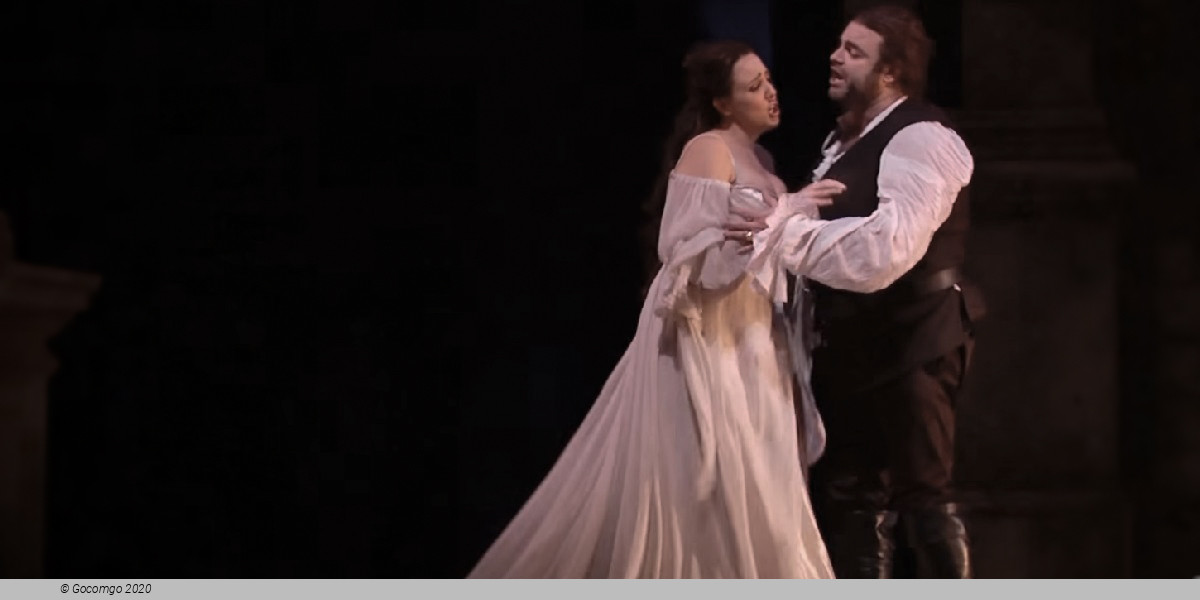
The play follows almost exactly the events of Shakespeare's classic tragedy. Romeo Montague and Juliet Capulet are children of rival families, but, unintentionally, they fall desperately in love. In a duel that pits the families' honor against each other, Romeo kills Juliet's cousin and is exiled as punishment.

Although Juliet and Romeo have secretly married, her father wants her to marry another man. Juliet then drinks a potion that will make her family believe she is dead, so they will leave her in a tomb and she can escape with Romeo. But he, unaware of his beloved's plans, believes she has truly died and decides to take his own life. Overwhelmed by horror, Juliet ends her life to join Romeo in death.

History
Premiere of this production: 27 April 1867, Théâtre Lyrique (Théâtre-Lyrique Impérial du Châtelet), Paris

Roméo et Juliette (Romeo and Juliet) is an opera in five acts by Charles Gounod to a French libretto by Jules Barbier and Michel Carré, based on Romeo and Juliet by William Shakespeare. It was first performed at the Théâtre Lyrique (Théâtre-Lyrique Impérial du Châtelet), Paris on 27 April 1867. This opera is notable for the series of four duets for the main characters and the waltz song "Je veux vivre" for the soprano.

Synopsis

The libretto follows the story of Shakespeare's play.

Act 1

Overture prologue:

A short chorus sets the scene of the rival families in Verona.

A masked ball in the Capulets’ palace

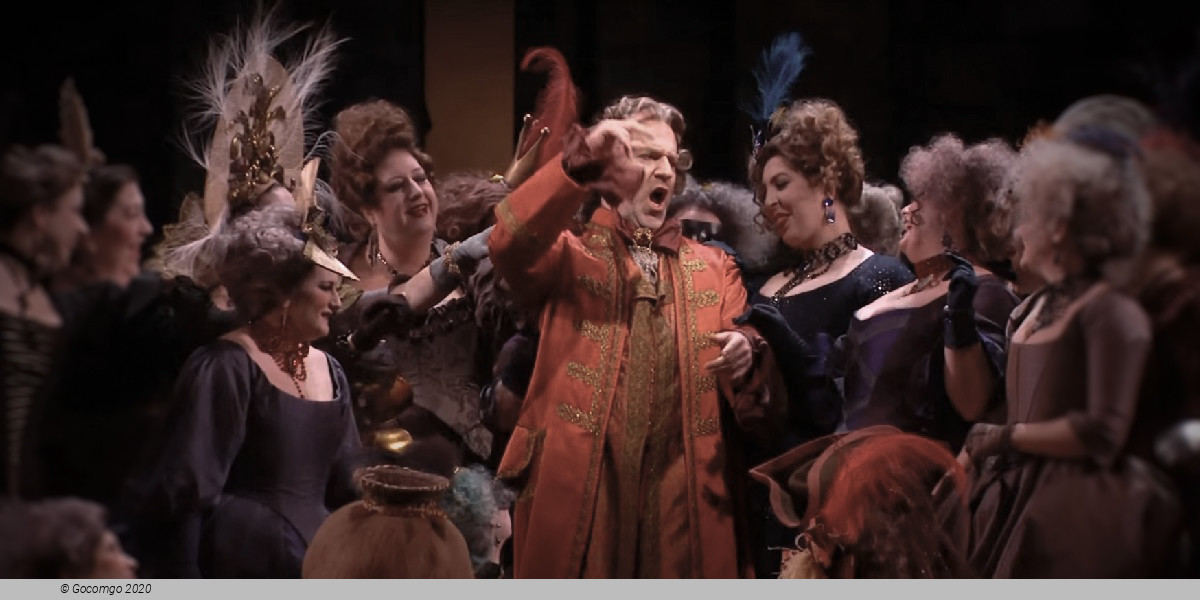
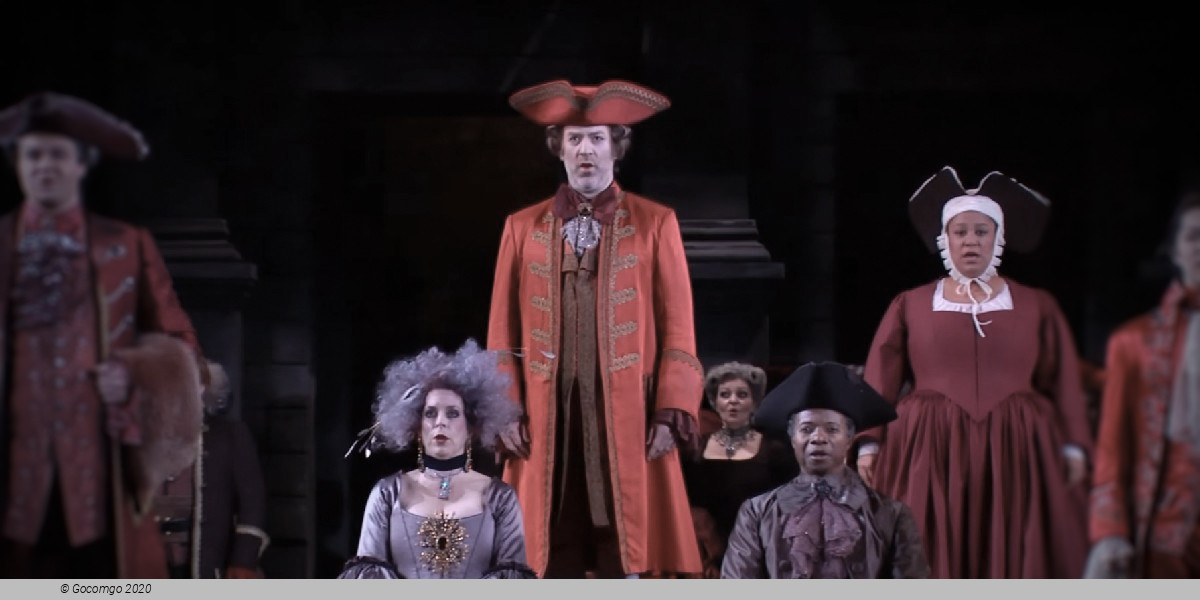
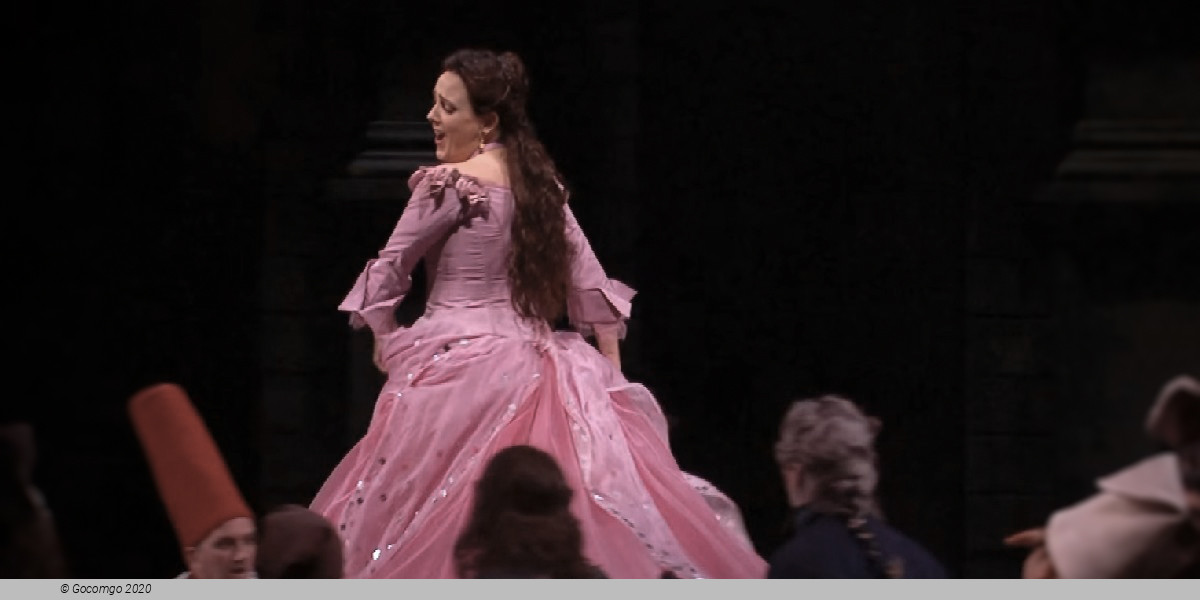
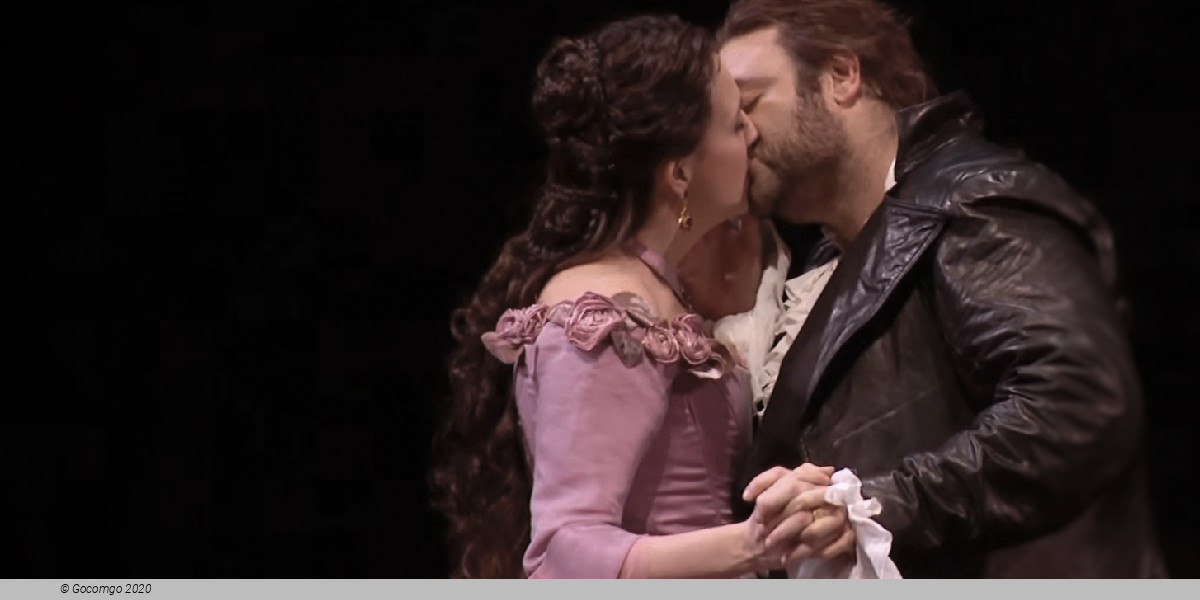
Tybalt talks to Pâris about Juliette, who appears with her father. Roméo, Mercutio, Benvolio and their friends enter, disguised, and Mercutio sings a ballad about Queen Mab, after which Juliette sings a joyful waltz song. The first meeting between Roméo and Juliette takes place, and they fall in love. But Tybalt re-appears and suspects that the hastily re-masked Roméo is his rival. While Tybalt wants immediate revenge, Capulet orders that the ball continue.

Act 2

The Capulets' garden

After Roméo's page Stephano has helped his master gain access, he reveals the two young lovers exchanging their vows of love.

Act 3

Press illustration of Act 3, scene 2, as staged in the original production
Scene 1: Laurent's cell

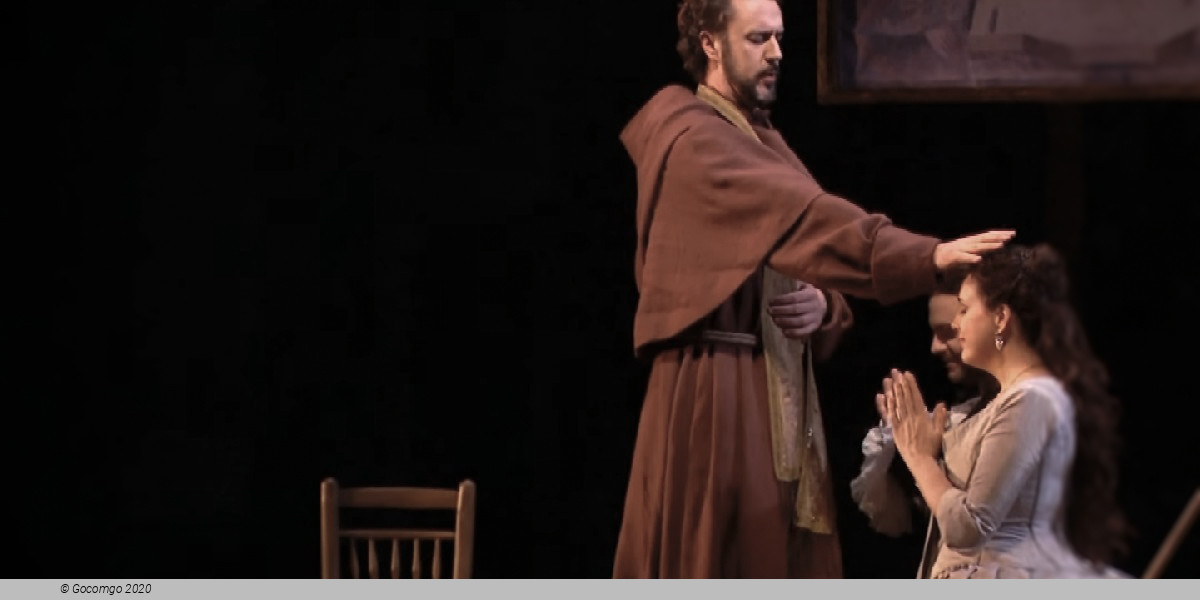
Roméo and Juliette, accompanied by Gertrude, go to the cell, and the wedding takes place. Laurent hopes that reconciliation between the houses of the Montagus and the Capulets may thus take place.

Scene 2: a street near Capulet's palace

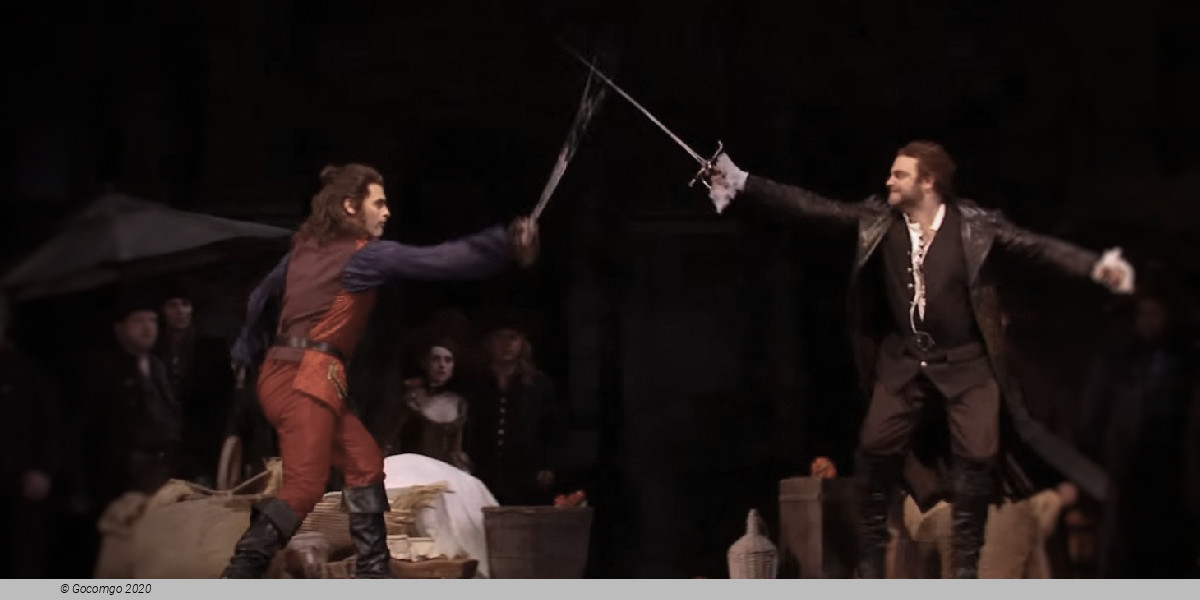
Stephano sings to attract the occupants into the street. Gregoire and Stephano skirmish as men from each family appear. The duel is first between Tybalt and Mercutio, who falls dead, and then between Roméo, determined to avenge his comrade, and Tybalt. Tybalt is killed by Roméo, who is banished by the Duke.

Act 4

Juliet's room at dawn

Roméo and Juliette are together and, after a long duet, Roméo departs for exile. Juliette's father comes to remind her of Tybalt's dying wish for Juliette to marry Count Pâris. The friar gives Juliette a draught which will cause her to sleep, so as to appear as if dead and, after being laid in the family tomb, it is planned that Roméo will awaken her and take her away. 

Act 5

Juliet's tomb

Roméo breaks into the tomb after having taken poison because he believes that Juliette is dead. When she awakes from the friar’s potion, the lovers' last duet is heard before the poison takes effect on Roméo. As her bridegroom weakens Juliette stabs herself, to be united with her lover in death.

Venue Info

Municipal Theatre of Santiago - Santiago
Location   Agustinas 794

The oldest cultural center in the country and the most prestigious stage in Santiago, the Teatro Municipal de Santiago has seen the world’s best performers. This neoclassical gem was inaugurated in 1857, declared a National Monument in 1974, and still hosts a vibrant repertoire today.

Plans for the theater began in 1853, when President Manuel Torres issued a decree for a municipal theater in Santiago, then a rapidly growing city. French Chilean architect Claudio Brunet des Baines was commissioned for its design, and its construction was entrusted to another French Chilean, civil engineer Felipe Charme de l’Isle.

The theater opened in 1857 with a performance of “Ernani,” by Giuseppe Verdi. An Italian opera company was brought in especially for the occasion. At the time, the theater had a capacity of  1,800 and featured a massive glass chandelier. 

Just 13 years later, a devastating fire practically destroyed the building after a performance by opera superstar, Carlotta Patti. But the theater was quickly reconstructed, and reopened three years later with another Verdi opera, “La Forza del Destino.” 

Sadly, that fire wasn’t the last tragedy to strike the theater. In 1903, an earthquake destroyed most of the interior, and in 1927 another serious fire again gutted the building. However, the theater was quickly rebuilt both times, more opulent than ever. In the 1950s, the theater was fully modernized and numerous cultural institutions were created for it. 

Home to the Santiago Philharmonic Orchestra, Santiago Ballet, and Santiago Municipal Choir, the theater remains an active and integral part of the city’s culture today. Tours of the historic building are available with reservations.

Important Info
Type: Opera
City: Santiago, Chile
Starts at: 17:00
Acts: 5
Top of page