
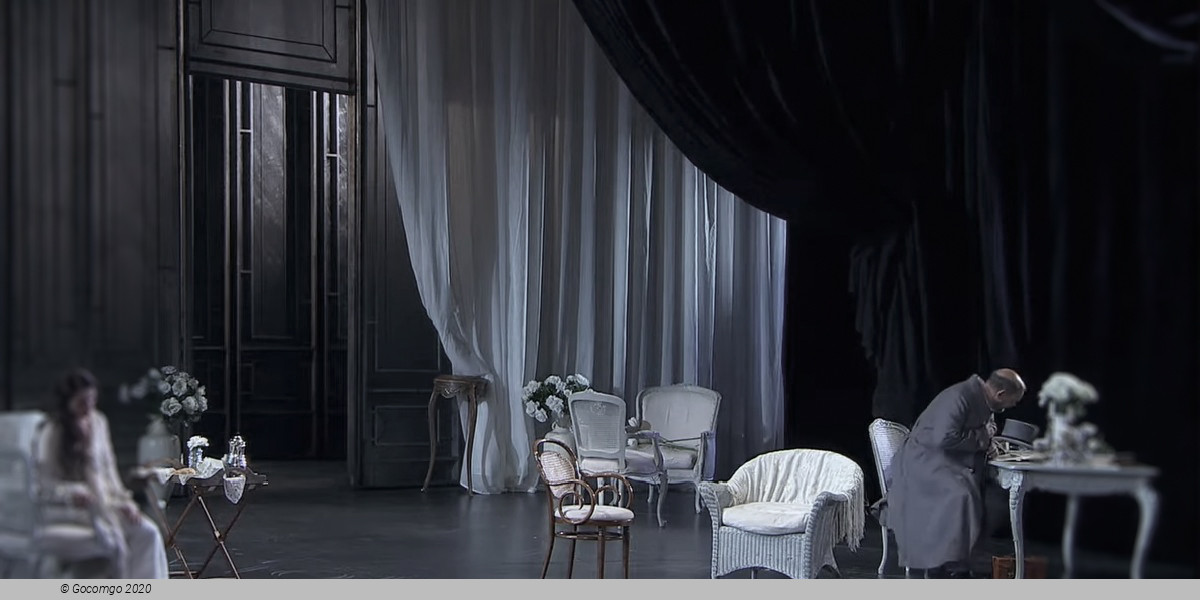
Lyric Opera House tickets 24 March 2027 - La traviata | GoComGo.com

La traviata

Lyric Opera House, Chicago, USA
All photos (7)
Select date and time
7 PM
From
US$ 104

E-tickets: Print at home or at the box office of the event if so specified. You will find more information in your booking confirmation email.

You can only select the category, and not the exact seats.
If you order 2 or 3 tickets: your seats will be next to each other.
If you order 4 or more tickets: your seats will be next to each other, or, if this is not possible, we will provide a combination of groups of seats (at least in pairs, for example 2+2 or 2+3).

Important Info
Type: Opera
City: Chicago, USA
Starts at: 19:00
Intervals: 2
Duration: 3h 5min
Sung in: Italian
Titles in: English

E-tickets: Print at home or at the box office of the event if so specified. You will find more information in your booking confirmation email.

You can only select the category, and not the exact seats.
If you order 2 or 3 tickets: your seats will be next to each other.
If you order 4 or more tickets: your seats will be next to each other, or, if this is not possible, we will provide a combination of groups of seats (at least in pairs, for example 2+2 or 2+3).

Cast
Performers
Tenor: Liparit Avetisyan (Alfredo Germont)
Conductor: Enrique Mazzola
Baritone: Amartuvshin Enkhbat (Giorgio Germont)
Orchestra: Lyric Opera Orchestra
Choir: Lyric Opera Chorus
Soprano: Yaritza Véliz (Violetta Valéry)
Creators
Composer: Giuseppe Verdi
Author: Alexandre Dumas (fils)
Director: Arin Arbus
Librettist: Francesco Maria Piave
Overview

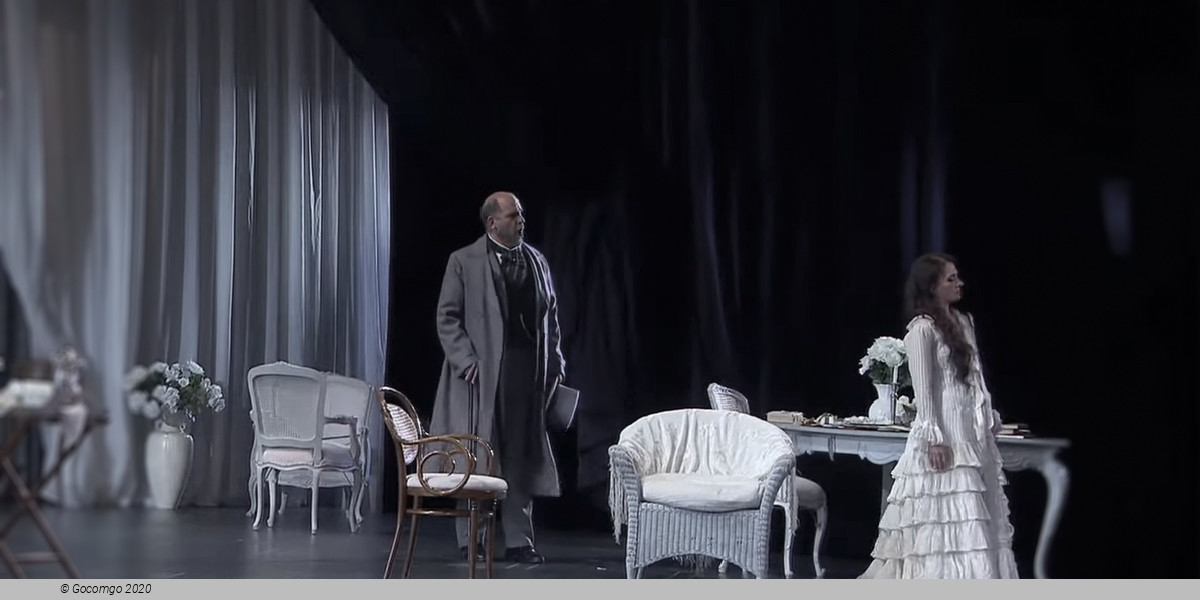
Violetta Valéry has enjoyed a life of beauty and decadence, complete with everything she could ever want — that is, until she meets Alfredo, whose idealistic romanticism wins her over. But as Violetta contemplates what remains of her life, she must make the ultimate choice: accept love’s tender embrace, or remain free forever.

This beloved Lyric Opera of Chicago production sets Verdi’s sumptuous music against the florid glamour of 19th-century France, bringing these captivating characters and their tragic tale to life.

Prepare to be moved by this masterwork of melody and melancholy conducted by Enrique Mazzola, whether you’ve heard it a hundred times or never before.

History
Premiere of this production: 06 March 1853, Teatro La Fenice, Venice

La traviata is an opera in three acts by Giuseppe Verdi set to an Italian libretto by Francesco Maria Piave. It is based on La Dame aux camélias (1852), a play adapted from the novel by Alexandre Dumas fils. The opera was originally titled Violetta, after the main character. It was first performed on 6 March 1853 at the La Fenice opera house in Venice.

Synopsis

Set in and around Paris in about 1850.

Act I

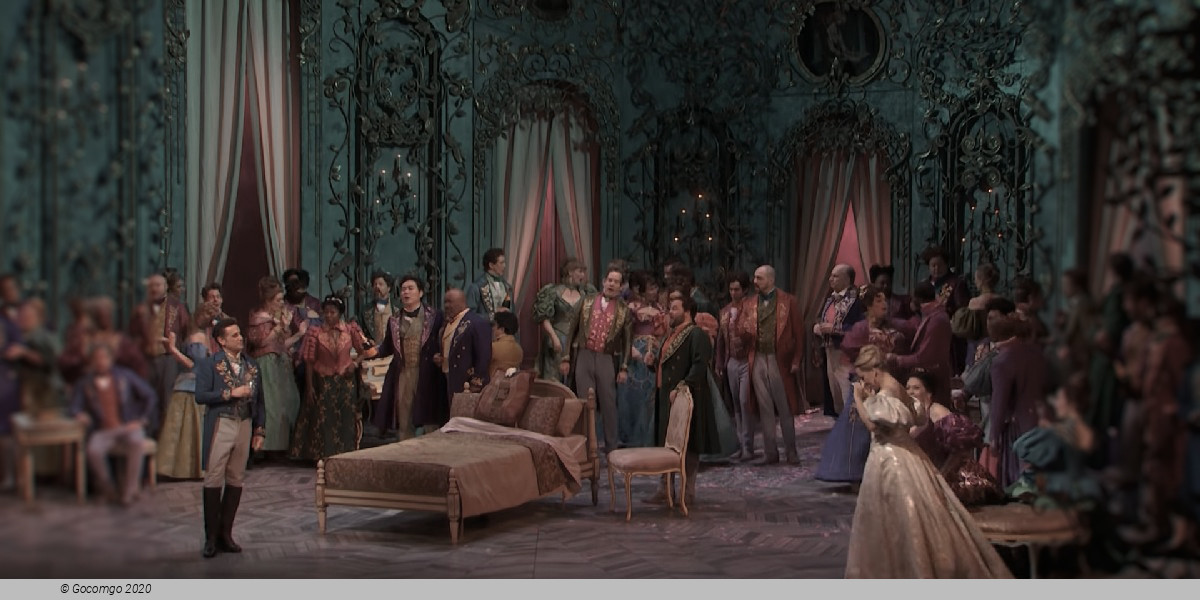
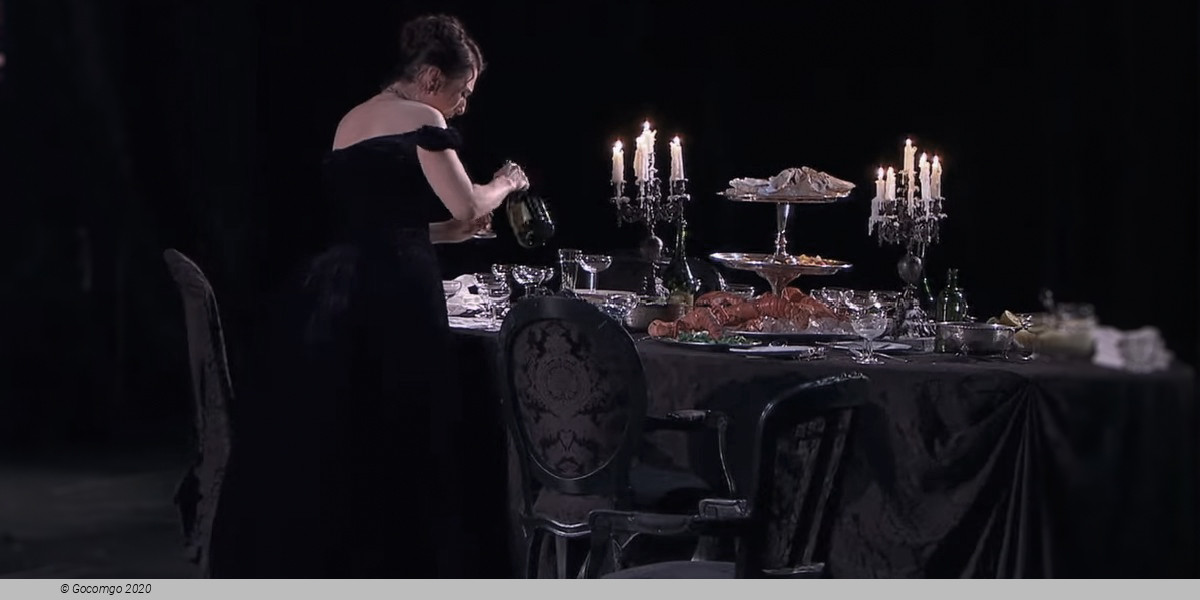
Violetta Valéry, a Parisian courtesan, greets the guests at her salon. Among them are Flora Bervoix, the Marchese D’Obigny, Baron Douphol and Gastone, who introduces Violetta to a new admirer of hers, Alfredo Germont. The young Germont, who has been admiring her from afar, joins her in a drinking song. An orchestra strikes up in an adjacent room, inviting the guests to dance. As the guests make their way to the ballroom, Violetta, who is suffering from consumption, feels faint; she therefore sends the guests on ahead and retires to her boudoir to recover. Alfredo enters and, realising that they are alone, admits his love for her. She replies that love means nothing to her. She
is, however, touched by the young man’s sincerity and promises to meet him the following day.
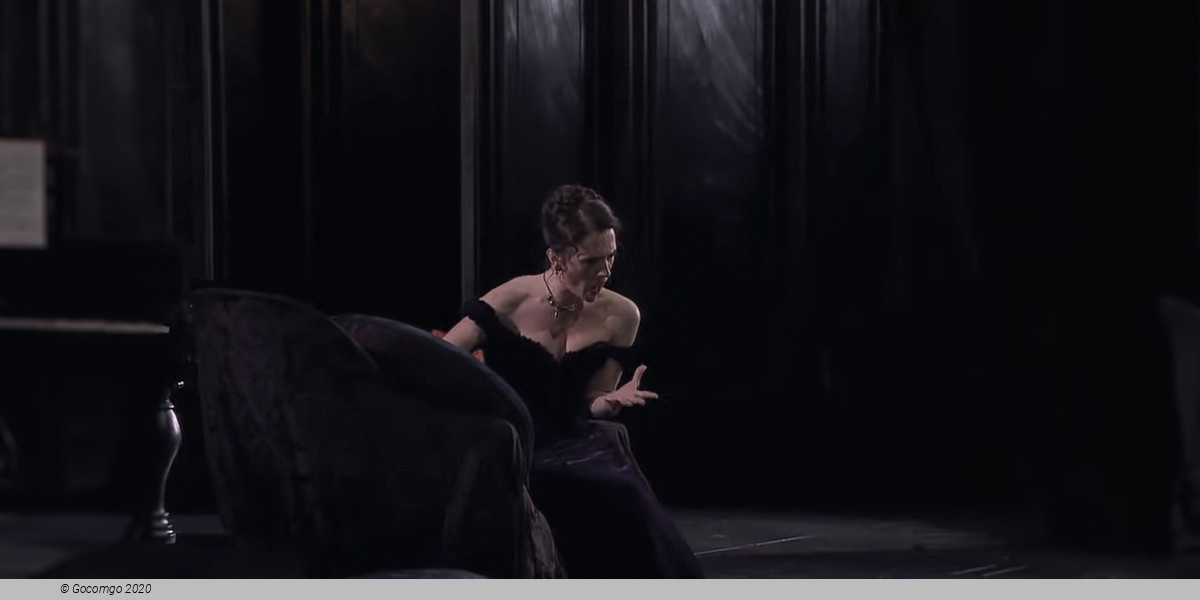
When the guests have departed, she asks herself whether Alfredo is the man she could love. Despite
the strains of Alfredo’s love song drifting in from outside, she decides she prefers her freedom.

Act II

scene 1
A few months later: Alfredo and Violetta have set up house together in the country, outside Paris. Alfredo says how happy they are, but when Violetta’s maid Annina lets on that Violetta has been selling her belongings to pay for the house, he hastens into town to raise the money himself. Violetta comes in search of him and discovers an invitation from her friend Flora to a soirée that very night. Violetta has no intention of returning to her former life, but she is forced to reconsider
on encountering Alfredo’s father. He is very taken with Violetta and her civilised manners but orders her to renounce Alfredo: his son’s scandalous liaison with Violetta is threatening his daughter’s forthcoming marriage. Violetta considers his demand unreasonable, but before long Germont succeeds in persuading her. Alone and desolate, Violetta sends a reply to Flora accepting her invitation and sits down to write a farewell letter to Alfredo. His return takes her by surprise, and she can barely restrain herself as she passionately reminds him how much she loves him before
rushing out. As the maid brings him Violetta’s farewell letter, Germont returns to console his son and reminds him of life in their family home in Provence. Alfredo spots Flora’s invitation and suspects that Violetta has left him for another man. In a rage, he decides to confront her at the soirée.

scene 2
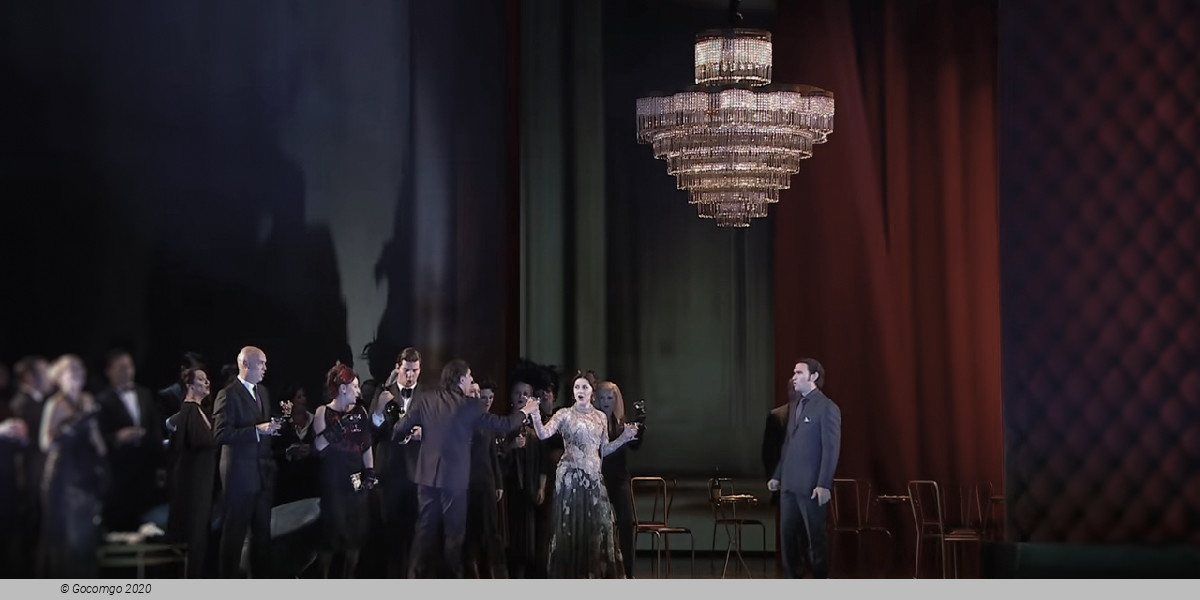
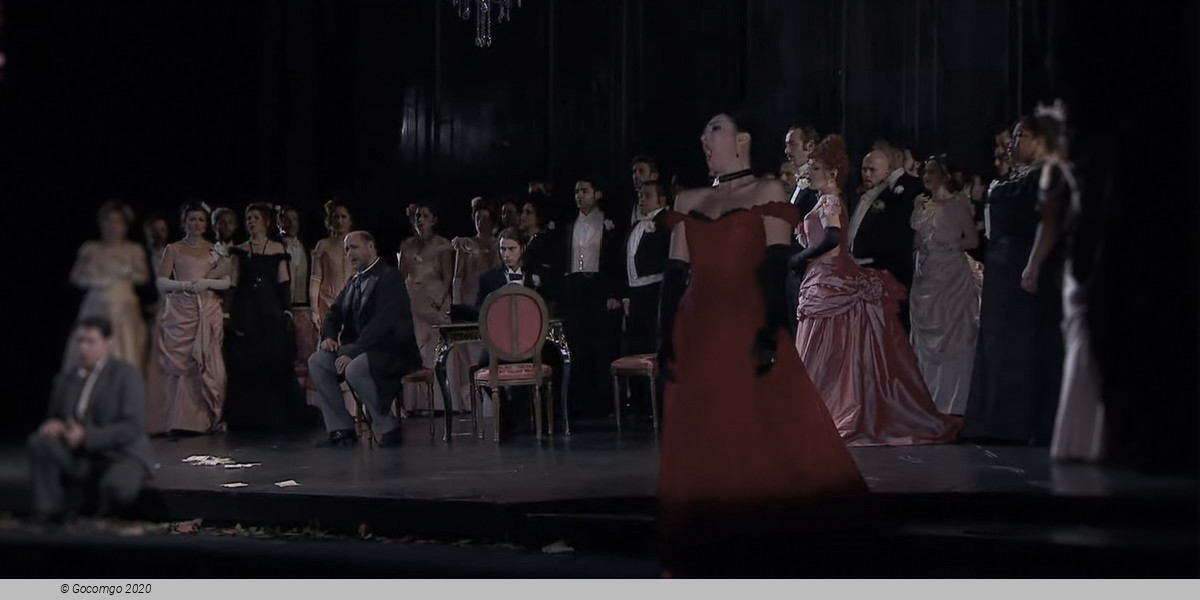
At the soirée, Flora hears from the Marchese that Violetta and Alfredo have parted. Flora asks the guests to make way for a visiting troupe of performing gypsies. They are followed by matadors and a song about Piquillo and his sweetheart. Alfredo rushes in and delivers some bitter comments about love and gambling. Violetta appears on the arm of Baron Douphol, who challenges Alfredo to a game of cards and loses a small fortune to him. As the guests go in to supper, Violetta asks to have a word with Alfredo in private. She is afraid the Baron will be enraged by his loss and urges Alfredo to leave. Alfredo misunderstands her and orders her to admit she loves the Baron. Disappointed by Alfredo’s reaction, Violetta lies and confesses that yes, she does. Alfredo calls the other guests to gather round in order to denounce his former beloved in public and throws the money he has won at her feet. Germont, arriving at that very moment, expresses his disapproval of his son’s behaviour. The guests likewise rebuke Alfredo and Douphol challenges him to a duel.

Act III

Violetta’s bedroom, six months later. Dr Grenvil tells Annina that her mistress has not long to live –
the consumption has taken its toll. Alone, Violetta rereads a letter from Germont saying that the Baron was only slightly wounded in his duel with Alfredo, that Alfredo has heard the truth and is
coming to beg her pardon. But Violetta realises it is too late. It is carnival time in Paris and, the sounds of the revellers having passed, Annina rushes in to announce Alfredo. The lovers ecstatically plan to leave Paris. Germont enters with the doctor just as Violetta rises from her bed with the last of her strength. Feeling a sudden rush of life, she sways and falls dead at her lover’s feet.

Venue Info

Lyric Opera House - Chicago
Location   20 North Wacker Drive

The world-renowned Lyric Opera of Chicago performs in one of North America's most beautiful opera houses, the Lyric Opera House at 20 North Wacker Drive.

In 2017, Lyric Opera of Chicago as house manager of the theater announced that the Joffrey Ballet planned to move from its longtime performance venue at the Auditorium Theatre to the opera house in 2020. The announcement coincided with Lyric's presentation of a new production of Gluck's Orfeo ed Euridice by choreographer John Neumeier; the production fused the musical and ballet elements of the opera and featured the Joffrey Ballet.

Opened as the Civic Opera House in 1929, the building was the vision of utility magnate Samuel Insull (1859–1938), a populist billionaire known as "the Prince of Electricity." Insull, the president of the Chicago Civic Opera Association, wanted to erect a new opera house to replace Louis B. Sullivan's Auditorium Building on South Michigan Avenue as the home of the Chicago Civic Opera — one that would be democratic in scope, and would be housed in and supported by a commercial office building.

The design team chosen by Insull, the Chicago architectural firm of Graham, Anderson, Probst & White, wanted the Civic Opera Building to symbolize "the spirit of a community which is still youthful and not much hampered by traditions." The firm was already famous for designing the Field Museum of Natural History, the Wrigley Building on North Michigan Avenue, and the Continental Illinois Bank Building on South LaSalle Street. In the 1930s the firm created the massive Merchandise Mart Building, also on the Chicago River.

From its opening on Nov. 4, 1929 (just six days after the stock-market crash) until Lyric Opera of Chicago was founded in 1954 (as Lyric Theatre), the Lyric Opera House was home to the Chicago Civic Opera, Chicago Grand Opera Company, Chicago City Opera Company and Chicago Opera Company.

Over the years the Lyric Opera House has also hosted visiting opera and dance companies, as well as touring operettas, musical shows, and a great number of orchestral, dance, and vocal concerts. The adjoining Civic Theatre, at the north end of the block-long building, was used to present plays (including the premiere of Tennessee Williams' The Glass Menagerie), dance performances, and films; for a considerable time it also served as a television studio.

The Civic Opera Building is a majestic limestone skyscraper with a 45-story office tower and two 22-story wings. Shaped like a gigantic throne facing the Chicago River between Washington and Madison streets, it was completed after just 22 months of planning and construction.

The auditorium and its backstage areas occupy approximately one-third of the total space of the building. The distinguishing feature on the Wacker Drive side of the Civic Opera Building is the colonnaded portico that runs the entire length of the building. At the south end, large bronze doors open onto the grand foyer of the Lyric Opera House, whose gilt cornices glitter beneath the sparkling lights of Austrian crystal chandeliers and elaborately stenciled ceilings.

The magnificent space, named the Daniel F. and Ada L. Rice Grand Foyer in honor of major benefactors in 1994, features a floor and wainscoting of pink and gray Tennessee marble, and fluted Roman travertine columns and pilasters. The 40-foot-high columns are topped with carved capitals covered in gold leaf. An imposing grand double staircase leads to the mezzanine foyer.

The decorative character of the entire building is a hybrid of Art Nouveau and Art Deco styles. Comedy-tragedy masks and cornucopia of instruments abound as playful ornaments around entrances, inspired by the Paris Opera House designed by Jean-Louis-Charles Garnier.

The famous painted fire curtain (depicting the parade scene from Aida) and the interior decoration details of the Lyric Opera House were created by American artist Jules Guerin in a palette of salmon pinks, roses, olives, golds and bronzes.

In 1993, Lyric Opera of Chicago purchased all of the theater and backstage space in the Civic Opera Building. Previously Lyric Opera had rented the auditorium and backstage areas.

A massive $100-million renovation of the backstage area commenced in 1993, and continued during Lyric's off-seasons (mid-March through early September) through 1996. The improvements made during this project allowed Lyric Opera to continue producing world-class opera well into the 21st century. The purchase and renovation was made possible by Lyric's $100-million "Building on Greatness" capital campaign. The Lyric Opera of Chicago/Chicago Symphony Orchestra Facilities Fund helped launch Lyric's campaign with a $50 million commitment.

The final phase of renovations took place between early April and early August of 1996 when all 3,563 seats, along with the carpeting, were removed from the auditorium so that artisans could clean and completely repaint. Previously, the theater had never been fully repainted since it opened in 1929 — just patched and touched up as needed over the years.

During the summer of 1996 more than 30 highly skilled artisans from around the country worked in the Lyric Opera House six days a week, 10 hours a day, applying 2,000 gallons of gold paint to the elegant ornamentation of the auditorium, Rice Grand Foyer, and all lobbies. The painters also hand-stenciled and hand-detailed the exquisite colorful ornamentation that adorns the Lyric Opera House ceilings.

Every seat in the auditorium was beautifully refurbished for the first time since 1929. The metal portions were repainted and the wood arms were refinished; the upholstery, seat and back of each chair were replaced. 6,000 square yards of new deep-red carpeting were installed in the theater and lobbies of the Lyric Opera House. The 31 boxes on the mezzanine level were rebuilt and enlarged by 18 inches.

A new 500-pound mainstage curtain was installed, made of 580 yards of heavy-weight wool velour and silk fringe to replicate the original 1929 curtain. All the bronze decorative features and railings in the Lyric Opera House were polished to a just-like-new sheen. The beautiful travertine marble was thoroughly cleaned.

Backstage, a 40-foot-high, 40,000-pound soundproof door was installed to acoustically separate the scenery handling area from the mainstage. During the renovation 32 miles of new rope and cable were installed backstage to update the scenery rigging system. Additionally, 170 miles of electrical wiring and 38 miles of electrical conduit were installed throughout the Lyric Opera House.

Important Info
Type: Opera
City: Chicago, USA
Starts at: 19:00
Intervals: 2
Duration: 3h 5min
Sung in: Italian
Titles in: English
Top of page