
Lyric Opera House tickets 27 November 2026 - Don Pasquale | GoComGo.com

Don Pasquale

Lyric Opera House, Chicago, USA
All photos (7)
Select date and time
7 PM
From
US$ 104

E-tickets: Print at home or at the box office of the event if so specified. You will find more information in your booking confirmation email.

You can only select the category, and not the exact seats.
If you order 2 or 3 tickets: your seats will be next to each other.
If you order 4 or more tickets: your seats will be next to each other, or, if this is not possible, we will provide a combination of groups of seats (at least in pairs, for example 2+2 or 2+3).

Important Info
Type: Opera
City: Chicago, USA
Starts at: 19:00
Intervals: 1
Duration: 19h
Sung in: Italian
Titles in: English

E-tickets: Print at home or at the box office of the event if so specified. You will find more information in your booking confirmation email.

You can only select the category, and not the exact seats.
If you order 2 or 3 tickets: your seats will be next to each other.
If you order 4 or more tickets: your seats will be next to each other, or, if this is not possible, we will provide a combination of groups of seats (at least in pairs, for example 2+2 or 2+3).

Cast
Performers
Conductor: Enrique Mazzola
Tenor: Alberto Robert (Ernesto)
Baritone: Ian Rucker (Dr Malatesta)
Baritone: Misha Kiria (Don Pasquale)
Soprano: Ying Fang (Norina)
Creators
Composer: Gaetano Donizetti
Librettist: Gaetano Donizetti
Librettist: Giovanni Ruffini
Opera Company: Lyric Opera of Chicago
Director: Mariame Clément
Overview

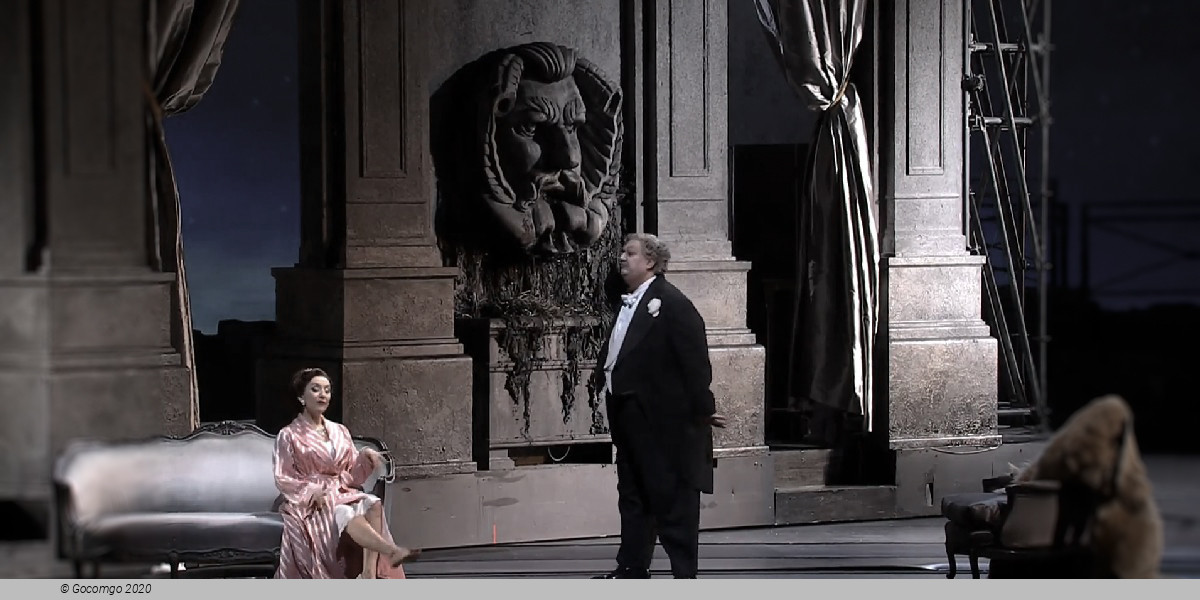
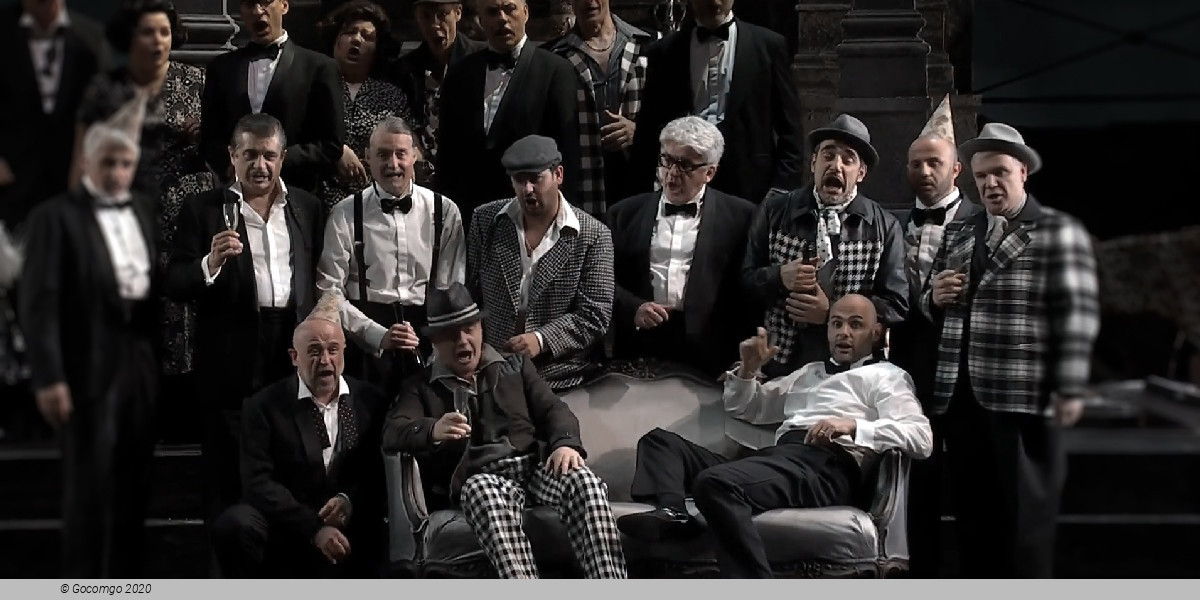
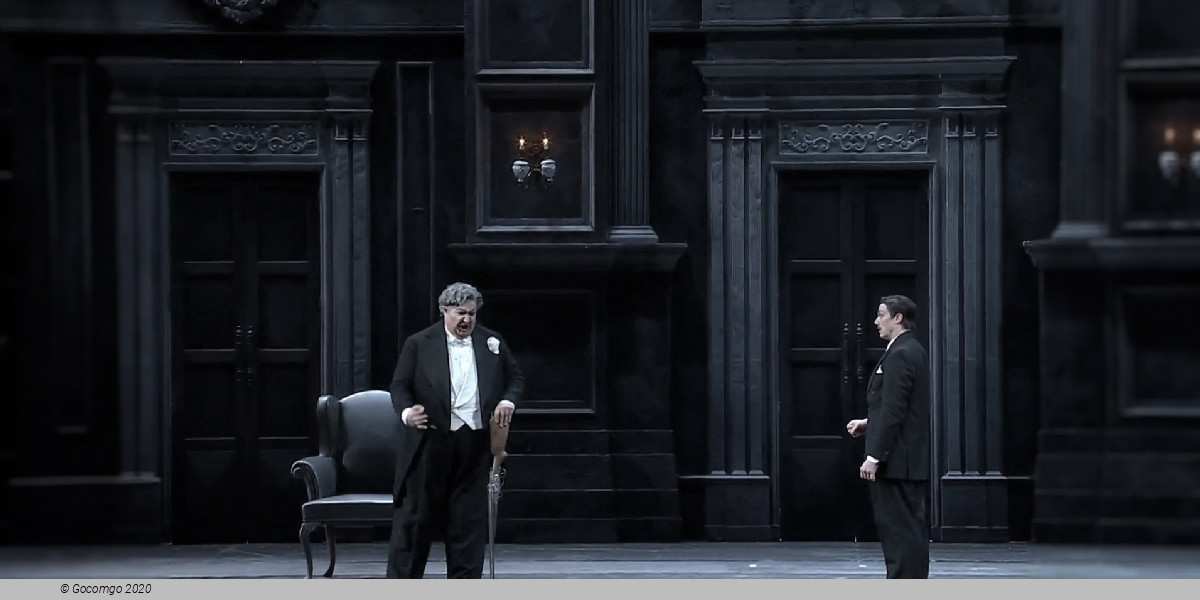
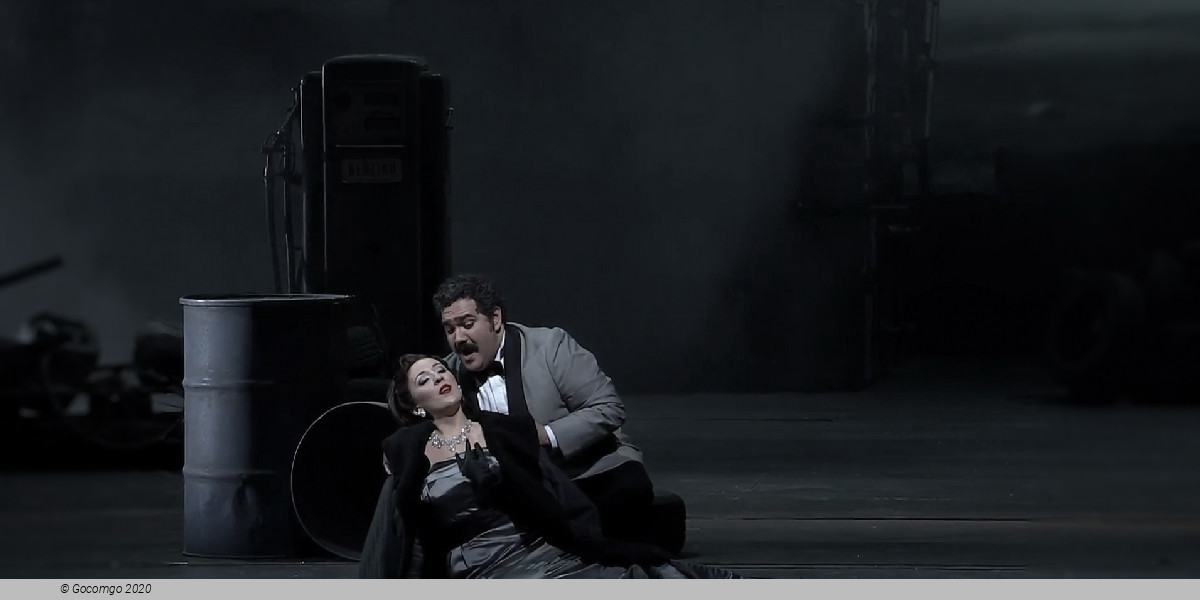
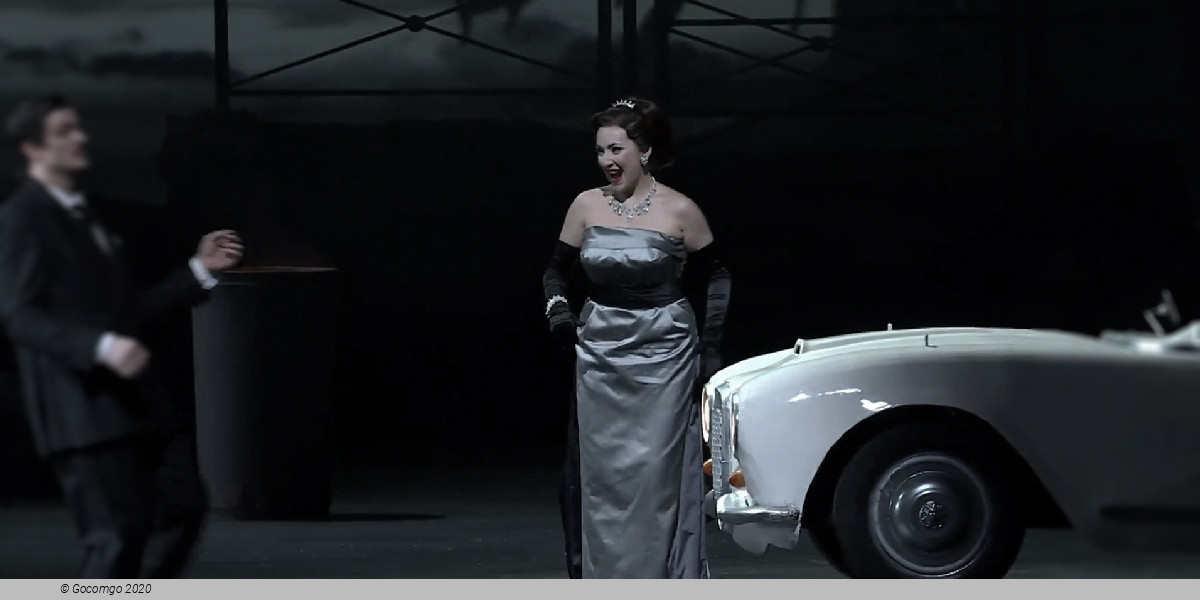
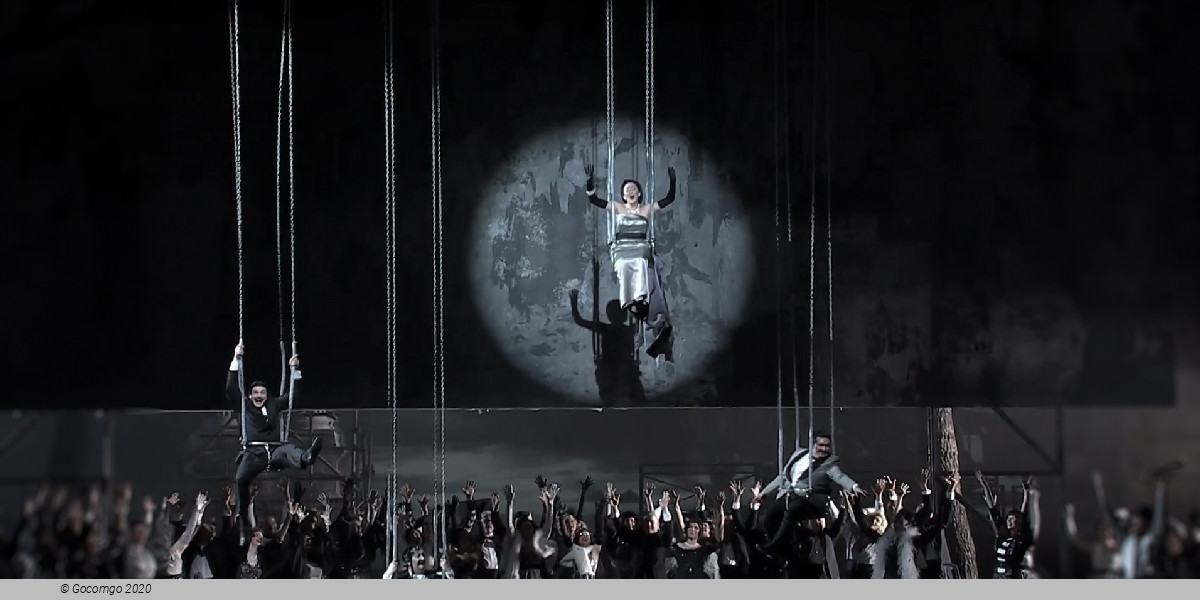
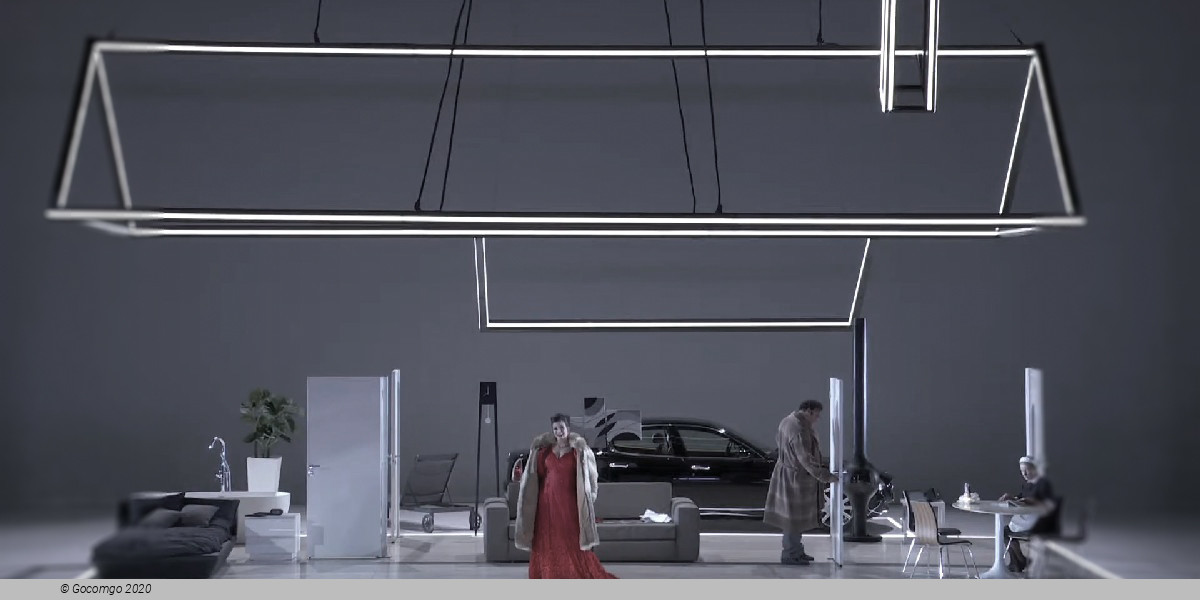
Immerse yourself in the rococo grandeur of 19th-century Rome in this fizzy comedy of errors, returning to the Lyric Opera of Chicago stage for the first time in more than a decade with a vivid, period production directed by Mariame Clément.

Donizetti’s lively score animates the story of the aging bachelor Don Pasquale, whose disowned nephew enlists his wry fiancée and the Don’s long-suffering doctor to orchestrate a complex series of dupes and double-crosses in a bid to reclaim his uncle’s inheritance — all in the name of true love.

Lyric Music Director Enrique Mazzola conducts this good-natured touchstone of the comic opera repertoire.

History
Premiere of this production: 03 January 1843, Théâtre-Italien, Paris

Don Pasquale is an opera buffa, or comic opera, in three acts by Gaetano Donizetti with an Italian libretto completed largely by Giovanni Ruffini as well as the composer. It was based on a libretto by Angelo Anelli for Stefano Pavesi's opera Ser Marcantonio written in 1810 but, on the published libretto, the author appears as "M.A.". The opera was first performed on 3 January 1843 by the Théâtre-Italien at the Salle Ventadour in Paris with great success and it is generally regarded as being the high point of the 19th century opera buffa tradition and, in fact, marking its ending.

Synopsis

Time: Early 19th century
Place: Rome

Overture

The music is suggestive of a comic opera; bright and lively, it starts with plenty of percussion and brass instruments. After a while, the ambience changes to suggesting a party, and the overture ends with a finale.

Act 1

Scenes 1–3: A room in the home of Don Pasquale, at 9 o'clock

Ernesto has refused the woman that his uncle Don Pasquale had found for him, and as a result is to be disinherited. Ernesto declares his devotion to the young – but poor – widow Norina. In view of Ernesto's determination, Don Pasquale decides to marry in old age to produce his own heir, and anxiously awaits the arrival of his physician, Dr. Malatesta, who is determined to teach Don Pasquale how foolish he is being, but has been pretending to search for a suitable bride. Malatesta, confronted with Pasquale's impatience, mutters that he is a buffoon, but proceeds to describe the attributes of the bride-to-be (Bella siccome un angelo – "Beautiful like an angel"). Honest, modest and sweet – when pressed, Malatesta reveals she is in fact his sister. Overcome with joy, Pasquale demands to meet her at once, and sends Malatesta to fetch her, before singing of the love that has gripped him (Ah, un foco insolito – "A sudden fire").

Ernesto comes back and pleads with the Don to consult with his friend Malatesta – when he hears that Malatesta supposedly supports Pasquale, he is amazed at this apparent betrayal (Mi fa il destino mendico – "Fate has made a beggar of me"). Ernesto determines to elope and writes to tell Norina that all is lost.

Scenes 4–5: An apartment in the home of Norina

Norina sits alone, reading a book. She recites a passage, before laughing at the situation described and reflecting on her own temperament (So anch'io la virtù magica – "I too know your magical virtues"). She is in cahoots with Dr. Malatesta and impatiently waits for him to come and explain his plan at which he had only hinted. A servant delivers the letter from Ernesto, which she quickly reads and is instantly dismayed.

Malatesta arrives to explain the stratagem, but Norina cuts him off and hands him the letter, which he reads aloud: Ernesto has announced his intention to leave Rome, and Europe altogether. Malatesta reassures her, saying that he has adapted his plan: Norina shall play the part of Malatesta's sister. Having arranged for his cousin to act as a notary, they will easily deceive the Don. Norina consents to play her part in the deception, and they discuss her strategies in a lively duet (Pronta son; purch'io non manchi – "I am ready; if I do not miss").

Act 2

A salon in the home of Don Pasquale

Ernesto is alone: lamenting his fate, he considers his decision to leave Rome (Cercherò lontana terra – "I shall seek a distant land"). He leaves the room just as Pasquale enters, dressed in his outdated finery, along with his servants, to whom he gives instructions to admit Malatesta on his arrival. He parades around in his grand costume, hoping it will conceal his advancing years.

Malatesta arrives with Norina in tow, and introduces her to Pasquale as his sister, Sofronia, fresh out of the convent. Pasquale is smitten, and Norina plays the part of a dutiful, modest and submissive lady, to Pasquale's satisfaction. Norina consents to the proposed marriage, which delights Pasquale. He wants to send for the notary to conduct the ceremony straight away – conveniently, Malatesta has brought one along, who waits in the antechamber.

Malatesta fetches the supposed notary, as servants arrange a table. Taking his seat, the "notary" writes out a marriage contract as dictated by Malatesta and Pasquale (Fra da una parta – "Between, on one hand"), where the Don bequeaths all his estate to be administrated by Sofronia. The contract is quickly drawn up: Pasquale signs but, before Norina can affix her signature, Ernesto bursts in. Intending to say a final farewell, he is amazed to see Norina about to marry Pasquale. However, Malatesta persuades him not to say anything (Figliol non mi far scene – "Son, don't make a scene"), and he is forced to act as the final witness much to Don Pasquale's delight.

As soon as the contract is signed, Norina abandons her pretence of docility, and refuses Pasquale's embrace. She announces her intention to teach him manners, and to have Ernesto as a gallant to accompany her on evening strolls. Pasquale is horrified at this transformation, while Malatesta and Ernesto can barely conceal their amusement (È rimasto là impietrato – "He stands there, petrified"). Summoning the household staff, Norina recites a long list of demands – more servants (young and handsome at that), carriages and horses, furniture – and instructs them to spare no expense doubling all their wages. Pasquale is stricken at his misfortune, so Malatesta urges him to go to bed.

Act 3

Scenes 1–5: A room in the home of Don Pasquale

Pasquale sits in a room, surrounded by piles of newly purchased jewels, dresses and the like, as the servants bustle in and out of Norina's apartment (I diamanti presto presto – "The diamonds, quickly, quickly"). Dismayed by the piles of bills and invoices, the Don summons the courage to confront his tyrannical new wife. Norina emerges, dressed to go out. He attempts to reason with her, but she pays little heed (Signorina, in tanta fretta – "Madam, where are you off to in such a hurry"). He suggests that if she leaves, he may not allow her to return, an idea that she meets with patronising insincerity (Via, caro sposino – "There, there, dear little husband") but the discussion ends in her slapping him. As she exits, she drops a note which Pasquale picks up and reads. The note is addressed to Sofronia, arranging a meeting in the garden with its unnamed, admiring author. Pasquale calls for a servant to summon Malatesta, before leaving the room.

The servants return and, amongst themselves, at once complain at the amount of work they are being made to do, and reveal how much they are enjoying the farcical drama developing between Pasquale and his new wife (Che interminabile andirivieni! – "Such endless coming and going!"). At the approach of Malatesta and Ernesto, however, they exit, assured of more entertainment to come. Malatesta reminds Ernesto of the finer points of their plan, and the latter leaves. The doctor moves forward to greet Don Pasquale, who tells him of Norina's intended assignation, and his own plan to expose her unfaithfulness before a magistrate. Malatesta persuades him to moderate his plan and Pasquale, believing him an ally, consents to his conditions, while plotting his revenge on Norina (Aspetta, aspetta, cara sposina – "Wait, wait, dear little wife").

Scenes 6–7: The garden, adjoining Pasquale's house

In the garden, as night draws in, Ernesto sings of his love for Norina, as he waits for her arrival (Com'è gentil – "How lovely"). At last, Norina emerges, and they express their love: (Tornami a dir che m'ami – "Tell me once more that you love me"). Don Pasquale and Malatesta have observed and, as they reveal themselves, Ernesto covers himself with a cloak and runs to the house. Pasquale tries to confront Norina – he has caught her in flagrante – but this only provokes a fight that leaves the Don spluttering. She refuses to leave at his demand, so Malatesta, as per his agreement with Pasquale, takes over. Pretending to negotiate with Norina/Sofronia, he tells Pasquale that the only way to make her leave will be to allow Ernesto to marry his beloved, whom "Sofronia" apparently despises. Pasquale consents, and calls out to the house, from which Ernesto and the servants emerge. He instructs Ernesto to send for his would-be bride, but Malatesta reveals that Norina is in fact the woman Pasquale thinks he married, while the real Sofronia remains in a convent. All are reconciled, and the moral of the story – not to marry in old age – is revealed in a playful quartet (La moral di tutto questo – "The moral of all this").

Venue Info

Lyric Opera House - Chicago
Location   20 North Wacker Drive

The world-renowned Lyric Opera of Chicago performs in one of North America's most beautiful opera houses, the Lyric Opera House at 20 North Wacker Drive.

In 2017, Lyric Opera of Chicago as house manager of the theater announced that the Joffrey Ballet planned to move from its longtime performance venue at the Auditorium Theatre to the opera house in 2020. The announcement coincided with Lyric's presentation of a new production of Gluck's Orfeo ed Euridice by choreographer John Neumeier; the production fused the musical and ballet elements of the opera and featured the Joffrey Ballet.

Opened as the Civic Opera House in 1929, the building was the vision of utility magnate Samuel Insull (1859–1938), a populist billionaire known as "the Prince of Electricity." Insull, the president of the Chicago Civic Opera Association, wanted to erect a new opera house to replace Louis B. Sullivan's Auditorium Building on South Michigan Avenue as the home of the Chicago Civic Opera — one that would be democratic in scope, and would be housed in and supported by a commercial office building.

The design team chosen by Insull, the Chicago architectural firm of Graham, Anderson, Probst & White, wanted the Civic Opera Building to symbolize "the spirit of a community which is still youthful and not much hampered by traditions." The firm was already famous for designing the Field Museum of Natural History, the Wrigley Building on North Michigan Avenue, and the Continental Illinois Bank Building on South LaSalle Street. In the 1930s the firm created the massive Merchandise Mart Building, also on the Chicago River.

From its opening on Nov. 4, 1929 (just six days after the stock-market crash) until Lyric Opera of Chicago was founded in 1954 (as Lyric Theatre), the Lyric Opera House was home to the Chicago Civic Opera, Chicago Grand Opera Company, Chicago City Opera Company and Chicago Opera Company.

Over the years the Lyric Opera House has also hosted visiting opera and dance companies, as well as touring operettas, musical shows, and a great number of orchestral, dance, and vocal concerts. The adjoining Civic Theatre, at the north end of the block-long building, was used to present plays (including the premiere of Tennessee Williams' The Glass Menagerie), dance performances, and films; for a considerable time it also served as a television studio.

The Civic Opera Building is a majestic limestone skyscraper with a 45-story office tower and two 22-story wings. Shaped like a gigantic throne facing the Chicago River between Washington and Madison streets, it was completed after just 22 months of planning and construction.

The auditorium and its backstage areas occupy approximately one-third of the total space of the building. The distinguishing feature on the Wacker Drive side of the Civic Opera Building is the colonnaded portico that runs the entire length of the building. At the south end, large bronze doors open onto the grand foyer of the Lyric Opera House, whose gilt cornices glitter beneath the sparkling lights of Austrian crystal chandeliers and elaborately stenciled ceilings.

The magnificent space, named the Daniel F. and Ada L. Rice Grand Foyer in honor of major benefactors in 1994, features a floor and wainscoting of pink and gray Tennessee marble, and fluted Roman travertine columns and pilasters. The 40-foot-high columns are topped with carved capitals covered in gold leaf. An imposing grand double staircase leads to the mezzanine foyer.

The decorative character of the entire building is a hybrid of Art Nouveau and Art Deco styles. Comedy-tragedy masks and cornucopia of instruments abound as playful ornaments around entrances, inspired by the Paris Opera House designed by Jean-Louis-Charles Garnier.

The famous painted fire curtain (depicting the parade scene from Aida) and the interior decoration details of the Lyric Opera House were created by American artist Jules Guerin in a palette of salmon pinks, roses, olives, golds and bronzes.

In 1993, Lyric Opera of Chicago purchased all of the theater and backstage space in the Civic Opera Building. Previously Lyric Opera had rented the auditorium and backstage areas.

A massive $100-million renovation of the backstage area commenced in 1993, and continued during Lyric's off-seasons (mid-March through early September) through 1996. The improvements made during this project allowed Lyric Opera to continue producing world-class opera well into the 21st century. The purchase and renovation was made possible by Lyric's $100-million "Building on Greatness" capital campaign. The Lyric Opera of Chicago/Chicago Symphony Orchestra Facilities Fund helped launch Lyric's campaign with a $50 million commitment.

The final phase of renovations took place between early April and early August of 1996 when all 3,563 seats, along with the carpeting, were removed from the auditorium so that artisans could clean and completely repaint. Previously, the theater had never been fully repainted since it opened in 1929 — just patched and touched up as needed over the years.

During the summer of 1996 more than 30 highly skilled artisans from around the country worked in the Lyric Opera House six days a week, 10 hours a day, applying 2,000 gallons of gold paint to the elegant ornamentation of the auditorium, Rice Grand Foyer, and all lobbies. The painters also hand-stenciled and hand-detailed the exquisite colorful ornamentation that adorns the Lyric Opera House ceilings.

Every seat in the auditorium was beautifully refurbished for the first time since 1929. The metal portions were repainted and the wood arms were refinished; the upholstery, seat and back of each chair were replaced. 6,000 square yards of new deep-red carpeting were installed in the theater and lobbies of the Lyric Opera House. The 31 boxes on the mezzanine level were rebuilt and enlarged by 18 inches.

A new 500-pound mainstage curtain was installed, made of 580 yards of heavy-weight wool velour and silk fringe to replicate the original 1929 curtain. All the bronze decorative features and railings in the Lyric Opera House were polished to a just-like-new sheen. The beautiful travertine marble was thoroughly cleaned.

Backstage, a 40-foot-high, 40,000-pound soundproof door was installed to acoustically separate the scenery handling area from the mainstage. During the renovation 32 miles of new rope and cable were installed backstage to update the scenery rigging system. Additionally, 170 miles of electrical wiring and 38 miles of electrical conduit were installed throughout the Lyric Opera House.

Important Info
Type: Opera
City: Chicago, USA
Starts at: 19:00
Intervals: 1
Duration: 19h
Sung in: Italian
Titles in: English
Top of page