
Glyndebourne tickets 31 May 2026 - Il turco in Italia | GoComGo.com

Il turco in Italia

Glyndebourne, Lewes, Great Britain
All photos (8)
Select date and time
4 PM
From
US$ 264

E-tickets: Print at home or at the box office of the event if so specified. You will find more information in your booking confirmation email.

You can only select the category, and not the exact seats.
If you order 2 or 3 tickets: your seats will be next to each other.
If you order 4 or more tickets: your seats will be next to each other, or, if this is not possible, we will provide a combination of groups of seats (at least in pairs, for example 2+2 or 2+3).

Important Info
Type: Opera
City: Lewes, Great Britain
Starts at: 16:00
Intervals: 1
Duration: 4h 5min
Sung in: Italian
Titles in: English

E-tickets: Print at home or at the box office of the event if so specified. You will find more information in your booking confirmation email.

You can only select the category, and not the exact seats.
If you order 2 or 3 tickets: your seats will be next to each other.
If you order 4 or more tickets: your seats will be next to each other, or, if this is not possible, we will provide a combination of groups of seats (at least in pairs, for example 2+2 or 2+3).

Cast
Performers
Conductor: Vincenzo Milletari
Soprano: Aytaj Shikhalizada
Soprano: Elena Villalón
Orchestra: London Philharmonic Orchestra
Baritone: Matteo Mancini
Bass-Baritone: Peter Kálmán
Baritone: Rodion Pogossov
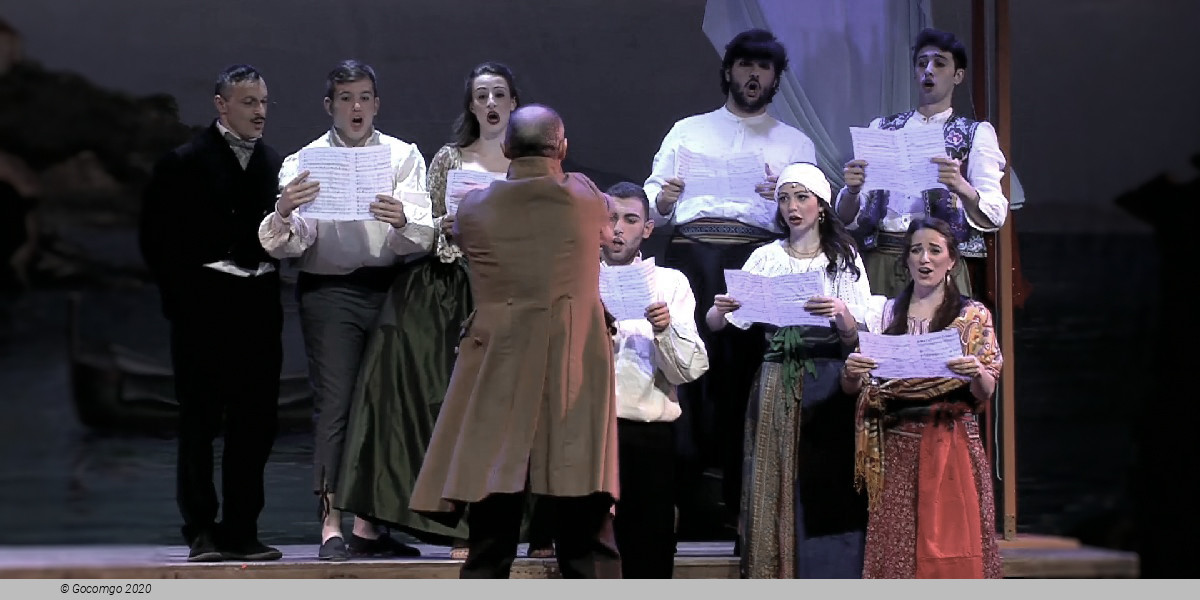
Chorus: The Glyndebourne Chorus
Creators
Composer: Gioachino Rossini
Librettist: Felice Romani
Costume designer: Julia Hansen
Stage Director: Mariame Clement
Overview

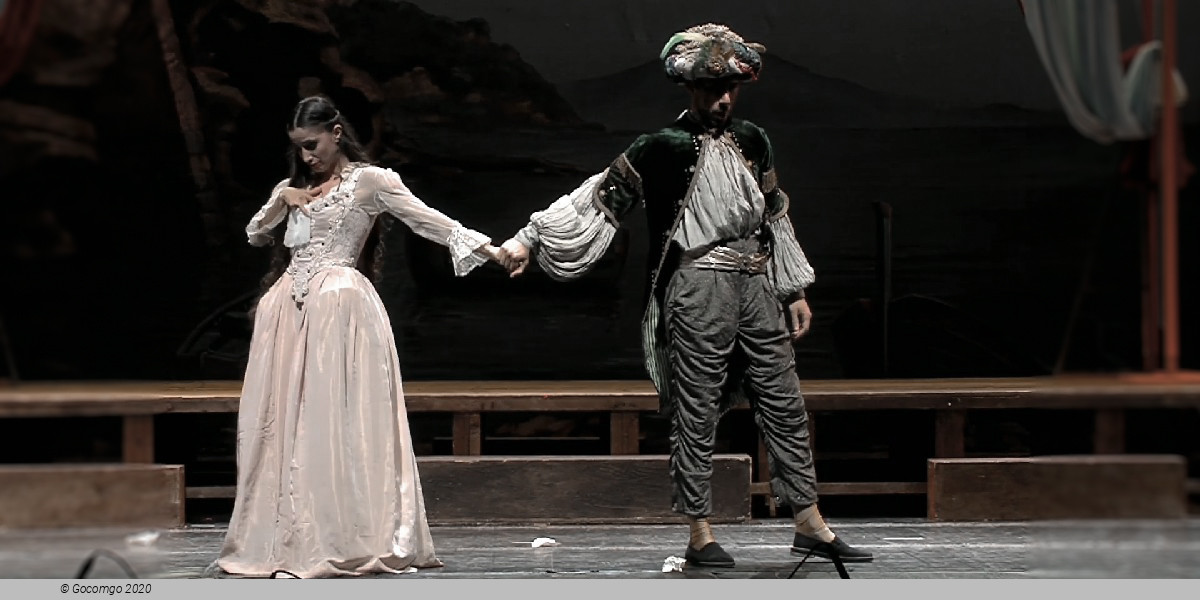
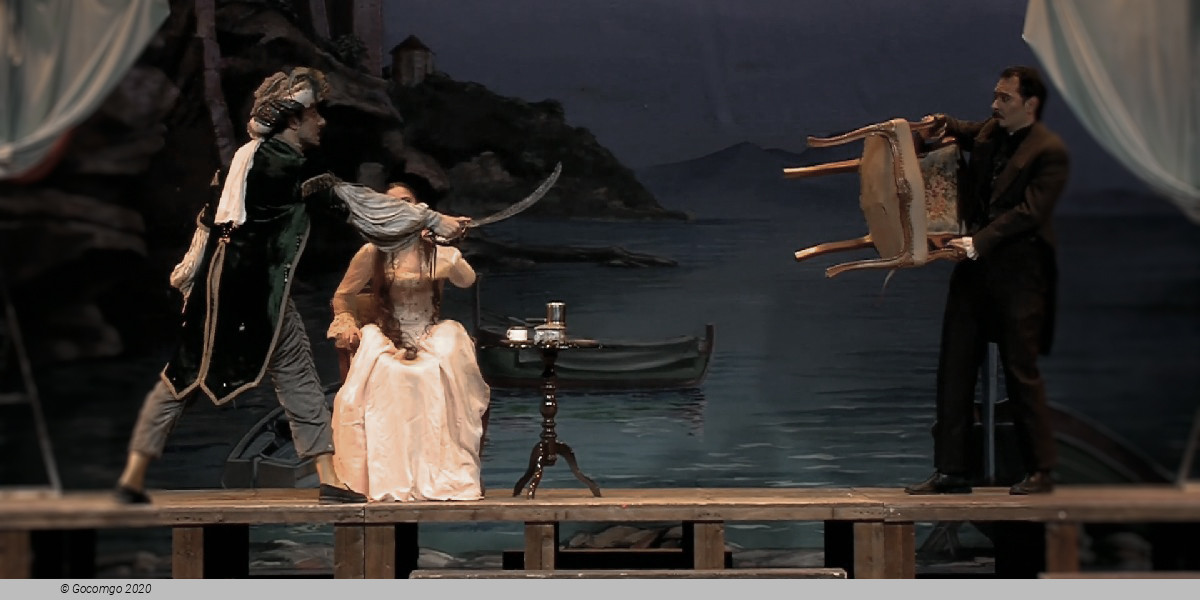
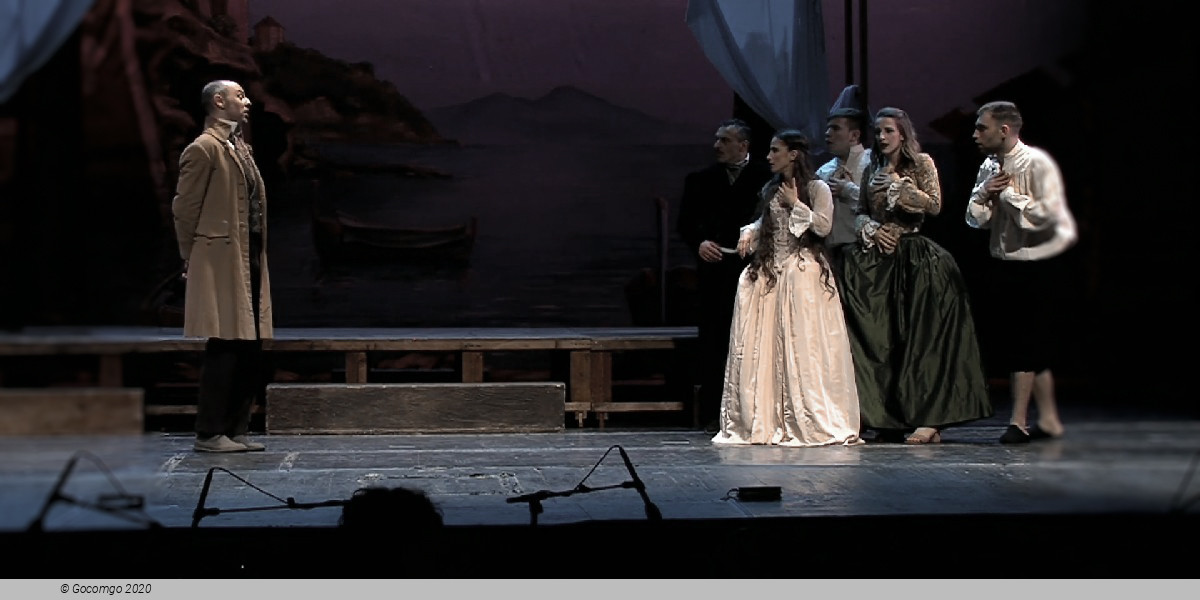
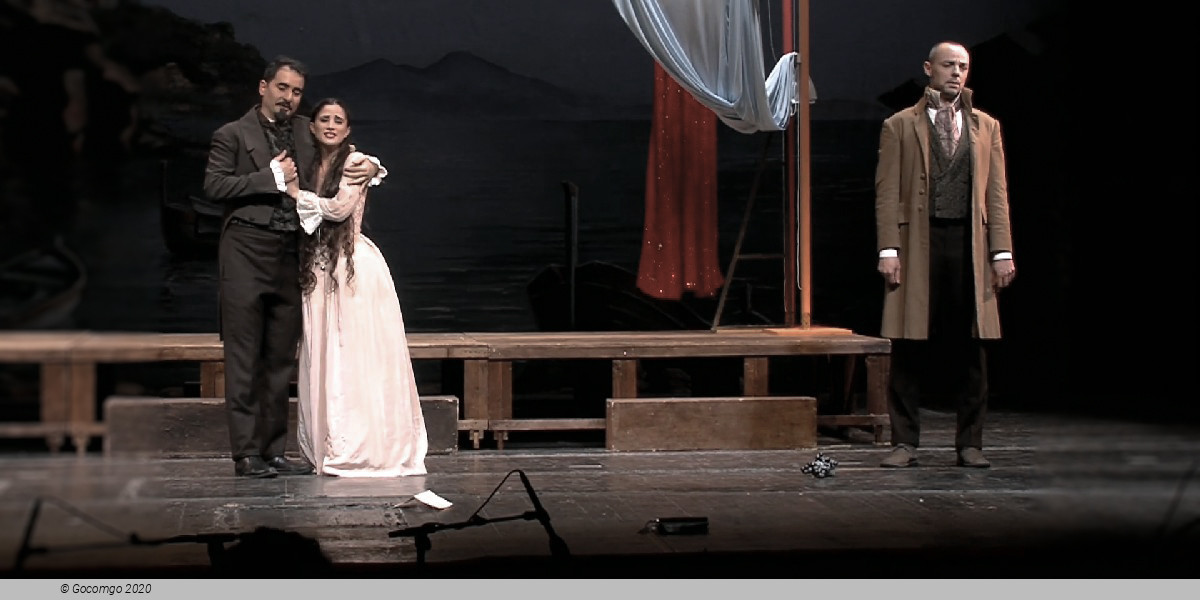
Rossini’s sparkling comedy Il turco in Italia arrives at Glyndebourne in a vibrant and stylish production. A witty tale of romance, jealousy, and theatrical mischief unfolds as a charming Turkish prince disrupts the lives of a flirtatious Italian woman and her exasperated husband.

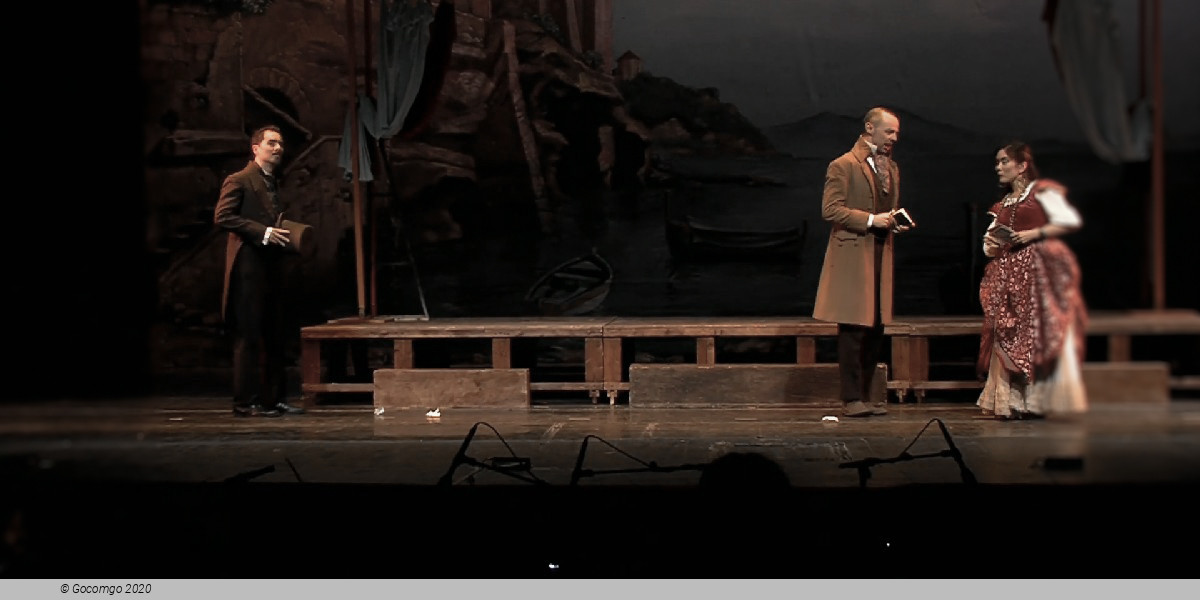
Gioachino Rossini’s Il turco in Italia is a brilliant opera buffa filled with rapid-fire ensembles, dazzling vocal virtuosity, and playful theatrical humor. At Glyndebourne Festival Opera, this lively production captures the elegance and irony of Rossini’s music while highlighting the opera’s sharp wit.

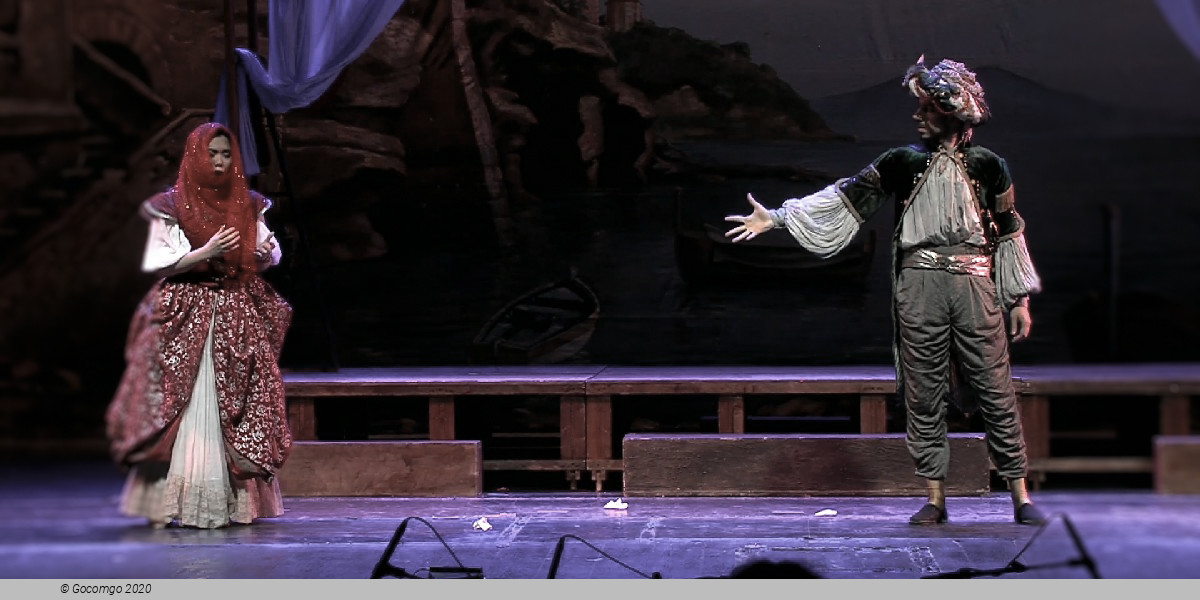
The story centers on Fiorilla, a spirited and flirtatious young woman who quickly grows bored with her jealous husband, Don Geronio. When the charismatic Turkish prince Selim arrives in Italy, Fiorilla sees an opportunity for adventure and romance. Meanwhile, the poet Prosdocimo observes the chaos, shaping the events like a playwright within the story.

Through disguises, misunderstandings, and comic confrontations, the opera explores themes of desire, pride, and the absurdity of romantic games. Glyndebourne’s production balances humor and musical brilliance, offering audiences an evening of effervescent charm and Rossinian sparkle.

History
Premiere of this production: 14 August 1814, La Scala, Milan

Il turco in Italia (The Turk in Italy) is an opera in two acts by Gioachino Rossini. The Italian-language libretto was written by Felice Romani. It was a re-working of a libretto by Caterino Mazzolà set as an opera (with the same title) by the German composer Franz Seydelmann in 1788.

Synopsis

Time: 18th Century
Place: In and around Naples

Act 1

By the sea shore near Naples

The poet Prosdocimo (baritone) is searching for a plot for a drama buffo. He meets a band of Gypsies, including the beautiful but unhappy Zaida (mezzo-soprano) and her confidant Albazar (tenor). Perhaps the Gypsies can provide some ideas? Prosdocimo's friend, the obstinate and sometimes foolish Geronio (bass), is looking for a fortune teller to advise him on his marital problems, but the Gypsies tease him. Zaida tells Prosdocimo that she is from a Turkish harem. She and her master, Prince Selim, were in love, but jealous rivals accused her of infidelity and she had to flee for her life, accompanied by Albazar. Nevertheless, she still loves only one man and that man is Selim. Prosdocimo knows that a Turkish prince will shortly be arriving in Italy. Perhaps he can help? Geronio's capricious young wife Fiorilla (soprano) enters singing (in contrast to Zaida) of the joys of free and unfettered love. A Turkish ship arrives and the prince disembarks. It is Selim (bass) himself. Fiorilla is immediately attracted to the handsome Turk, and a romance rapidly develops. Narciso (tenor) appears in her pursuit. He is an ineffectual admirer of Fiorilla posing as a friend of her husband. Geronio follows, horrified to learn that Fiorilla is taking the Turk home to drink his coffee!

Geronio's house

Fiorilla and Selim are flirting. Geronio enters timidly and Selim is initially impressed by his unexpected meekness, however Narciso noisily scolds Geronio. The domestic menage irritates Selim and he leaves after quietly arranging to meet Fiorilla again by his ship. Geronio tells Fiorilla he will not allow any more Turks - or Italians - in his house. She sweetly undermines his complaints, and then, when he softens, threatens to punish him by enjoying herself even more wildly.

The sea shore at night

Selim is waiting for Fiorilla. Instead he meets Zaida. The former lovers are shocked and delighted, and declare once more their mutual love. Narciso re-appears, followed by Fiorilla in disguise, with Geronio in pursuit. Selim confuses the veiled Fiorilla with Zaida and the two women come suddenly face to face. Fiorilla accuses Selim of betrayal. Zaida confronts Fiorilla. Geronio tells his wife to go home. There is a stormy finale.

Act 2

At an inn

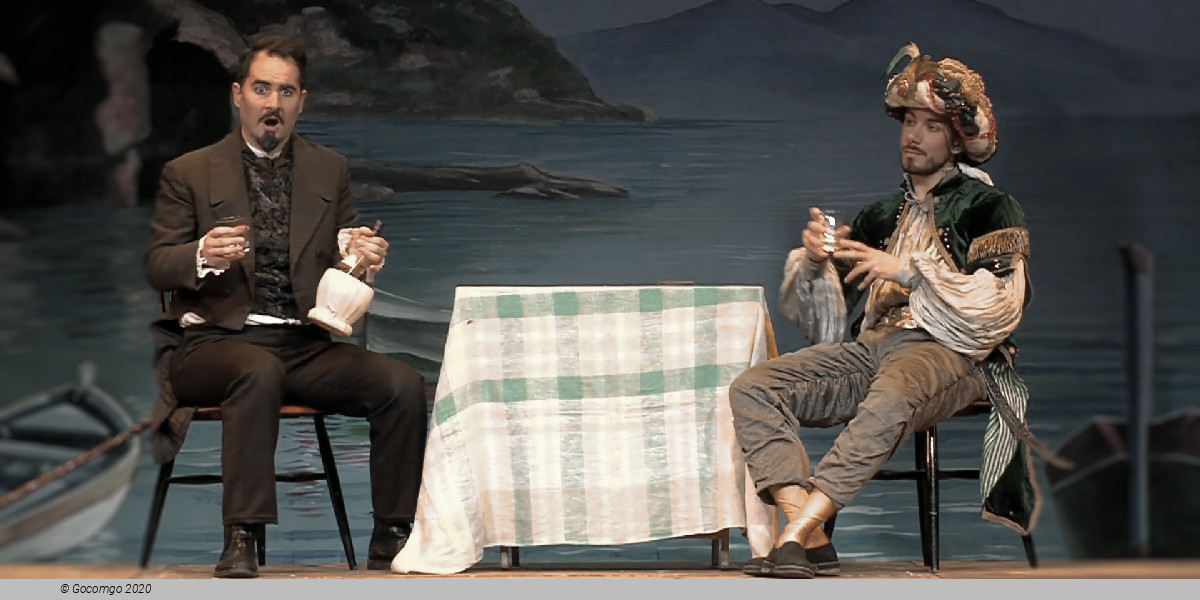
Selim approaches Geronio amicably, offering to buy Fiorilla. That way Geronio can be rid of his problems and also make some money. Geronio refuses. Selim vows to steal her instead. After they leave, Fiorilla and a group of her friends appear, followed by Zaida. Fiorilla has set up a meeting between them and Selim, so that the Turk will be forced to decide between the two women. In the event he is indecisive, not wishing to lose either of them. Zaida leaves in disgust. Selim and Fiorilla quarrel but are eventually reconciled. As the poet tells Geronio, there is going to be a party. Fiorilla will be there to meet Selim, who will be masked. Geronio should also go - disguised as a Turk! Narciso overhears this, and decides to take advantage of the situation to take Fiorilla himself, in revenge for her former indifference. Geronio laments his destiny, that he should have such a terrible, crazy wife. Albazar passes by holding a costume - for Zaida!

A ballroom with masqueraders and dancers

Fiorilla mistakes Narciso for Selim and Narciso leads her away. Meanwhile, Selim enters with Zaida, under the impression that she is Fiorilla. Geronio is in utter despair at finding two couples and two Fiorillas! Narciso and Selim both entreat their partners to leave with them. Confused and angry, Geronio attempts to stop both couples, but they eventually escape.

Back at the inn

Prosdocimo meets Geronio. They now know that Selim was with Zaida and guess that Fiorilla was with Narciso. Albazar confirms that Selim will definitely stay with Zaida. Prosdocimo advises Geronio to have his revenge on Fiorilla by pretending to divorce her and threatening to send her back to her family.

Having discovered Narciso's deception, Fiorilla tries to find Selim, but he has already left with Zaida. She returns home only to find the divorce letter, and her belongings being removed from the house. She is devastated by shame, and promptly deserted by her friends.

The beach

Selim and Zaida are about to set sail for Turkey, while Fiorilla is looking for a boat to take her back to her home town. Geronio finds and forgives her. They are affectionately reconciled. Both couples are now reunited and Prosdocimo is delighted with his happy ending.

Venue Info

Glyndebourne - Lewes
Location   New Road, BN8 5UU

Glyndebourne is an English country house, the site of an opera house that, since 1934, has been the venue for the annual Glyndebourne Festival Opera. Initially, operas were presented within the house but there is now a free-standing opera house in its grounds. The house itself, located near Lewes in East Sussex, England, is thought to be about six hundred years old and listed at grade II.

Origins of the opera house

John Christie obtained the use of the house in 1913 after the death of William Langham Christie, his grandfather. He came into full legal possession of the estate in 1920. Among other renovations, he added to the house an organ room, 80 feet (24 m) long, in the process almost doubling the length of the south facade of the house. This room contained one of the largest organs outside of a cathedral in the country. It was built by the firm of Hill, Norman & Beard Ltd (bought by Christie in 1923). After the Second World War, John Christie made a gift of sections of the soundboards, pipes and structural parts to the rebuilt Guards Chapel, Wellington Barracks (which had been destroyed in the Blitz); the case and console remain at Glyndebourne.

John Christie's fondness for music led him to hold regular amateur opera evenings in this room. At one of these evenings in 1931, he met his future wife, the Sussex-born Canadian soprano Audrey Mildmay, a singer with the Carl Rosa Opera company who had been engaged to add a touch of professionalism to the proceedings. They were married on 4 June 1931. During their honeymoon, they attended the Salzburg and Bayreuth festivals, which gave them the idea of bringing professional opera to Glyndebourne, although Christie's original concept was for it to be similar to the Bayreuth Festival. As their ideas evolved, the concept changed to focus on smaller-scale productions of operas by Mozart more suited to the intimate scale of the planned theatre.

The first theatre

As an annex to the organ room, the Christies built a fully equipped and up-to-date theatre with a 300-seat auditorium and an orchestra pit capable of holding a symphony orchestra. Christie engaged conductor Fritz Busch as the first music director, Carl Ebert, the Intendant of Berlin's Städtische Oper as artistic director, and Rudolf Bing became general manager until 1949. All three men were exiles from Nazi Germany.

After extensive rehearsals, the first six-week season opened on 28 May 1934 with a performance of Le nozze di Figaro followed by Così fan tutte. Boyd Neel had conducted the first music heard in the renovated Glyndebourne opera house in 1934, in private performances, at John Christie.
John Christie's original theatre was soon enlarged and improved many times after its initial construction. As early as 1936 its capacity was increased to 433; by 1952 it held nearly 600, and finally, in 1977, it held 850 people. In addition, a rehearsal hall was constructed.

Productions were interrupted by the Second World War, during which time the house became an evacuation centre for children from London. After 1945 the Festival slowly began again. Until 1951, the entire burden of financing the opera festival was undertaken by John Christie himself, but, in 1952, the Glyndebourne Festival Society was formed to take over the financial management. Christie's death in 1962 resulted in his son George (later Sir George) taking over, and additional changes and improvements to the theatre continued.

Hill, Norman and Beard built the pipe organ in 1924, and it gradually expanded over the years. John Christie owned a considerable share in the company. Currently, the organ is a gutted shell, the pipes having been donated to various churches for the construction of new organs after World War II. The organ originally contained 4 manuals and 46 stops, but this was eventually expanded to 106 stops, unusual for an English-built organ in having multiple diapason chorus ranks of pipes.

A short semi-documentary film was made in 1955 entitled On Such a Night, featuring excerpts from that year's production of Le nozze di Figaro and with glimpses of John Christie, Vittorio Gui and Carl Ebert, interwoven with fictional story about an American going there for the first time.

The present theatre

By the late 1980s the theatre's expansion, which had proceeded in a somewhat piecemeal fashion, included an agglomeration of outbuildings which housed restaurants, dressing rooms, storage and other facilities. It became clear to George Christie that a completely new theatre - and not just an enlargement of the old one - was necessary. Having chosen the architects Michael and Patty Hopkins of Hopkins Architects in a design competition, Christie announced in 1990 that a new theatre, capable of seating 1,200 people, would be constructed in 1992.

The old theatre hosted its last festival in 1992, and construction of a brand-new theatre was under way. It was completed at a cost of £34 million, 90 per cent of which was raised through donations, which gave the donors control of 28% of the seats. The inaugural performance in the new theatre on 28 May 1994, given sixty years to the day after the old theatre's first performance, was Le nozze di Figaro.

The design of the theatre, a large brick oval building, has resulted in a four-level, horseshoe-shaped auditorium with main level seating, two balconies, and a gallery topped with a circular roof. The over sixty-foot-high stage building is semi-circular in shape and allows for the efficient flying and storage of scenery. The acoustics, by Derek Sugden and Rob Harris of Arup Acoustics, have received praise.

Important Info
Type: Opera
City: Lewes, Great Britain
Starts at: 16:00
Intervals: 1
Duration: 4h 5min
Sung in: Italian
Titles in: English
Top of page