
Glyndebourne tickets 28 July 2026 - Billy Budd | GoComGo.com

Billy Budd

Glyndebourne, Lewes, Great Britain
All photos (5)
Select date and time
5 PM
From
US$ 209

E-tickets: Print at home or at the box office of the event if so specified. You will find more information in your booking confirmation email.

You can only select the category, and not the exact seats.
If you order 2 or 3 tickets: your seats will be next to each other.
If you order 4 or more tickets: your seats will be next to each other, or, if this is not possible, we will provide a combination of groups of seats (at least in pairs, for example 2+2 or 2+3).

Important Info
Type: Opera
City: Lewes, Great Britain
Starts at: 17:00
Intervals: 1
Duration: 4h 15min
Sung in: English

E-tickets: Print at home or at the box office of the event if so specified. You will find more information in your booking confirmation email.

You can only select the category, and not the exact seats.
If you order 2 or 3 tickets: your seats will be next to each other.
If you order 4 or more tickets: your seats will be next to each other, or, if this is not possible, we will provide a combination of groups of seats (at least in pairs, for example 2+2 or 2+3).

Cast
Performers
Bass-Baritone: Daniel Okulitch
Conductor: Nicholas Carter
Tenor: Allan Clayton
Bass-Baritone: Dingle Yandell
Orchestra: London Philharmonic Orchestra
Bass: Sam Carl
Chorus: The Glyndebourne Chorus
Baritone: Thomas Mole
Bass: William Thomas
Creators
Composer: Benjamin Britten
Sets & costumes designer: Christopher Oram
Librettist: Edward Morgan Forster
Librettist: Eric Crozier
Director: Michael Grandage
Lighting Designer: Paule Constable
Overview

Benjamin Britten’s Billy Budd at Glyndebourne Festival Opera is a gripping psychological opera about innocence, justice, and moral conflict aboard a British warship. Set against the unforgiving sea, its powerful score and tragic story explore the clash between good and evil.

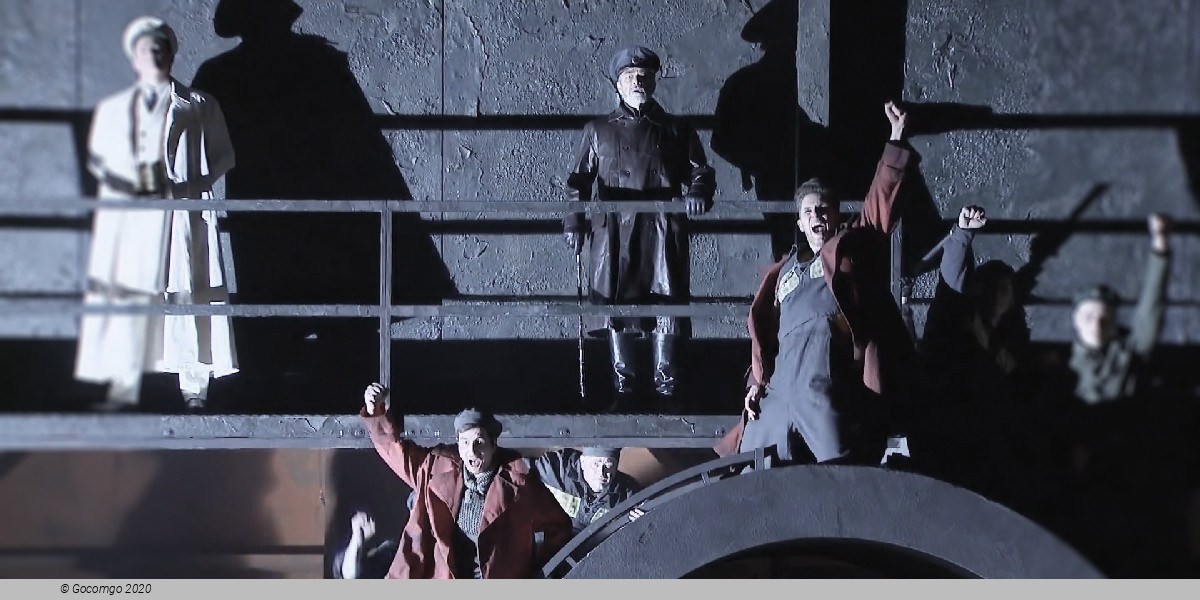
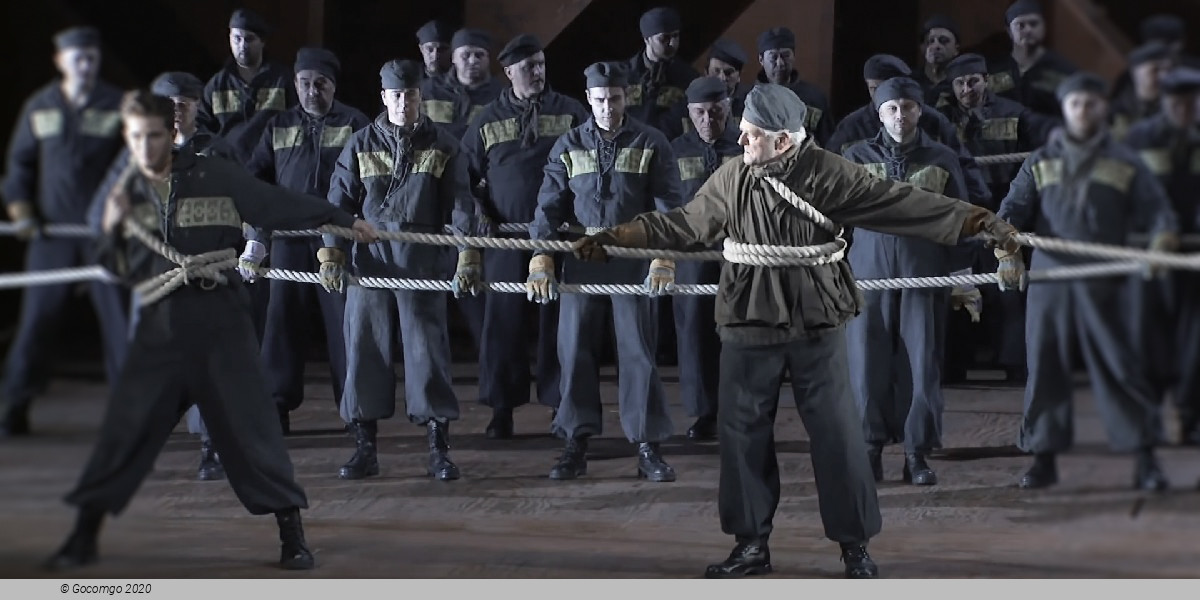
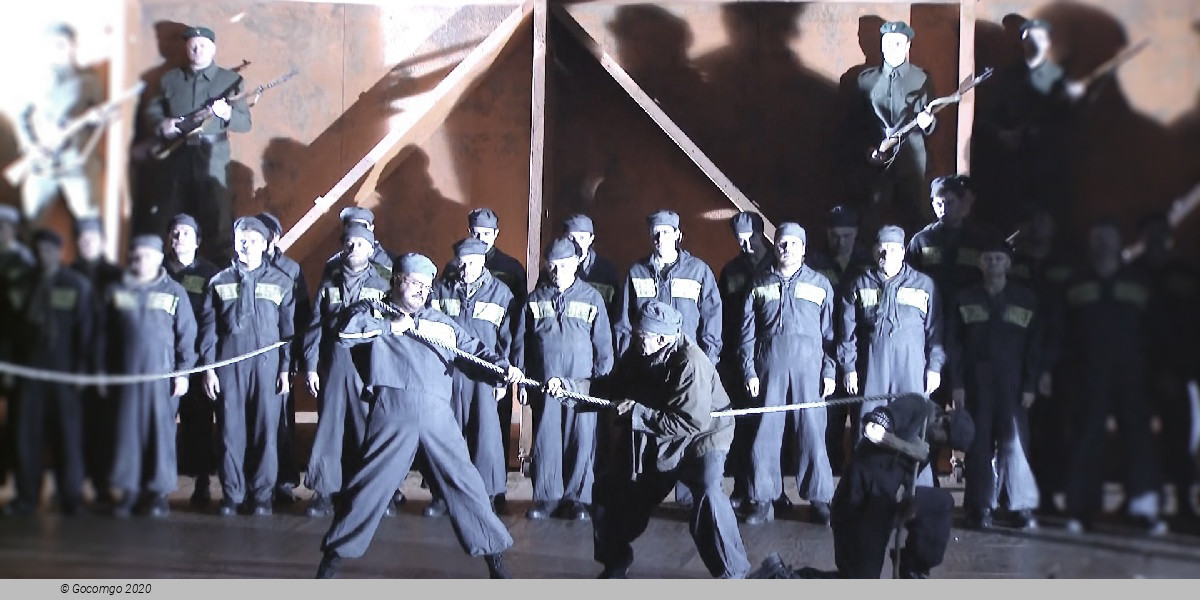
Benjamin Britten’s Billy Budd returns to Glyndebourne Festival Opera in an acclaimed revival of Michael Grandage’s evocative production. Based on Herman Melville’s novella and set during the French wars of 1797, the opera focuses on a young sailor whose innocence and beauty unsettle the rigid hierarchy of life aboard HMS Indomitable.

When the innocent Billy Budd is falsely accused of inciting mutiny by the malevolent Master-at-Arms John Claggart, the conflict escalates tragically. Captain Vere is forced to make an impossible decision in the face of discipline and duty. Britten’s haunting and dramatic score — sung in English with a large chorus and orchestra — brings out the emotional complexity of its characters and the harrowing pressure of life at sea.

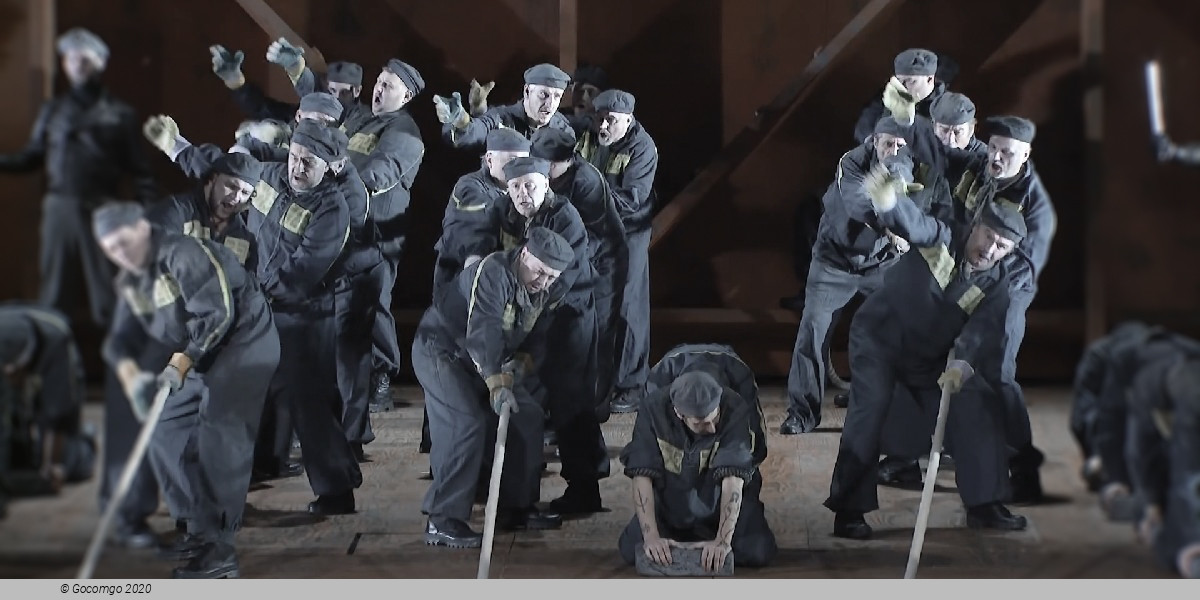
Staged with intense atmosphere and detailed design that evokes the claustrophobic world of the ship, Billy Budd is both a powerful morality tale and a richly rewarding musical experience at one of Britain’s foremost opera festivals.

History
Premiere of this production: 01 December 1951, Royal Opera House, London

Billy Budd is an opera by Benjamin Britten to a libretto by the English novelist E. M. Forster and Eric Crozier, based on the short novel Billy Budd by Herman Melville. Originally in four acts, it was first performed at the Royal Opera House, London, on 1 December 1951; it was later revised as a two-act opera with a prologue and an epilogue.

Synopsis

Place: On board the battleship HMS Indomitable, a "seventy-four"
Time: The French Revolutionary Wars in 1797

Prologue
Captain Edward Fairfax Vere, an old man, reflects on his life and his time in the navy. He reflects on the conflict between good and evil, he is tormented by guilt over the case of Billy Budd on board his ship, HMS Indomitable, some years earlier.

Act 1
The crew of the Indomitable works on deck. For slipping and bumping into an officer, the Novice is sentenced to be flogged. At the same time a cutter approaches, returning from a merchant ship where it has pressed three sailors into the Royal Navy.

One of these sailors, Billy Budd, seems overjoyed with his situation – entirely different from the other two who are not so happy. Claggart, the Master-at-Arms, calls him "a find in a thousand," despite the slight defect of a stammer. Billy says a jaunty farewell to the Rights o' Man, his former ship, innocent of what his words imply. The officers take his words as a deliberate provocation and order the men below decks. Claggart tells Squeak, the ship's corporal, to keep an eye on Billy and give him a rough time.

The Novice returns from his flogging, unable to walk and helped along by a friend. Billy is shocked at the cruelty of the punishment, but is certain that if he follows the rules he will be in no danger. Dansker, an old sailor, nicknames Billy "Baby Budd" for his innocence.

At this point in the four-act version came the climax of Act I, in which Captain Vere appeared on deck to give a speech to the men. In the two-act version, Dansker simply tells the others Vere's nickname, "Starry Vere," and this is enough for the impulsive Billy to swear his loyalty to the unseen captain.

In his cabin, Captain Vere muses over classical literature. His officers enter, and they discuss the revolution in France and the mutinies in the Royal Navy sparked by French ideas of democracy. The officers warn that Billy may cause trouble, but Vere dismisses their fears and expresses his love for the men under his command.

Below decks the sailors rough-house, but old Dansker remains gloomy. Billy goes for some tobacco to cheer him up, and discovers Squeak rifling through his kit. In a rage, Billy begins to stammer. He knocks Squeak to the ground as Claggart and the corporals enter. Billy is still unable to speak, but Claggart takes his side and sends Squeak to the brig. However, when alone, Claggart reveals his hatred for Billy and vows to destroy him. He orders the Novice to try to bribe Billy into joining a mutiny, and the broken-spirited Novice quickly agrees. Billy refuses the bribe and believes he will be rewarded, but Dansker warns him to beware of Claggart.

Act 2
Claggart begins to tell Vere about the danger that Billy represents, but is interrupted by the sighting of a French ship. The Indomitable attacks, but loses the enemy in the mist. Claggart returns, and tells Vere that Billy poses a threat of mutiny. Vere does not believe him and sends for Billy so that Claggart may confront him.

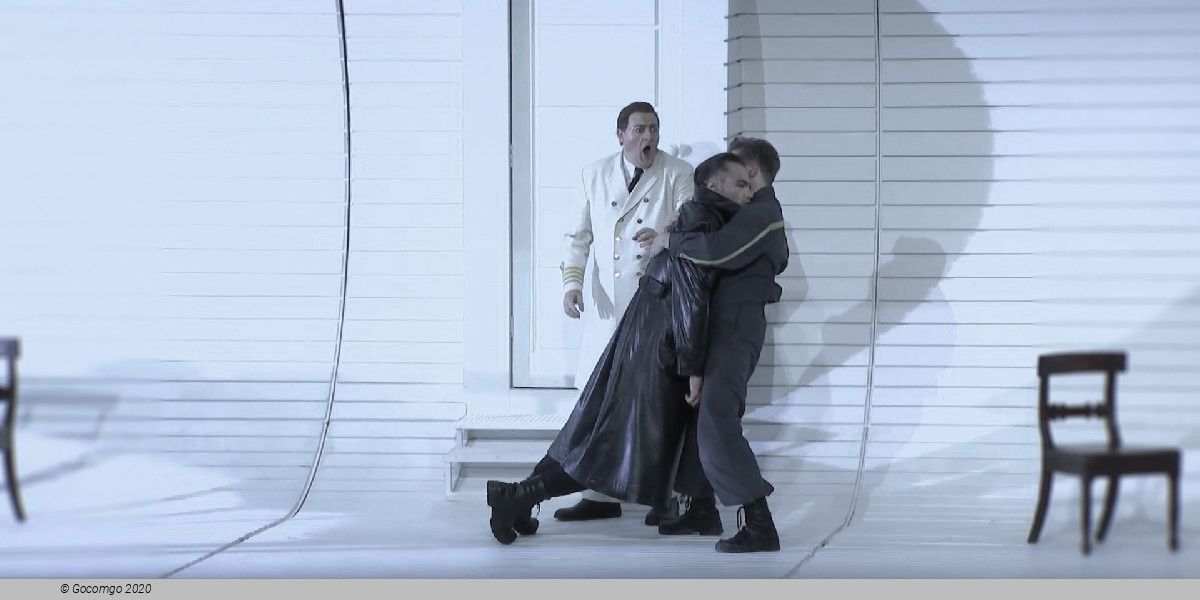
Later, in Vere's cabin, Claggart repeats the false charge to Billy's face. Once again, Billy begins to stammer in rage. Unable to speak, he strikes Claggart, killing him. The Captain is forced to convene an immediate court-martial, and the officers find Billy guilty and sentence him to hang. Billy begs Vere to save him, and the officers appeal to him for guidance, but Vere remains silent and accepts their verdict. He goes into the cabin where Billy is being held, and the orchestra suggests a tender offstage meeting as the captain informs Billy of the death sentence. This was the end of Act 3 in the four-act version.

Billy prepares for his execution in his cell. Dansker brings him a drink and reveals that the crew is willing to mutiny for his sake, but Billy is resigned to his fate. Four o'clock that morning, the crew assembles on deck, and Billy is brought out. The Articles of War are read, and show that Billy must be hanged. Just before his execution, he praises Vere with his final words, singing "Starry Vere, God Bless you!" echoed by the rest of the crew.

Epilogue
Vere, as an old man, remembers Billy's burial at sea, reflecting that the man he failed to save has instead blessed and saved him. As he recalls Billy's blessing, he realises he has discovered genuine goodness and can be at peace with himself.

Venue Info

Glyndebourne - Lewes
Location   New Road, BN8 5UU

Glyndebourne is an English country house, the site of an opera house that, since 1934, has been the venue for the annual Glyndebourne Festival Opera. Initially, operas were presented within the house but there is now a free-standing opera house in its grounds. The house itself, located near Lewes in East Sussex, England, is thought to be about six hundred years old and listed at grade II.

Origins of the opera house

John Christie obtained the use of the house in 1913 after the death of William Langham Christie, his grandfather. He came into full legal possession of the estate in 1920. Among other renovations, he added to the house an organ room, 80 feet (24 m) long, in the process almost doubling the length of the south facade of the house. This room contained one of the largest organs outside of a cathedral in the country. It was built by the firm of Hill, Norman & Beard Ltd (bought by Christie in 1923). After the Second World War, John Christie made a gift of sections of the soundboards, pipes and structural parts to the rebuilt Guards Chapel, Wellington Barracks (which had been destroyed in the Blitz); the case and console remain at Glyndebourne.

John Christie's fondness for music led him to hold regular amateur opera evenings in this room. At one of these evenings in 1931, he met his future wife, the Sussex-born Canadian soprano Audrey Mildmay, a singer with the Carl Rosa Opera company who had been engaged to add a touch of professionalism to the proceedings. They were married on 4 June 1931. During their honeymoon, they attended the Salzburg and Bayreuth festivals, which gave them the idea of bringing professional opera to Glyndebourne, although Christie's original concept was for it to be similar to the Bayreuth Festival. As their ideas evolved, the concept changed to focus on smaller-scale productions of operas by Mozart more suited to the intimate scale of the planned theatre.

The first theatre

As an annex to the organ room, the Christies built a fully equipped and up-to-date theatre with a 300-seat auditorium and an orchestra pit capable of holding a symphony orchestra. Christie engaged conductor Fritz Busch as the first music director, Carl Ebert, the Intendant of Berlin's Städtische Oper as artistic director, and Rudolf Bing became general manager until 1949. All three men were exiles from Nazi Germany.

After extensive rehearsals, the first six-week season opened on 28 May 1934 with a performance of Le nozze di Figaro followed by Così fan tutte. Boyd Neel had conducted the first music heard in the renovated Glyndebourne opera house in 1934, in private performances, at John Christie.
John Christie's original theatre was soon enlarged and improved many times after its initial construction. As early as 1936 its capacity was increased to 433; by 1952 it held nearly 600, and finally, in 1977, it held 850 people. In addition, a rehearsal hall was constructed.

Productions were interrupted by the Second World War, during which time the house became an evacuation centre for children from London. After 1945 the Festival slowly began again. Until 1951, the entire burden of financing the opera festival was undertaken by John Christie himself, but, in 1952, the Glyndebourne Festival Society was formed to take over the financial management. Christie's death in 1962 resulted in his son George (later Sir George) taking over, and additional changes and improvements to the theatre continued.

Hill, Norman and Beard built the pipe organ in 1924, and it gradually expanded over the years. John Christie owned a considerable share in the company. Currently, the organ is a gutted shell, the pipes having been donated to various churches for the construction of new organs after World War II. The organ originally contained 4 manuals and 46 stops, but this was eventually expanded to 106 stops, unusual for an English-built organ in having multiple diapason chorus ranks of pipes.

A short semi-documentary film was made in 1955 entitled On Such a Night, featuring excerpts from that year's production of Le nozze di Figaro and with glimpses of John Christie, Vittorio Gui and Carl Ebert, interwoven with fictional story about an American going there for the first time.

The present theatre

By the late 1980s the theatre's expansion, which had proceeded in a somewhat piecemeal fashion, included an agglomeration of outbuildings which housed restaurants, dressing rooms, storage and other facilities. It became clear to George Christie that a completely new theatre - and not just an enlargement of the old one - was necessary. Having chosen the architects Michael and Patty Hopkins of Hopkins Architects in a design competition, Christie announced in 1990 that a new theatre, capable of seating 1,200 people, would be constructed in 1992.

The old theatre hosted its last festival in 1992, and construction of a brand-new theatre was under way. It was completed at a cost of £34 million, 90 per cent of which was raised through donations, which gave the donors control of 28% of the seats. The inaugural performance in the new theatre on 28 May 1994, given sixty years to the day after the old theatre's first performance, was Le nozze di Figaro.

The design of the theatre, a large brick oval building, has resulted in a four-level, horseshoe-shaped auditorium with main level seating, two balconies, and a gallery topped with a circular roof. The over sixty-foot-high stage building is semi-circular in shape and allows for the efficient flying and storage of scenery. The acoustics, by Derek Sugden and Rob Harris of Arup Acoustics, have received praise.

Important Info
Type: Opera
City: Lewes, Great Britain
Starts at: 17:00
Intervals: 1
Duration: 4h 15min
Sung in: English
Top of page