
Deutsche Oper Berlin tickets 27 September 2026 - Wednesday from Light | GoComGo.com

Wednesday from Light

Deutsche Oper Berlin, Main Stage, Berlin, Germany
All photos (6)
Select date and time
4 PM
From
US$ 110

E-tickets: Print at home or at the box office of the event if so specified. You will find more information in your booking confirmation email.

You can only select the category, and not the exact seats.
If you order 2 or 3 tickets: your seats will be next to each other.
If you order 4 or more tickets: your seats will be next to each other, or, if this is not possible, we will provide a combination of groups of seats (at least in pairs, for example 2+2 or 2+3).

Important Info
Type: Opera
City: Berlin, Germany
Starts at: 16:00
Acts: 4
Intervals: 2
Duration: 4h
Sung in: German
Titles in: English,German

E-tickets: Print at home or at the box office of the event if so specified. You will find more information in your booking confirmation email.

You can only select the category, and not the exact seats.
If you order 2 or 3 tickets: your seats will be next to each other.
If you order 4 or more tickets: your seats will be next to each other, or, if this is not possible, we will provide a combination of groups of seats (at least in pairs, for example 2+2 or 2+3).

Cast
Performers
Conductor: Maxime Pascal
Chorus: Chorus of the Deutsche Oper Berlin
Orchestra: Le Balcon Orchestra
Artist: Marie Groothof
Ensemble: String Quartet of the Orchestra of the Deutsche Oper Berlin
Mezzo-Soprano: Tarren Johnson
Creators
Composer: Karlheinz Stockhausen
Director: Susanne Kennedy
Overview

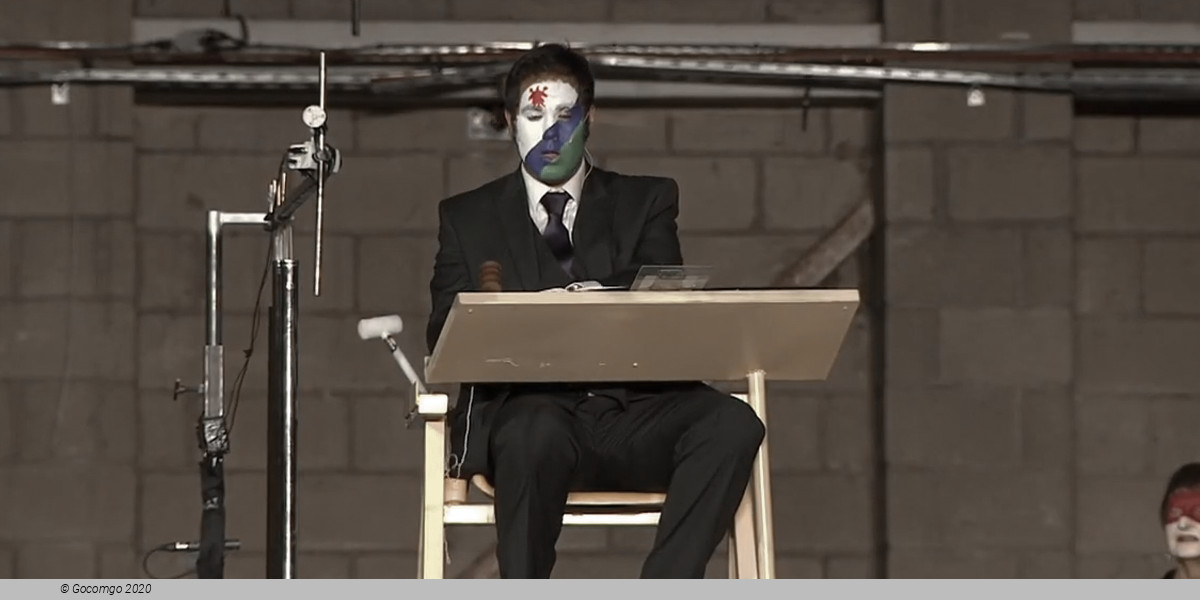
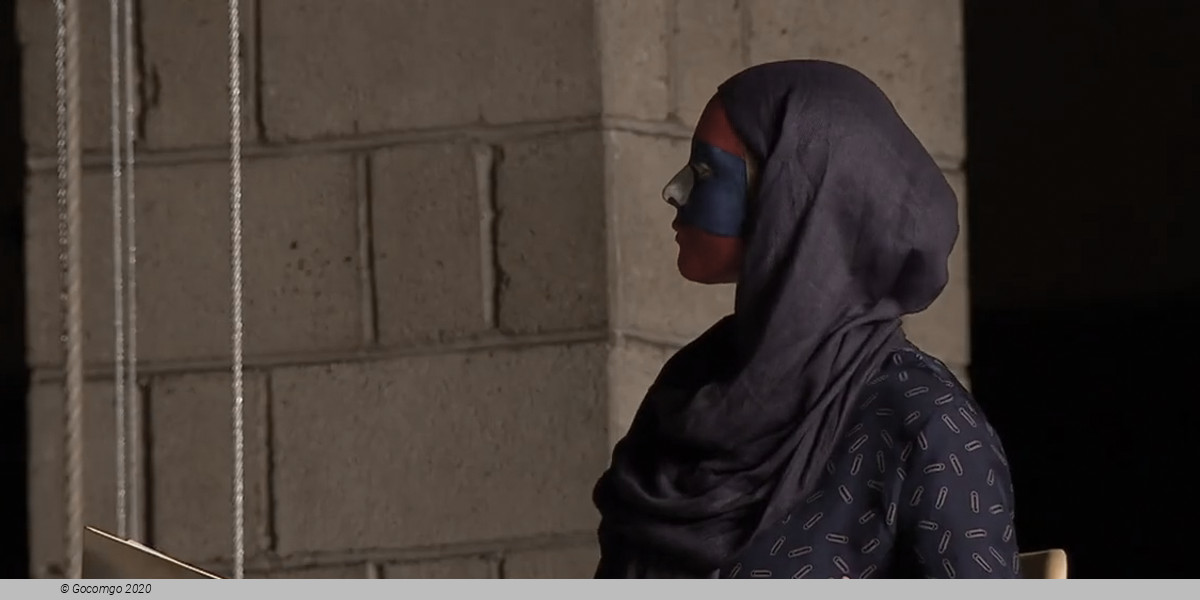
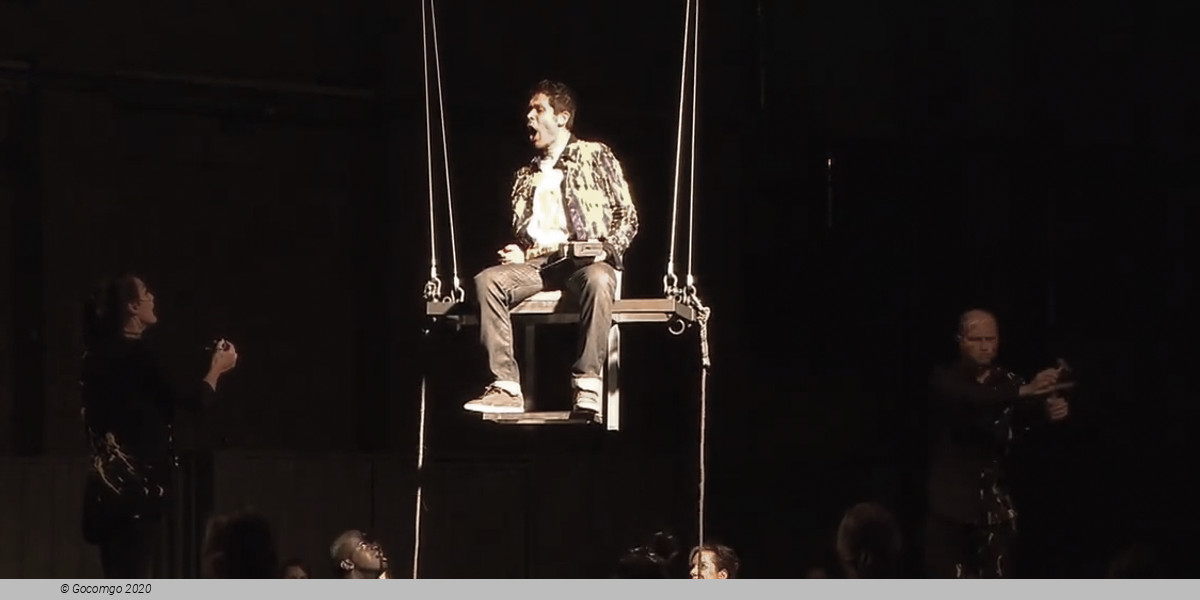
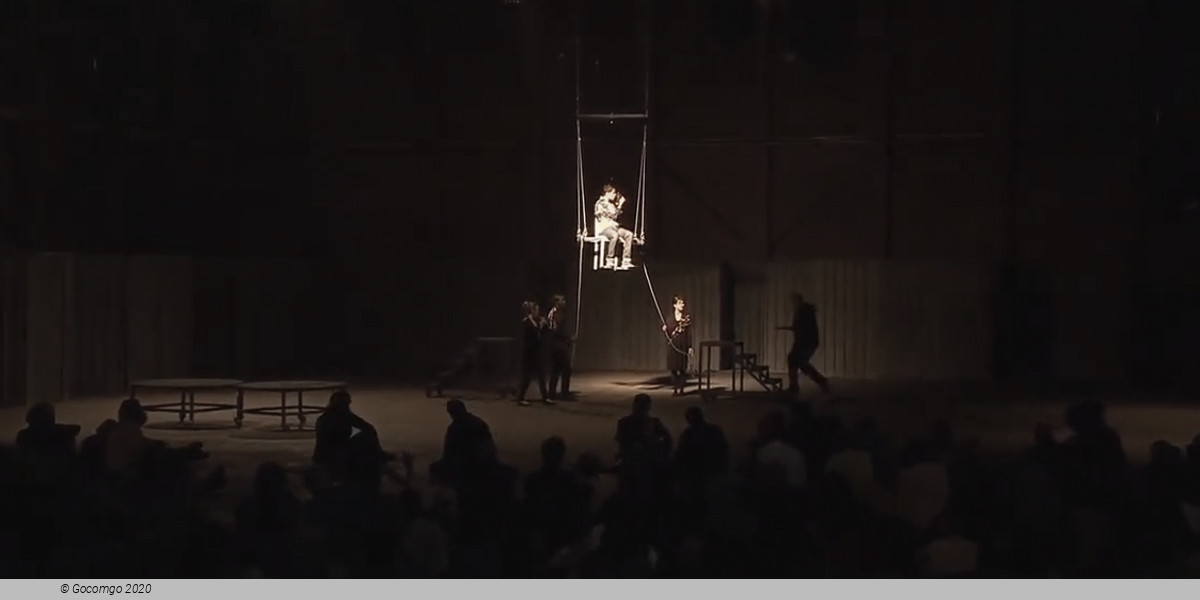
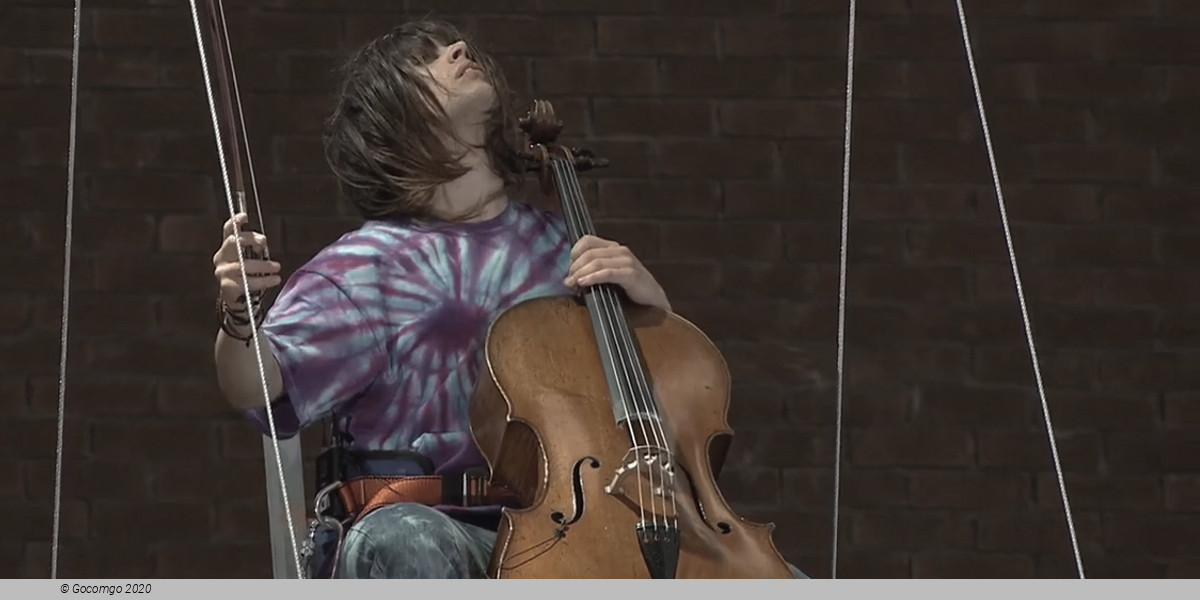
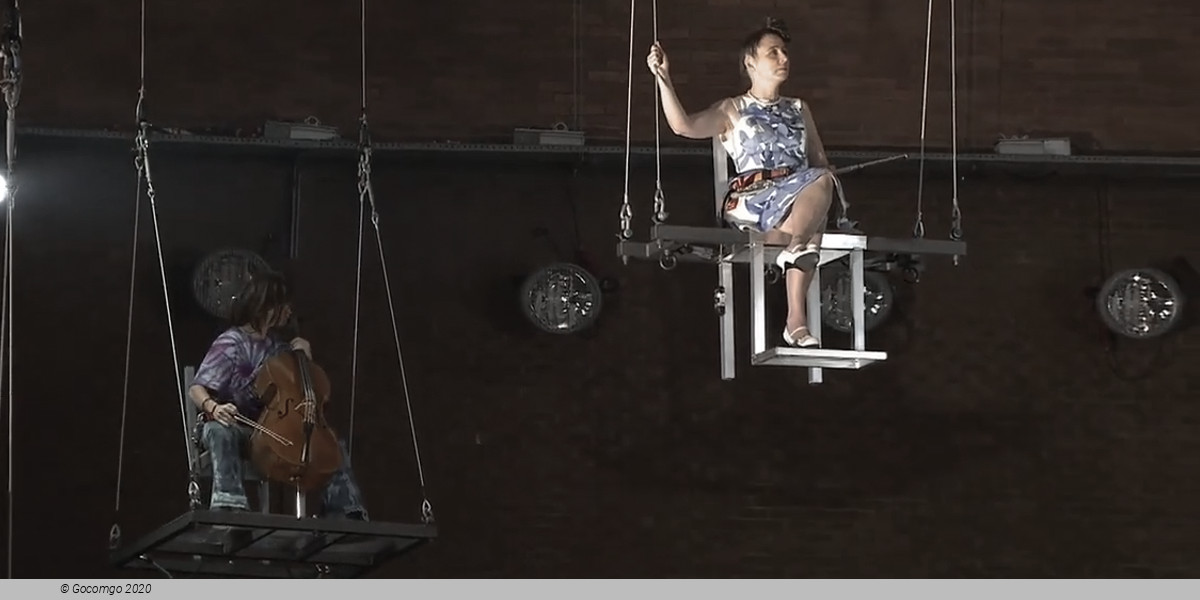
On the occasion of the new directorship, Deutsche Oper Berlin is venturing to show a project that crashes through boundaries and opens up new spaces: Karlheinz Stockhausen’s Mittwoch aus Licht will be shown as a scenic opera production in the German-speaking world for the first time. Stockhausen, visionary of sound, crafted nothing less than a cosmic theatrum mundi about man and woman, good and evil, birth and death with his monumental cycle LICHT. Die sieben Tage der Woche. While other portions of the cycle centre around the struggle between competing forces, the polarity of which reshapes our lives every day, Mittwoch celebrates the utopia of love and the spiritual connection in the spirit of music, as well as the belief that community and solidarity are possible. Stockhausen was uncompromising in his search for a new type of music; he is considered one of the most innovative and yet most controversial composers of the 20th century. A pioneer of electronic music, he also inspired pop music across all genres, including Kraftwerk and Björk. The spectacular centrepiece of Mittwoch aus Licht is the helicopter string quartet, in which Stockhausen expands the musical space beyond the theatre itself: The members of a string quartet sit in four helicopters circling high above the audience. Sounds of strings meld with the helicopter blades, floating down to the audience from above. For our production, the quartet will be performed live as a one-of-a-kind event for the whole city, with film recordings of the quartet becoming part of the production. Award-winning duo Susanne Kennedy and Markus Selg, who caused a sensation with Einstein on the Beach at Theater Basel and Parsifal at Opera Antwerpen, will transform their first opera production in Berlin into an immersive ritual. Maxime Pascal, Principal Guest Conductor under the new directorship, is an expert and passionate connoisseur of Stockhausen and has performed every piece of the LICHT cycle except for Mittwoch.

History
Premiere of this production: 22 August 2012, Birmingham

Wednesday from Light (Mittwoch aus Licht) is a visionary opera by Karlheinz Stockhausen from his seven-part cycle LICHT. Combining electronic music, theatre, ritual, and innovative sound experiences, the work explores communication, unity, and humanity’s search for harmony. Featuring the iconic Helicopter String Quartet, it is one of the most ambitious creations in contemporary music theatre.

Synopsis

The central theme of Wednesday from Light is communication between individuals, cultures, and civilizations.

In World Parliament, representatives from different nations and worlds gather in a symbolic assembly. Instead of political debate, they communicate through music, demonstrating the possibility of understanding beyond language and conflict.

In the Helicopter String Quartet, four musicians leave the traditional concert hall and perform in separate helicopters flying above the Earth. Their individual sounds are transmitted electronically and transformed into a unified musical experience, symbolizing connection between humans, technology, and nature.

The final scenes present visions of cooperation and universal harmony, reflecting Stockhausen’s belief that music can become a bridge between different forms of existence.

Venue Info

Deutsche Oper Berlin - Berlin
Location   Bismarckstraße 35

Venue's Capacity: 1698

The Deutsche Oper Berlin is an opera company located in the Charlottenburg district of Berlin, Germany. The resident building is the country's second-largest opera house and also home to the Berlin State Ballet. Since 2004 the Deutsche Oper Berlin, like the Staatsoper Unter den Linden (Berlin State Opera), the Komische Oper Berlin, the Berlin State Ballet, and the Bühnenservice Berlin (Stage and Costume Design), has been a member of the Berlin Opera Foundation.

The company's history goes back to the Deutsches Opernhaus built by the then independent city of Charlottenburg—the "richest town of Prussia"—according to plans designed by Heinrich Seeling from 1911. It opened on November 7, 1912 with a performance of Beethoven's Fidelio, conducted by Ignatz Waghalter. In 1925, after the incorporation of Charlottenburg by the 1920 Greater Berlin Act, the name of the resident building was changed to Städtische Oper (Municipal Opera).

With the Nazi seizure of power in 1933, the opera was under control of the Reich Ministry of Public Enlightenment and Propaganda. Minister Joseph Goebbels had the name changed back to Deutsches Opernhaus, competing with the Berlin State Opera in Mitte controlled by his rival, the Prussian minister-president Hermann Göring. In 1935, the building was remodeled by Paul Baumgarten and the seating reduced from 2300 to 2098. Carl Ebert, the pre-World War II general manager, chose to emigrate from Germany rather than endorse the Nazi view of music, and went on to co-found the Glyndebourne opera festival in England. He was replaced by Max von Schillings, who acceded to enact works of "unalloyed German character". Several artists, like the conductor Fritz Stiedry and the singer Alexander Kipnis, followed Ebert into emigration. The opera house was destroyed by a RAF air raid on 23 November 1943. Performances continued at the Admiralspalast in Mitte until 1945. Ebert returned as general manager after the war.

After the war, in what was now West Berlin, the company, again called Städtische Oper, used the nearby Theater des Westens; its opening production was Fidelio, on 4 September 1945. Its home was finally rebuilt in 1961 but to a much-changed, sober design by Fritz Bornemann. The opening production of the newly named Deutsche Oper, on 24 September, was Mozart's Don Giovanni.

Past Generalmusikdirektoren (GMD, general music directors) have included Bruno Walter, Kurt Adler, Ferenc Fricsay, Lorin Maazel, Gerd Albrecht, Jesús López-Cobos, and Christian Thielemann. In October 2005, the Italian conductor Renato Palumbo was appointed GMD as of the 2006/2007 season. In October 2007, the Deutsche Oper announced the appointment of Donald Runnicles as their next Generalmusikdirektor, effective August 2009, for an initial contract of five years. Simultaneously, Palumbo and the Deutsche Oper mutually agreed to terminate his contract, effective November 2007.

On the evening of 2 June 1967, Benno Ohnesorg, a student taking part in the German student movement, was shot in the streets around the opera house. He had been protesting against the visit to Germany by the Shah of Iran, who was attending a performance of Mozart's The Magic Flute.

In 1986 the American Berlin Opera Foundation was founded.

In April 2001, the Italian conductor Giuseppe Sinopoli died at the podium while conducting Verdi's Aida, at age 54.

In September 2006, the Deutsche Oper's Intendantin (general manager) Kirsten Harms drew criticism after she cancelled the production of Mozart's opera Idomeneo by Hans Neuenfels, because of fears that a scene in it featuring the severed heads of Jesus, Buddha and Muhammad would offend Muslims, and that the opera house's security might come under threat if violent protests took place. Critics of the decision include German Ministers and the German Chancellor Angela Merkel. The reaction from Muslims has been mixed — the leader of Germany's Islamic Council welcomed the decision, whilst a leader of Germany's Turkish community, criticising the decision, said:

This is about art, not about politics ... We should not make art dependent on religion — then we are back in the Middle Ages.

At the end of October 2006, the opera house announced that performances of Mozart's opera Idomeneo would then proceed. Kirsten Harms, after announcing in 2009 that she would not renew her contract beyond 2011, was bid farewell in July of that year.

Important Info
Type: Opera
City: Berlin, Germany
Starts at: 16:00
Acts: 4
Intervals: 2
Duration: 4h
Sung in: German
Titles in: English,German
Top of page