
Bolshoi Theatre tickets 10 December 2026 - A life for the Tsar | GoComGo.com

A life for the Tsar

Bolshoi Theatre, Historic Stage, Moscow, Russia
Select date and time
7 PM
Important Info
Type: Opera
City: Moscow, Russia
Starts at: 19:00
Acts: 4
Intervals: 2
Duration: 4h 5min
Sung in: Russian
Titles in: Russian

E-tickets: Print at home or at the box office of the event if so specified. You will find more information in your booking confirmation email.

You can only select the category, and not the exact seats.
If you order 2 or 3 tickets: your seats will be next to each other.
If you order 4 or more tickets: your seats will be next to each other, or, if this is not possible, we will provide a combination of groups of seats (at least in pairs, for example 2+2 or 2+3).

Overview

A Life for the Tsar is not the first opera created in Russia, but it is the first Russian opera.

That is no pun, but rather the essence of a turnabout that took place in in the history of Russian music following the premiere of this operatic masterpiece on 27 November 1836 at the Bolshoi (Stone) Theatre (the site is now occupied by the building of the St Petersburg Conservatoire). Operas had been written by Russian composers long before Glinka: The Carriage Accident by Vasily Pashkevich, The Miller Who Was a Wizard, a Cheat and a Matchmaker by Mikhail Sokolovsky and The Novgorod Hero Boyeslayevich and The Coachmen at the Horse Stage-Post by Yevstignei Fomin. But even Russian plots and the timid and enlightened pathos of these activities could not shed the genre of opera of its status as an imported product where everything – the dramaturgy, musical language and manner of singing – remained true to the “refined” Italian framework. Moreover, in the 18th century opera remained an entertainment for high society..

The 19th century was another affair. Russia entered the 19th century as a major European power, confirming its new status by freeing Europe from Napoleon’s expansionism. A great power required great art. For Russia the time had come to declare itself not just through its economic growth and victories in conflicts and politics. The time had come to promote Russian art, which meant not just art produced in Russia but specifically Russian art, at the same time original and of European significance.

All of this, without doubt, was also felt by Mikhail Glinka when he was searching for a plot for his “grand dramatic opera”. The story of the achievement of a simple peasant from Kostroma who sacrificed himself in order to save the life of the young Tsar Mikhail Fyodorovich and rescue Russia from foreign invaders was perfectly suitable for an expansive and heroically patriotic drama; in the plot there is war, there is love, there are scenes of folk life and there is the contrasting image of the culture of the invaders. In the plot, it was unexpected for contemporaries to see that a weapon of victory in war was not the talents of a crowned military leader but rather the courage of a provincial simple man. Ultimately, the public was shocked by the world that Glinka brought onto the stage of the Imperial theatre – peasant life, portraits of simple people and the poetry of the Russian way of life. And the corresponding musical language: Russian folkloric melodies, heterophonic choral polyphony and Orthodox prayers. Folk heroes and folk music had descended to mere amusing pastoral scenes, but were in no way permitted in a serious musical drama, on stage embodying the idea and the spirit of the triad “Orthodoxy, Autocracy, and Nationality”, only recently accepted as a weapon to defend the national idea: the folk heroine Susanin perishes, saving not only the Russian autocrat but also Russian Orthodoxy from the Catholics of a different creed.

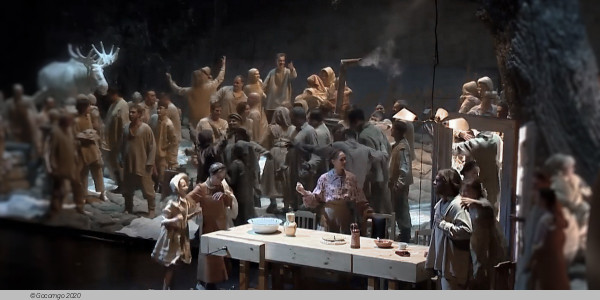
In the new production of  A Life for the Tsar (2004) the Mariinsky Theatre turned to the original version of the opera with the libretto by Baron Rosen. Entire generations of audiences had become accustomed to Sergei Gorodetsky’s Ivan Susanin in which the ideological accents and motivation behind the characters’ actions are mixed up and adapted to the conceptual framework of Soviet opera. The original libretto returns the Autocracy and the Orthodoxy to the opera – the components of the famous triad in which, according to stage director and production designer Dmitry Chernyakov “the Russian conscience recognised itself”. This is why Glinka’s A Life for the Tsar came to be a “true expression in the eternal consciousness of the Russian soul and Russian fate” (Dmitry Chernyakov).

Vladimir Rannev

History
Premiere of this production: 09 December 1836, Bolshoi Kamenny Theatre, Saint Petersburg

A Life for the Tsar is a "patriotic-heroic tragic opera" in four acts with an epilogue by Mikhail Glinka. During the Soviet era the opera was known under the name Ivan Susanin. The original Russian libretto, based on historical events, was written by Nestor Kukolnik, Egor Fyodorovich (von) Rozen, Vladimir Sollogub and Vasily Zhukovsky. It premiered on 27 November 1836 OS (9 December NS) at the Bolshoi Kamenny Theatre in St. Petersburg. The historical basis of the plot involves Ivan Susanin, a patriotic hero of the early 17th century who died in the expulsion of the invading Polish army for the newly elected Tsar Mikhail, the first of the Romanov dynasty, elected in 1613.

Synopsis

Time: The autumn of 1612 and the winter of 1613.

Act 1
The village of Domnino

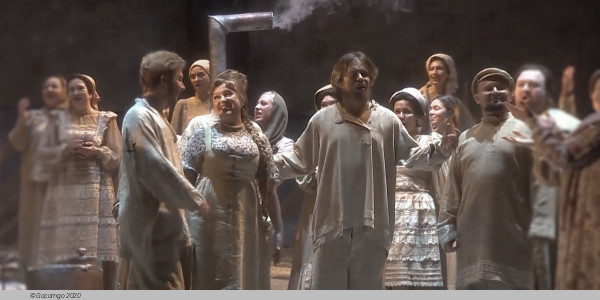
Antonida is eager to marry Sobinin, but her father, Susanin, refuses permission until a Russian has been duly chosen to take the tsar's throne. When Sobinin informs him that the Grand Council in Moscow has chosen a tsar, everyone celebrates.

Act 2
Poland

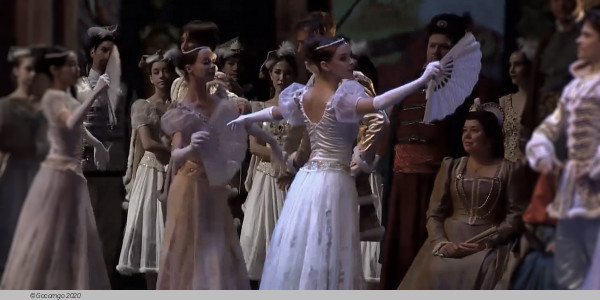
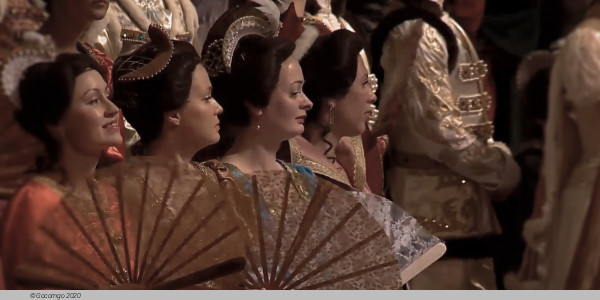
In a sumptuous hall, the nobility celebrates the Polish dominance over the Russians by singing and dancing. Suddenly, a messenger comes in with the news that Mikhail Romanov has been selected as the tsar of Russia but is now in hiding. The Poles vow to overthrow him.

Act 3
Susanin's cabin

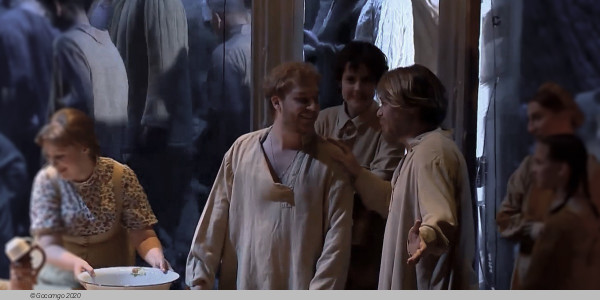
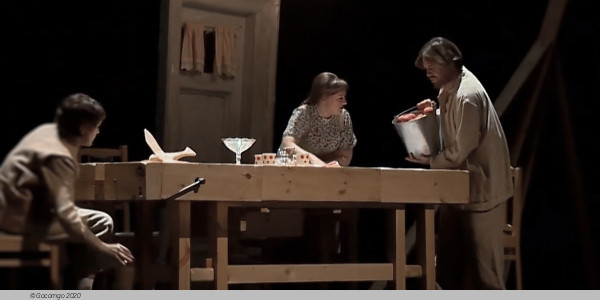
Susanin and his adopted son, Vanya, pledge to defend the new tsar. Susanin blesses Sobinin and Antonida on their upcoming wedding when a detachment of Polish soldiers bursts in to demand the tsar's whereabouts. Instead, Susanin sends Vanya to warn the tsar while Susanin leads the soldiers off the trail into the woods. Antonida is devastated. Sobinin gathers some men to go on a rescue mission.

Act 4
A dense forest

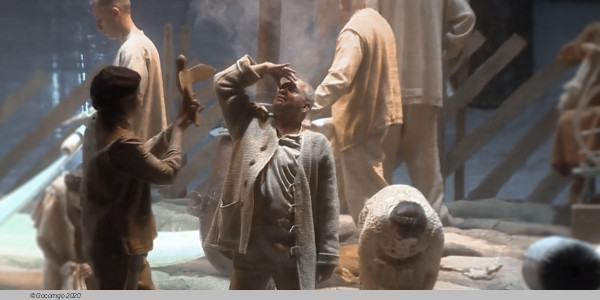
Sobinin reassures his men of the rightness of their mission. When night falls, in a part of the forest near a monastery, Vanya knocks at the gates and alerts the inhabitants to spirit the tsar away. Susanin has led the suspicious Polish troops into an impassable, snow-covered area of the forest. The Poles sleep while Susanin waits for the dawn and bids farewell to his children. A blizzard sets in, and when day breaks, the Poles awake. They realise that Susanin has deceived them and so kill him.

Epilogue
Red Square, Moscow.

Across the stage walks a crowd of people, celebrating the triumph of the new tsar. Alone in their own solemn procession, Antonida, Sobinin and Vanya mourn Susanin. A detachment of Russian troops comes upon them, discovers their connection with Susanin and comforts them. As the scene changes to Red Square, the people proclaim glory to the tsar and to Susanin's memory.

Venue Info

Bolshoi Theatre - Moscow
Location   Teatralnaya Square 1

The Bolshoi Theatre is one of the world’s most iconic cultural landmarks, renowned for its grandeur, history, and artistic excellence. Located in the heart of Moscow, this legendary theatre has been home to unforgettable performances of opera and ballet for over two centuries. Its majestic architecture, world-class acoustics, and rich tradition make every event at the Bolshoi a truly unforgettable experience.

On 28 March (17 according to the old style) 1776, Catherine II granted the prosecutor, Prince Pyotr Urusov, the "privilege" of "maintaining" theatre performances of all kinds, including masquerades, balls and other forms of entertainment, for a period of ten years. And it is from this date that Moscow’s Bolshoi Theatre traces its history.

The Bolshoi building, which for many years now has been regarded as one of Moscow’s main sights, was opened on 20 October 1856, on Tsar Alexander II’s coronation day.

On 29 October 2002 the Bolshoi was given a New Stage and it was here it presented its performances during the years the Main Stage was undergoing massive reconstruction and refurbishment.

The reconstruction project lasted from l July 2005 to 28 October 2011. As a result of this reconstruction, many lost features of the historic building were reinstated and, at the same time, it has joined the ranks of most technically equipped theatre buildings in the world.

The Bolshoi Theatre is a symbol of Russia for all time. It was awarded this honor due to the major contribution it made to the history of the Russian performing arts. This history is on-going and today Bolshoi Theatre artists continue to contribute to it many bright pages.

The Bolshoi Ballet and Bolshoi Opera are among the oldest and best known ballet and opera companies in the world. It is by far the world's biggest ballet company, with more than 200 dancers.
Important Info
Type: Opera
City: Moscow, Russia
Starts at: 19:00
Acts: 4
Intervals: 2
Duration: 4h 5min
Sung in: Russian
Titles in: Russian
Top of page