Ancient Theater of Orange tickets 4 July 2026 - La Traviata | GoComGo.com

La Traviata

Ancient Theater of Orange, Orange, France
All photos (7)
Select date and time
9:30 PM
From
US$ 121

E-tickets: Print at home or at the box office of the event if so specified. You will find more information in your booking confirmation email.

You can only select the category, and not the exact seats.
If you order 2 or 3 tickets: your seats will be next to each other.
If you order 4 or more tickets: your seats will be next to each other, or, if this is not possible, we will provide a combination of groups of seats (at least in pairs, for example 2+2 or 2+3).

Important Info
Type: Opera
City: Orange, France
Starts at: 21:30
Acts: 3

E-tickets: Print at home or at the box office of the event if so specified. You will find more information in your booking confirmation email.

You can only select the category, and not the exact seats.
If you order 2 or 3 tickets: your seats will be next to each other.
If you order 4 or more tickets: your seats will be next to each other, or, if this is not possible, we will provide a combination of groups of seats (at least in pairs, for example 2+2 or 2+3).

Cast
Performers
Tenor: Javier Camarena (Alfredo Germont)
Baritone: Ludovic Tézier (Giorgio Germont)
Soprano: Nadine Sierra (Violetta Valéry)
Conductor: Paolo Arrivabeni
Orchestra: Marseille Philharmonic Orchestra
Orchestra: Orchestre National de Lyon
Creators
Composer: Giuseppe Verdi
Author: Alexandre Dumas (fils)
Librettist: Francesco Maria Piave
Overview

Presented in Orange with a dazzling cast, this Traviata will feature the sublime Nadine Sierra in the title role, alongside Javier Camarena and Ludovic Tézier, under the baton of Paolo Arrivabeni.

Postponed to the next day in case of bad weather

Censorship, whether official or moral, was the most constant companion in Giuseppe Verdi’s life. It generally targeted the political themes addressed by the composer from Busseto: the onstage assassination of a king (Un ballo in maschera), the reprehensible behavior of another monarch (Francis I, transformed into the Duke of Mantua in Rigoletto), or the countless masked calls for revolt against Austria scattered throughout his early works. But it never struck him as personally as it did with La traviata (The Fallen Woman): at the time, Verdi was sharing his life with Giuseppina Strepponi, the creator of Abigaille (Nabucco), a single mother with a troubled past, and he had to endure the disapproval and rejection of the conservative bourgeoisie.

It is hard not to draw parallels with the story of this Parisian courtesan, who renounces love so as not to damage the reputation of her “in-laws.” Stricken with tuberculosis, she dies in utter poverty, bringing the tragic dimension demanded by 19th-century melodrama. A complete failure on the night of its premiere, La traviata is now universally recognized as one of the masterpieces of operatic art and, above all, the most beautiful musical narration of the foundation of Romanticism: the sacrifice made for love.

History
Premiere of this production: 06 March 1853, Teatro La Fenice, Venice

La traviata is an opera in three acts by Giuseppe Verdi set to an Italian libretto by Francesco Maria Piave. It is based on La Dame aux camélias (1852), a play adapted from the novel by Alexandre Dumas fils. The opera was originally titled Violetta, after the main character. It was first performed on 6 March 1853 at the La Fenice opera house in Venice.

Synopsis

Set in and around Paris in about 1850.

Act I

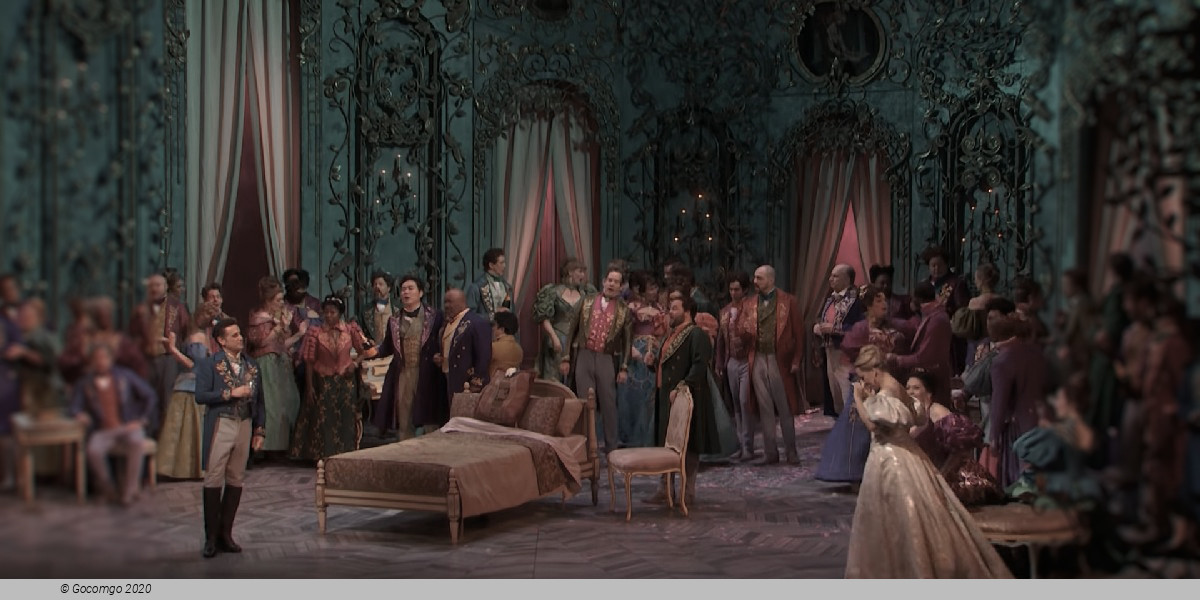
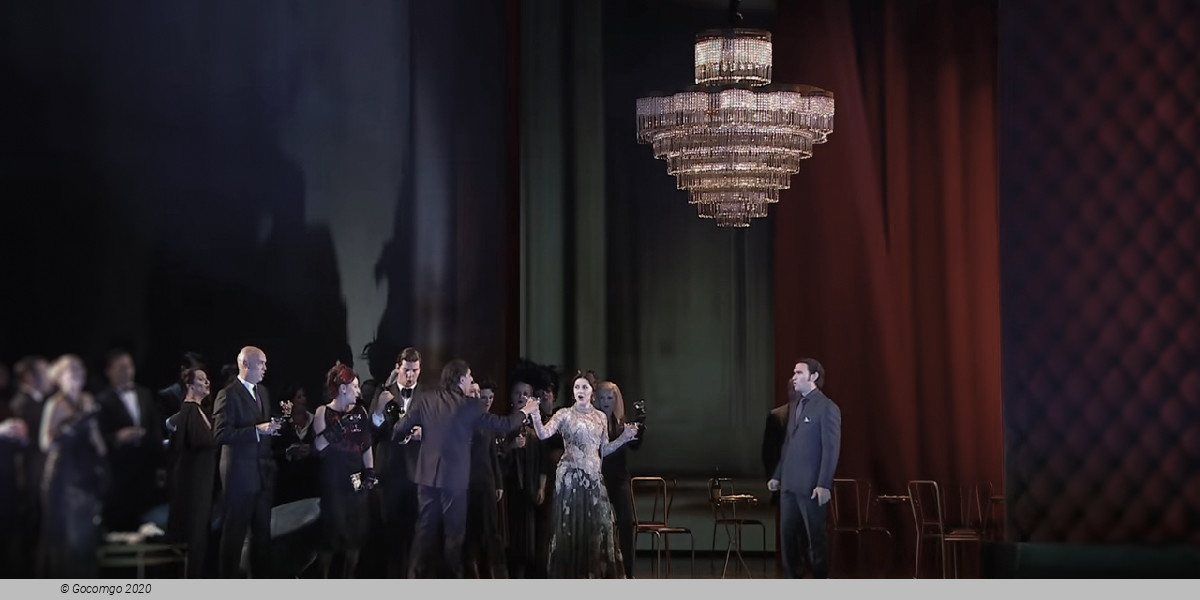
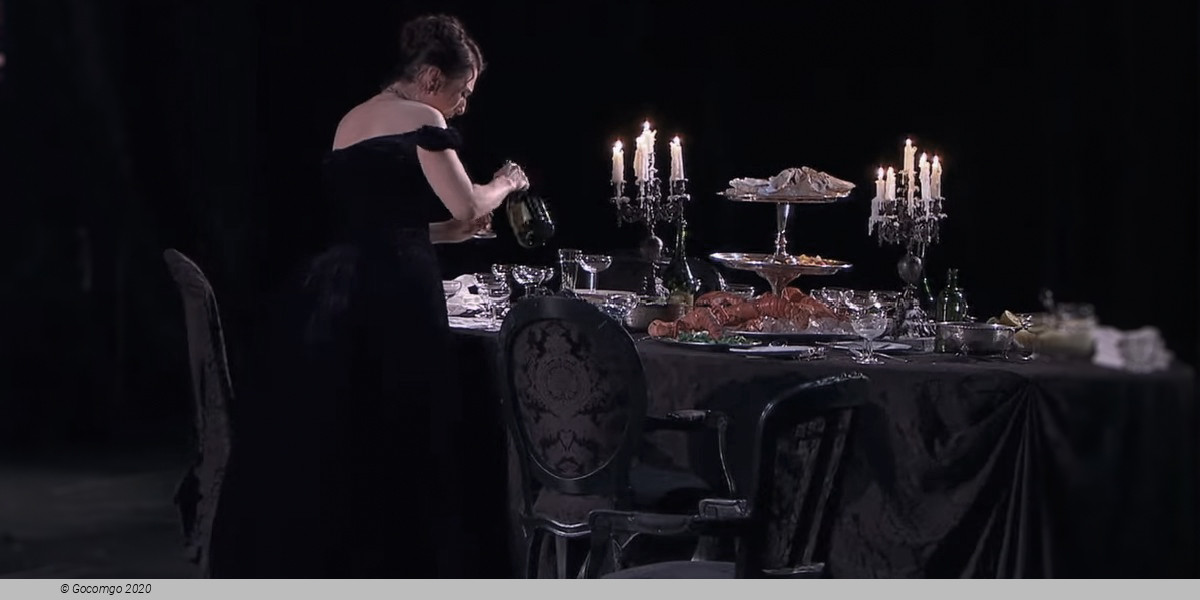
Violetta Valéry, a Parisian courtesan, greets the guests at her salon. Among them are Flora Bervoix, the Marchese D’Obigny, Baron Douphol and Gastone, who introduces Violetta to a new admirer of hers, Alfredo Germont. The young Germont, who has been admiring her from afar, joins her in a drinking song. An orchestra strikes up in an adjacent room, inviting the guests to dance. As the guests make their way to the ballroom, Violetta, who is suffering from consumption, feels faint; she therefore sends the guests on ahead and retires to her boudoir to recover. Alfredo enters and, realising that they are alone, admits his love for her. She replies that love means nothing to her. She
is, however, touched by the young man’s sincerity and promises to meet him the following day.
When the guests have departed, she asks herself whether Alfredo is the man she could love. Despite
the strains of Alfredo’s love song drifting in from outside, she decides she prefers her freedom.

Act II

scene 1
A few months later: Alfredo and Violetta have set up house together in the country, outside Paris. Alfredo says how happy they are, but when Violetta’s maid Annina lets on that Violetta has been selling her belongings to pay for the house, he hastens into town to raise the money himself. Violetta comes in search of him and discovers an invitation from her friend Flora to a soirée that very night. Violetta has no intention of returning to her former life, but she is forced to reconsider
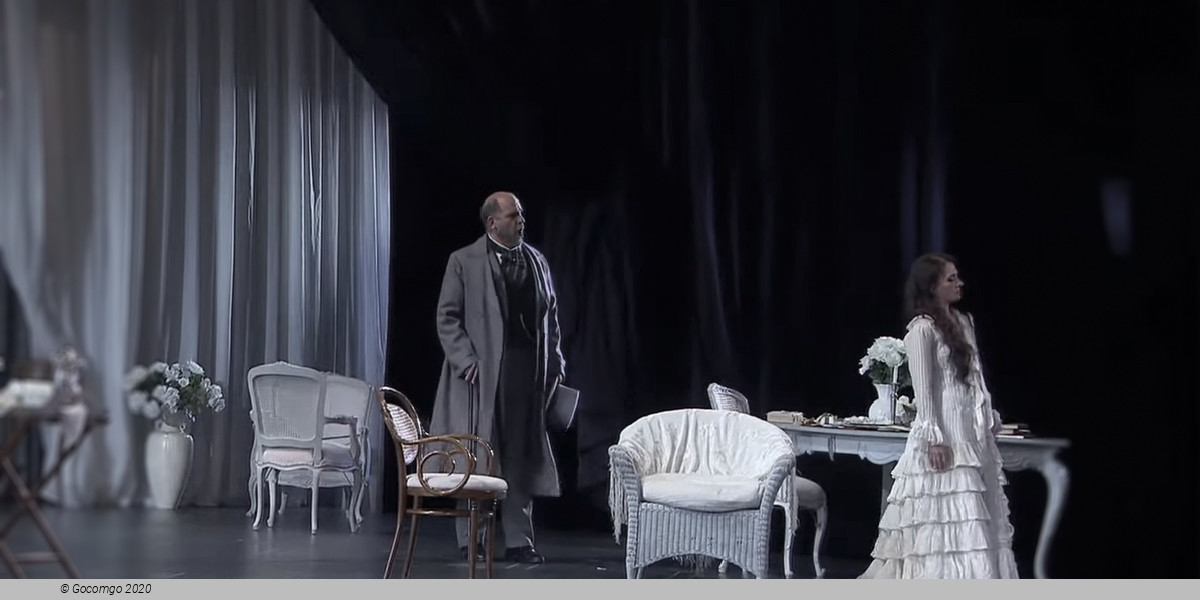
on encountering Alfredo’s father. He is very taken with Violetta and her civilised manners but orders her to renounce Alfredo: his son’s scandalous liaison with Violetta is threatening his daughter’s forthcoming marriage. Violetta considers his demand unreasonable, but before long Germont succeeds in persuading her. Alone and desolate, Violetta sends a reply to Flora accepting her invitation and sits down to write a farewell letter to Alfredo. His return takes her by surprise, and she can barely restrain herself as she passionately reminds him how much she loves him before
rushing out. As the maid brings him Violetta’s farewell letter, Germont returns to console his son and reminds him of life in their family home in Provence. Alfredo spots Flora’s invitation and suspects that Violetta has left him for another man. In a rage, he decides to confront her at the soirée.

scene 2
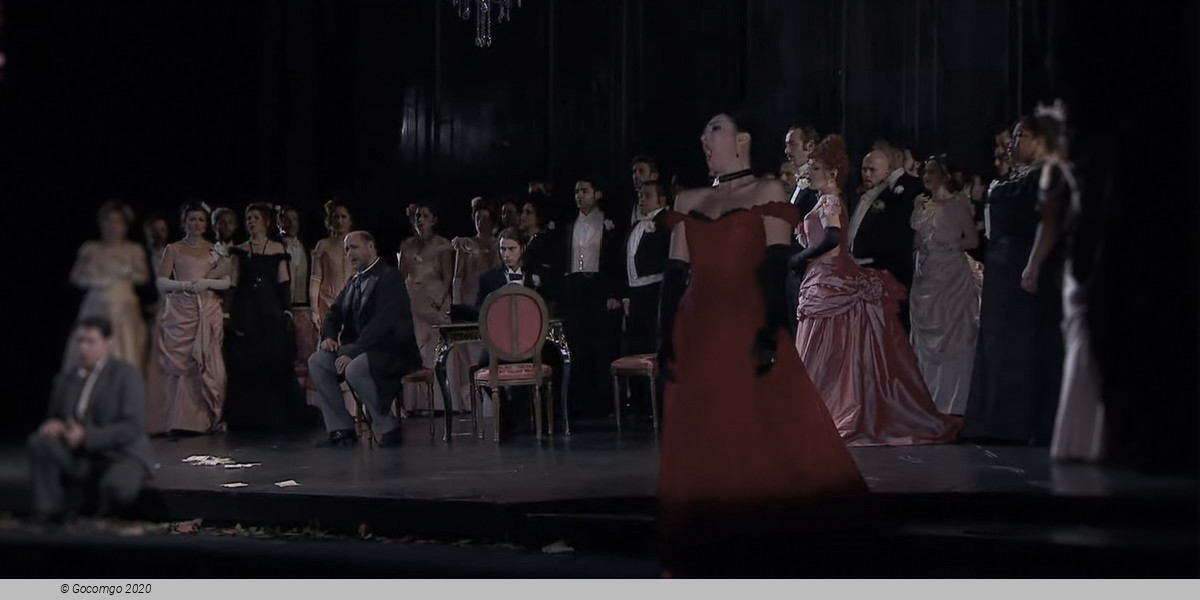
At the soirée, Flora hears from the Marchese that Violetta and Alfredo have parted. Flora asks the guests to make way for a visiting troupe of performing gypsies. They are followed by matadors and a song about Piquillo and his sweetheart. Alfredo rushes in and delivers some bitter comments about love and gambling. Violetta appears on the arm of Baron Douphol, who challenges Alfredo to a game of cards and loses a small fortune to him. As the guests go in to supper, Violetta asks to have a word with Alfredo in private. She is afraid the Baron will be enraged by his loss and urges Alfredo to leave. Alfredo misunderstands her and orders her to admit she loves the Baron. Disappointed by Alfredo’s reaction, Violetta lies and confesses that yes, she does. Alfredo calls the other guests to gather round in order to denounce his former beloved in public and throws the money he has won at her feet. Germont, arriving at that very moment, expresses his disapproval of his son’s behaviour. The guests likewise rebuke Alfredo and Douphol challenges him to a duel.

Act III

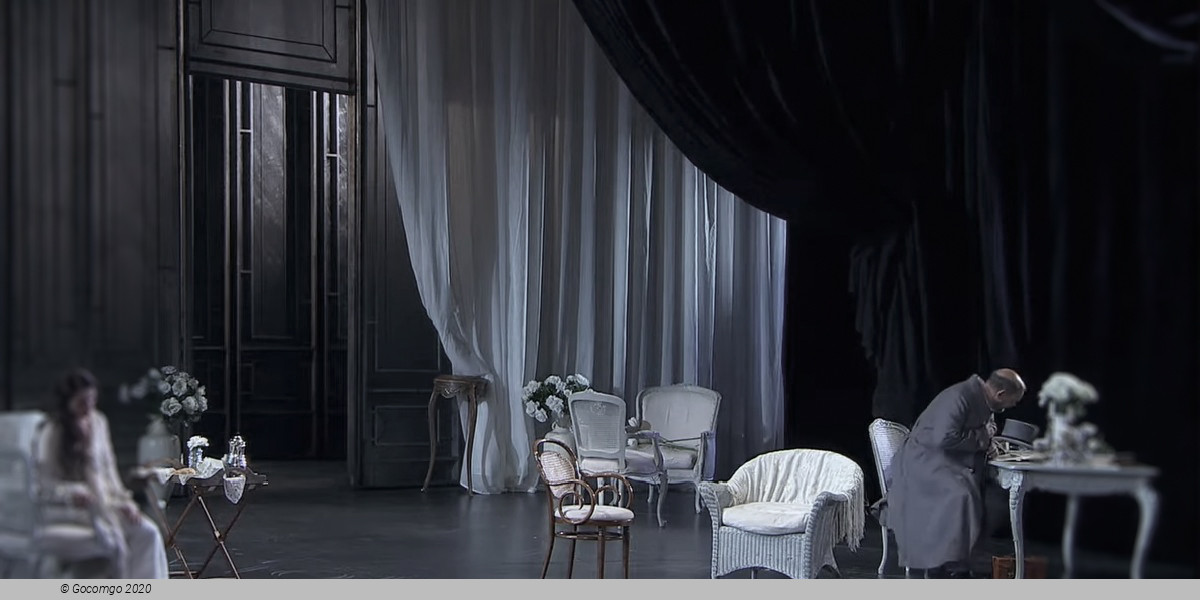
Violetta’s bedroom, six months later. Dr Grenvil tells Annina that her mistress has not long to live –
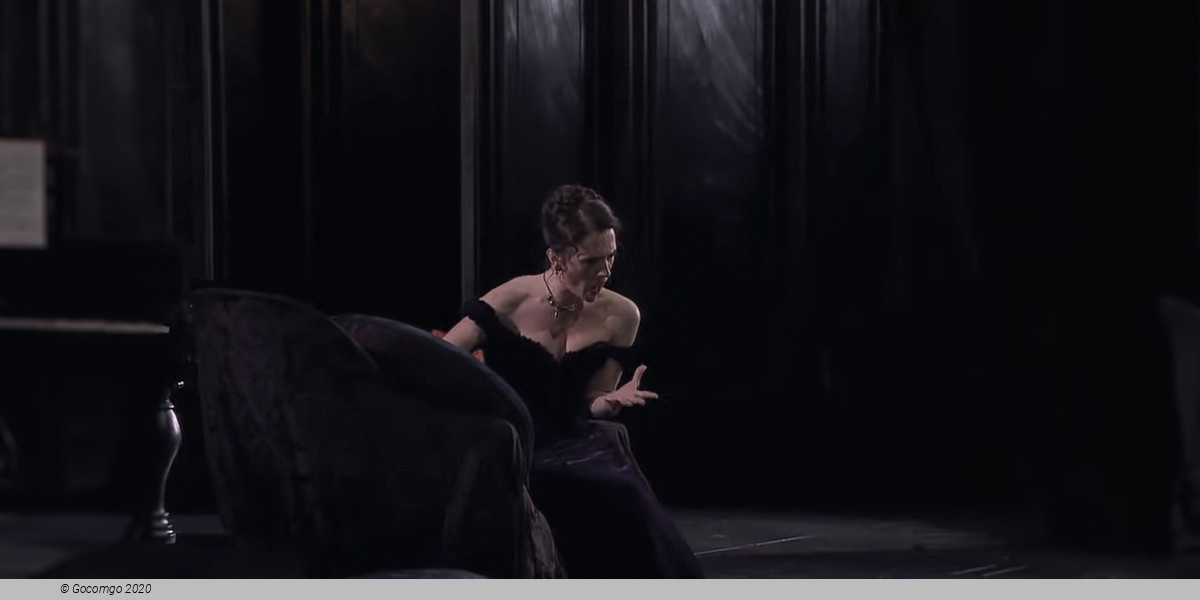
the consumption has taken its toll. Alone, Violetta rereads a letter from Germont saying that the Baron was only slightly wounded in his duel with Alfredo, that Alfredo has heard the truth and is
coming to beg her pardon. But Violetta realises it is too late. It is carnival time in Paris and, the sounds of the revellers having passed, Annina rushes in to announce Alfredo. The lovers ecstatically plan to leave Paris. Germont enters with the doctor just as Violetta rises from her bed with the last of her strength. Feeling a sudden rush of life, she sways and falls dead at her lover’s feet.


Venue Info

Ancient Theater of Orange - Orange
Location   Rue Madeleine Roch

The Roman Theatre of Orange (Théâtre antique d'Orange) is a Roman theatre in Orange, Vaucluse, France. It was built early in the 1st century AD. The structure is owned by the municipality of Orange and is the home of the summer opera festival, the Chorégies d'Orange.

It is one of the best preserved of all Roman theatres, and served the Roman colony of Arausio (or, more specifically, Colonia Julia Firma Secundanorum Arausio: "the Julian colony of Arausio established by the soldiers of the second legion") which was founded in 40 BC. Playing a major role in the life of the citizens, who spent a large part of their free time there, the theatre was seen by the Roman authorities not only as a means of spreading Roman culture to the colonies, but also as a way of distracting them from all political activities.

Mime, pantomime, poetry readings and the "attelana" (a kind of farce rather like the commedia dell'arte) were the dominant forms of entertainment, much of which lasted all day. For the common people, who were fond of spectacular effects, magnificent stage sets became very important, as was the use of stage machinery. The entertainment offered was open to all and free of charge.

As the Western Roman Empire declined during the 4th century, by which time Christianity had become the official religion, the theatre was closed by official edict in AD 391, since the Church opposed what it regarded at the time as uncivilized spectacles. It was probably pillaged by the Visigoths in 412, and like most Roman buildings was certainly stripped of its better stone over the centuries for reuse. It was used as a defensive post in the early Middle Ages, and by the 12th century began to be used by the Church for religious plays. During the 16th-century religious wars, it became a refuge for the townspeople. It has since been restored to its former function, primarily for opera, along side its use as a tourist spot.

Important Info
Type: Opera
City: Orange, France
Starts at: 21:30
Acts: 3
Top of page